
~ Shaping Your Identity ~
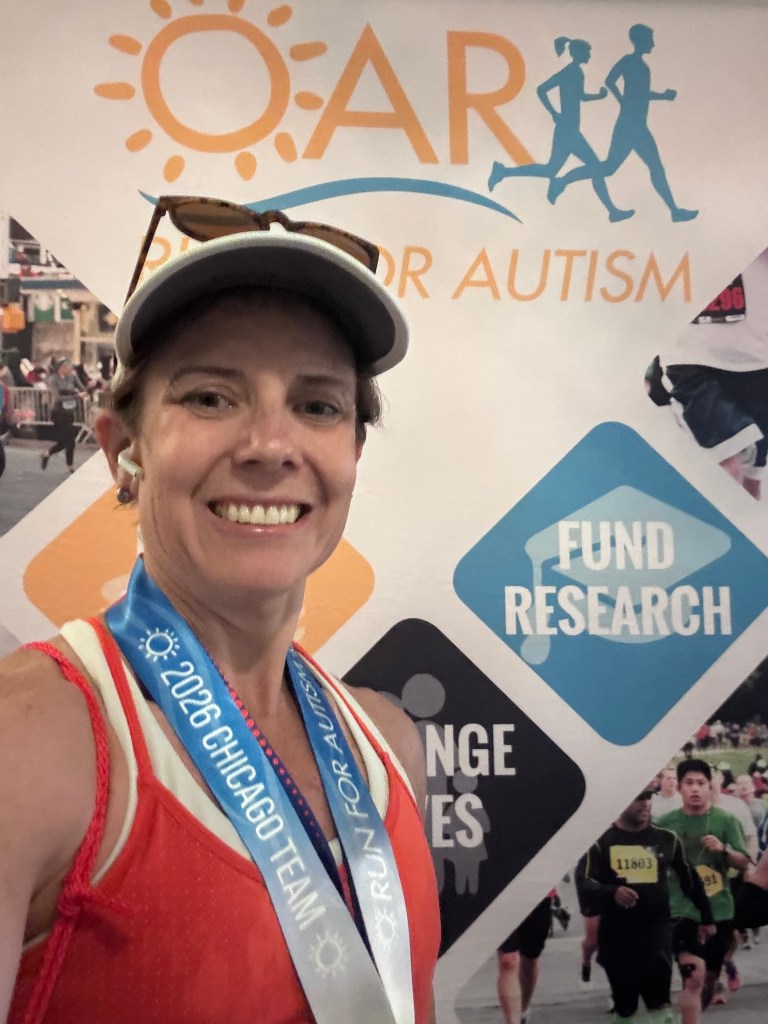
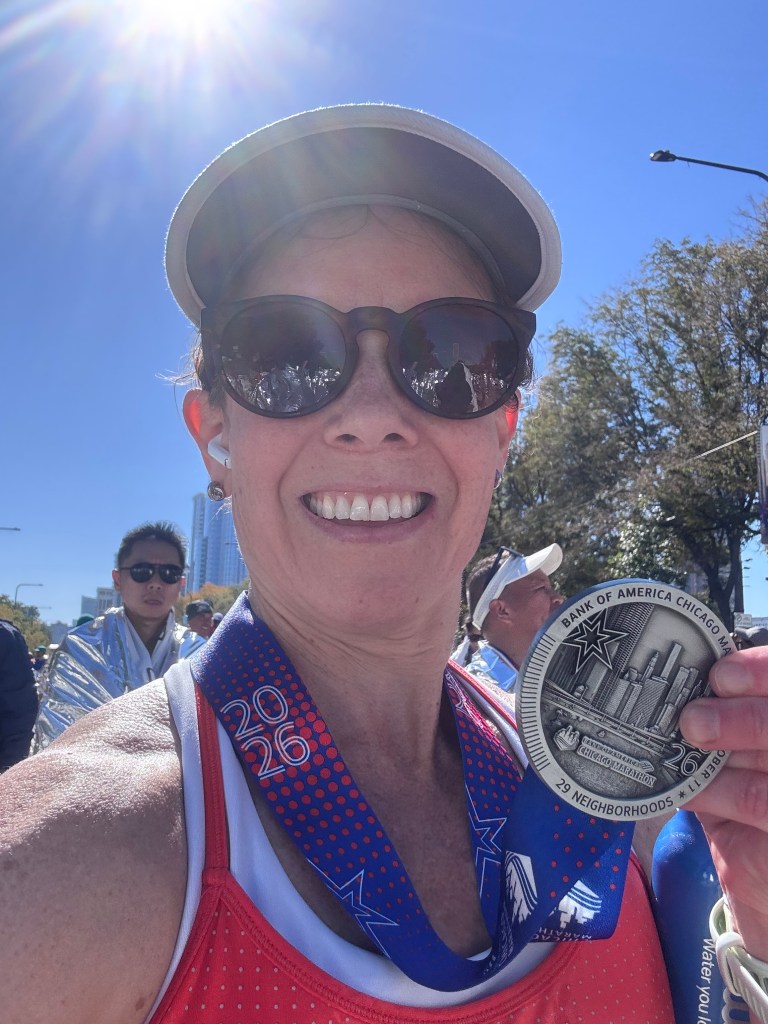
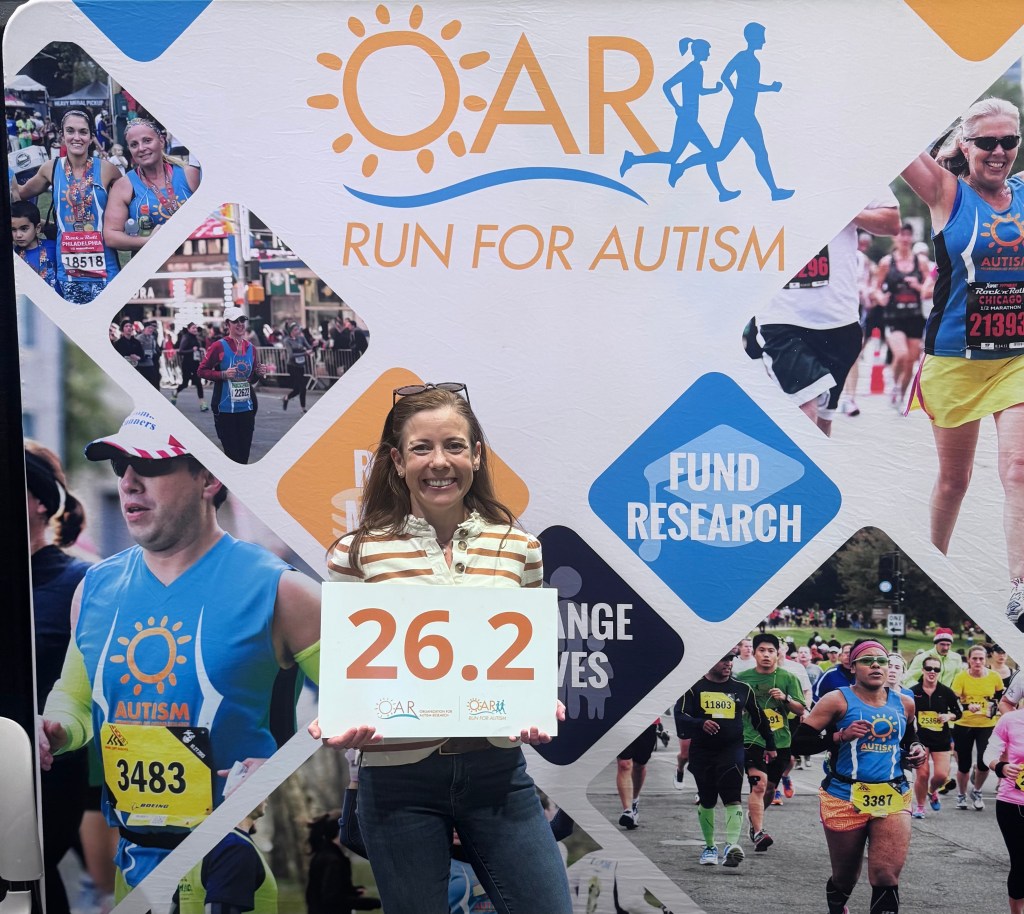
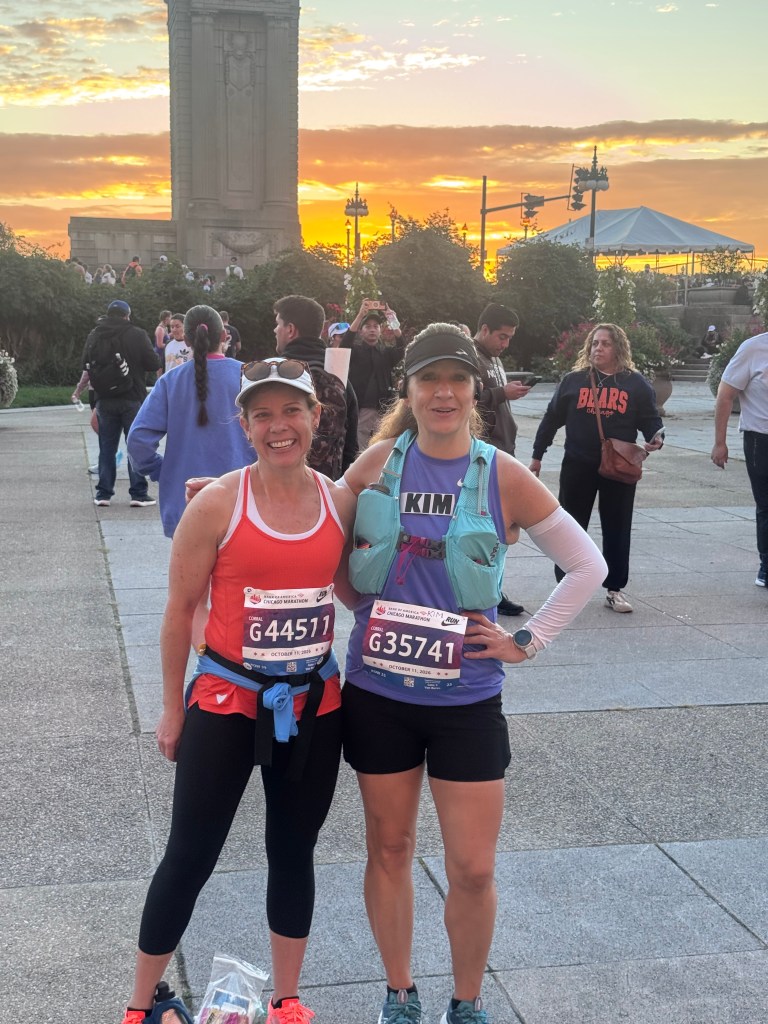
After months of training, I crossed the finish line of the Chicago Marathon this past Sunday. Along the way, I had plenty of time to reflect on how running has shaped me, how my training habits prepared me for race day, and how those same habits influence the way I approach challenges in life. The runs in the dark and rain, the days I felt strong and the days I needed to adapt all helped me practice endurance, resilience, and trust in the process and in myself. Those qualities carried me toward the finish line, and they support me in the other roles and responsibilities in my life. Running has shaped more than my fitness; it has shaped the meaning I make of difficult moments, the milestones I celebrate, and the person I am becoming. Running has taught me to work hard, to pace myself, and to build good habits.
As I’ve read James Clear’s Atomic Habits throughout these past months of marathon training, I’ve been considering the relationship he describes – habits shape our identity, and with intention, the identity we aspire to can shape our habits. Heading to Chicago, I reflected on how running has shaped both who I am and how I approach life’s challenges. Clear’s discussion of identity, particularly on page 36, connects with a belief I return to often: we participate in authoring our stories. The way we interpret our past influences how we experience the present and what we imagine for the future. We cannot choose everything that happens to us, but we can often reconsider the meaning we give it and choose how we respond. I find this empowering! Growth can begin with a small change in what we practice or what we believe is possible for ourselves.
On any given day, you may struggle with your habits because you’re too busy or too tired or too overwhelmed or hundreds of other reasons. Over the long run, however, the real reason you fail to stick with habits is that your self-mage gets in the way. This is why you can’t get too attached to one version of your identity. Progress requires unlearning. Becoming the best version of yourself requires you to continuously edit your beliefs, and to upgrade and expand your identity (36).
He goes on to ask a very important question:
If your beliefs and worldviews play such an important role in your behavior, where do they come from in the first place? How, exactly, is your identity formed? And how can you emphasize new aspects of your identity that serve you and gradually erase the pieces that hinder you? (36).
Your identity emerges out of your habits. You are not born with preset beliefs. Every belief, including those about yourself, is learned and conditioned through experience. More precisely, your habits are how you embody your identity.
Our habits, stories, and imaginations are deeply connected. They provide evidence of who we are. Our stories influence whether we interpret setbacks as endings or information. Our imagination expands, or limits, the futures we believe are available to us. Identity is both something we inherit and something we practice.
This month, I’m reflecting on these questions:
- Who am I becoming through the habits I repeat?
- What habits am I creating to become the person I long to be?
- What story am I telling about my most recent setback, and is it the only possible story?
- What small action could strengthen my confidence that I can influence what happens next?
We do not have to become someone entirely new overnight. We can begin by casting one small vote for the person we want to become, and then another, and another.
We often approach change by asking, What do I want to accomplish?
I want to run a marathon, write a book, earn a promotion or be hired for a high-paying job, become healthier, feel more confident, or lead more effectively. Goals like these can give us direction, but I’ve been thinking about the questions that sit beneath them:
Who am I becoming through the choices I make each day? More than accolades and titles, who do I want to be 10 years, 15 years, 20 years from now? How do I one day wish to be remembered?
These questions have surfaced repeatedly for me this month through a quote I keep returning to, the book I’ve been reading, and a two-part Hidden Brain conversation about optimism, agency, and the stories we tell ourselves.
Together, they all point to this powerful idea I have been pondering, considering and working to live into for many years – our identity is not fixed, and we are the authors of our story, our identity, and ultimately, our legacy. Our lives and identities are continually shaped by what we repeatedly do, how we explain what happens to us, and what we allow ourselves to imagine next.

Quotes I’m Pondering – Thought One:
Every action casts a vote
“Every action you take is a vote for the type of person you wish to become.”
—James Clear
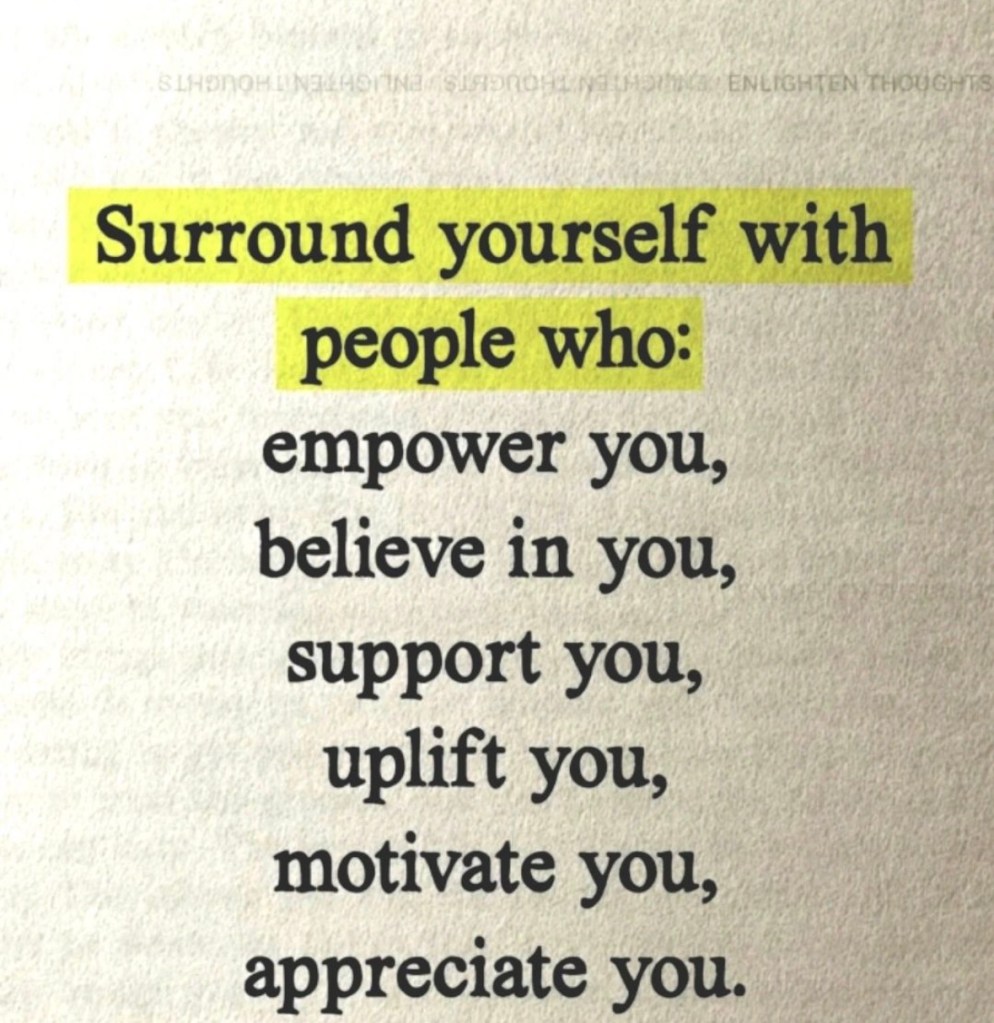
In the first quote, I appreciate the concept that you can help yourself out by surrounding yourself with the right people. Much like a garden, you can control the sunlight, water, and nutrients you put in to ensure you thrive. Our habits influence these nutrients, and you can make it a habit to check in to ensure you’re getting what you need in your life to grow and be your best.
I love this framing from James Clear because it removes the pressure to transform ourselves all at once. One action does not define us. Missing one workout does not make us lazy. One difficult conversation does not make us a poor leader. One setback does not prove we are incapable.
At the same time, our repeated choices become evidence. Intention and action come together to create habits and patterns that shape our days and our lives. Each time we follow through on a commitment, practice courage, extend compassion, establish a boundary, ask for help, or begin again, we reinforce a belief about who we are.
No single vote determines the outcome. But the votes accumulate. We become trustworthy by repeatedly acting with integrity. We become courageous by practicing courage before we feel completely ready. We become learners by remaining curious when it would be easier to defend what we already know.
Instead of asking, What result do I need to produce today? we might ask:
What vote do I want to cast for the person I am becoming?
What I’m reading – Thought Two:
Habits shape identity—and identity shapes habits
Atomic Habits: An Easy & Proven Way to Build Good Habits & Break Bad Ones
by James Clear
Clear distinguishes between outcome-based change and identity-based change. Outcome-based change begins with what we want to achieve. Identity-based change begins with who we want to become.
The difference is subtle but powerful:
- The goal is not simply to finish a book; it is to become a reader.
- The goal is not simply to complete a race; it is to become a runner.
- The goal is not simply to lead a meeting; it is to become a thoughtful and intentional leader.
- The goal is not simply to make one brave decision; it is to become someone who trusts herself to act courageously.
Our habits shape our identity because they provide evidence of who we are. But the relationship also works in the other direction: the identity we claim influences the habits we choose.
When I believe I am someone who learns, I am more likely to remain curious after a mistake. When I see myself as someone who follows through, I am more likely to honor a commitment. When I identify as someone who cares for my body, rest and recovery become part of the practice rather than rewards I must earn.
Clear reduces identity-based change to two deceptively simple steps:
- Decide who you want to be.
- Prove it to yourself through small wins. jamesclear.com
The habit does not need to be dramatic. In fact, the smallest repeatable action may be more powerful than the ambitious action we cannot sustain.
What identity are your current habits reinforcing? And what small action could offer evidence of the identity you want to build?


What I’m listening to – Thought Three:
The stories we tell can expand, or shrink, our agency
Hidden Brain, hosted by Shankar Vedantam
“How to Make a Difference,” Part 1, September 21, 2026 and Part 2, September 28, 2026
In this two-part conversation, psychologist Martin Seligman discusses learned helplessness and why some people act on the possibilities before them while others come to believe that nothing they do will matter.
What stayed with me was the role of our explanatory style: the stories we instinctively tell ourselves about what happens to us.
When something goes wrong, pessimistic explanations tend to make the setback:
- Permanent: “This will always be this way.”
- Pervasive: “This affects everything.”
- Personal: “This happened because something is fundamentally wrong with me.”
A disappointing outcome becomes evidence that we will never succeed. One strained relationship becomes proof that we cannot connect. One mistake becomes a verdict on our ability rather than information about something we are still learning.
When repeated often enough, these interpretations can narrow our sense of possibility. If we believe our actions will not make a difference, passivity begins to feel rational.
Optimism does not require denying reality or insisting that everything will work out. It asks us to examine whether our most catastrophic interpretation is the only possible explanation.
Perhaps the setback is temporary rather than permanent. Perhaps it is specific rather than pervasive. Perhaps our choices contributed to it, but it is not a complete judgment of who we are.
Seligman describes agency as involving three related capacities:
- Optimism: believing that success may be possible in the future
- Efficacy: believing that we can take meaningful action now
- Imagination: being able to envision more than one possible future
Agency can begin with something small. One successful action creates evidence. That evidence strengthens confidence. Confidence makes another action more likely. A positive domino effect begins.
The Hidden Brain conversations explore how challenging our discouraging stories can help us recognize new possibilities and strengthen our belief that our actions matter. www.hiddenbrain.org
Imagination plays an essential role in that process. We can write about our best possible future self. We can develop “what if” scenarios. We can borrow possibility from people whose lives show us paths we cannot yet imagine for ourselves. We can explore the intersection between what we naturally do well and what the world needs from us.
Agency also requires discernment. Not everyone has equal access to resources, choices, power, or opportunity. Some forms of helplessness are not simply stories; they are responses to real constraints. And the ability to imagine or accomplish something does not automatically mean it should be pursued.
Possibility invites another set of questions:
- Who could benefit from this future?
- Who might bear its costs?
- What values would guide the choices I make?
- Is this merely something I can do, or is it something worth doing?
Agency is not absolute control over what happens. It is our capacity to recognize where choice remains—and to act responsibly within that space.





Becoming with Intention: Reflections Through the Three I’s of EQ™
Our habits offer evidence of who we are becoming. Our stories shape how we interpret that evidence. And our imagination helps us envision who we might become next.
As you reflect, choose one question from each of the Three I’s—Inward, Integrate, and Impact—then use Ignite to bring your insights into practice.
INWARD: Notice the habits and stories shaping your identity
Insight & Intuition
- Who am I becoming through the habits I repeat, including the ways I speak to myself?
- Which beliefs about who I am still serve me, and which am I ready to question or unlearn?
- When I experience a setback, what story do I tell myself? What feelings arise, and what other explanation might also be true?
- Beneath the goals, titles, and expectations, who do I long to become—and what draws me toward that person?
INTEGRATE: Align who you are with how you live
Integrity & Intention
- Where do my daily choices reflect my values, and where is there a gap between what matters to me and what I practice?
- What habit would help me embody a quality I want to strengthen—curiosity, courage, compassion, or integrity?
- How can I acknowledge the constraints I face while recognizing the choices still available to me?
- How might I revise a familiar story about myself so it holds both honest responsibility and room for growth?
IMPACT: Consider what your repeated choices create
How I Show Up & Lead
- What do my habits communicate to the people around me about what they can expect from me?
- When I encounter uncertainty or disappointment, how does my response influence others’ willingness to learn, speak up, or try again?
- As I imagine the future I want to create, who could benefit—and whose needs or perspectives should shape my choices?
- How do I hope to be remembered, and where am I already practicing that legacy in everyday moments?
IGNITE: Cast one small vote for who you are becoming
Bring Insight into Action
- What is one small action I can take today that reflects the person I want to become?
- When and where will I practice it, and what support would make it easier to repeat?
- What will I notice as evidence of growth, even before I achieve the outcome I hope for?
- If I miss a day or encounter a setback, how will I help myself begin again with curiosity and compassion?
What vote will you cast today for the person you are becoming?



~
You can sign up to receive my Three Thoughts for Thursday post as an email on the third Thursday of every month by clicking here. If you’ve missed any of my Three Thoughts, you can find them all on my blog. If you enjoyed this post, take a look at my recap of 2025 in December’s Three Thoughts and last month’s September Three Thoughts for Thursday. You may also be interested in reading some of my other recent blog posts, like the four-part Lessons of the Run series –Endurance, Resilience, Rest, and Grit. Take a look at my latest post, The Gift of the Fog, and “YOU are the MISSING Piece!”
If you are interested or know someone who may be interested, I also offer leadership and emotional intelligence coaching and workshops. You can find more information on my website, or you can use this link to set up a free 30-minute introduction to coaching session.
I have partnered with my fellow Education and Coaching colleague, Dr. Joan Flora, to offer a new experience we are calling The Empathy & Attunement Studio. This new endeavor seeks to create space to take emotions and experiences to the “studio” to build and practice new tools and create new outcomes in emotionally charged conversations and relationships. This space explores emotions and their purpose, the information they hold about our human needs, and how we can learn to respond with intention and integrity instead of reacting and regretting. We are offering monthly Open Houses and Studio Practice Space where you can learn more and dive into creating new outcomes.
Come check out what we’re up to at The Empathy & Attunement Studio ~ Where Emotional Awareness Becomes Purposeful Action!
I also have the privilege of hosting the Emotional Intelligence Special Interest Group for ICFLA. Please consider joining us for the remaining sessions of the ICFLA EI SIG in 2026! We began the 2026 series on February 24th with Re-grounding Coaching in Emotional Intelligence: Foundations That Deepen Presence, Insight, and Impact. In April, Elena Sarango-Muniz joined us to share on the topic of The Art of Approachability – Build Bridges, Create Connections, Unlock Possibilities. On June 23rd Erika Parker Pricejoined us and presented on the topic of What AI Can’t Do: The Case for Human Skills. On August 25th, we had the privilege of having Joshua Freedman, CEO and Co-Founder of 6 Seconds who presented on “What AI Can’t Replace: The Business Case for EQ and the Coach’s Role in Building It” in a multi-chapter event with ICF WA and ICF Oregon. And to close the year, we will have Shruti Rustagi, PCC Coach at Compounding Leadership, and Finance and Strategy Leader at Amazon, who will present on EQ at Work: From Individual Insight to Organizational Impact. Register here!
Want to know more about the ICFLA Emotional Intelligence Special Interest Group and what we’ve covered lately? We kicked off our 2025 explorations and learning journey on February 25th with guest Dr. J.D. Pincus of AgileBrain, who walked us through The LA Wildfires through the Lens of Emotional Needs: Coaching in Times of Loss. On Tuesday, June 24th, we both revisited and explored emotional intelligence in coaching through our topic, Emotional Intelligence Foundations for Coaching and Workplace Impact, with guest Maribel Hines, MBA, SPHR, CPLP. Maribel offered her insights, wisdom, and perspective through her in-house leadership and coaching and EQ practitioner lens. It was a great session as we translated theory and emotional intelligence into action and impact! Our August 26th session with Dr. Joan Flora focused on From Reactivity to Resilience: Coaching to Soften Reactivity and Strengthen Resilience. Our final session for the year was on Tuesday, October 28th, with guest speaker, Nicole Venner, who created space to explore, discuss, and practice ways of holding space for Emotional Intelligence in Threshold Spaces.
If you are interested in joining and co-creating these learning communities, please use the links above to learn more about The Empathy & Attunement Studio, ICFLA’s Emotional Intelligence Special Interest Group, and BrainByDesign, and for more information about Women’s Events, please email me to learn more! I hope you will come along for the journey!
I’m always looking for new inspiration, new books to read, and new podcasts to listen to, so please send your suggestions my way or comment on this post to offer some new recommendations!
Wishing you a season of looking inward with curiosity and compassion to notice the habits and stories shaping who you are becoming; integrating intention into small, everyday choices that reflect what matters most; and creating impact through the courage, care, and possibility you bring to your relationships and the world around you.
May you give yourself permission to outgrow an old definition of who you are, imagine a future that invites you forward, and recognize the choices still available to you. May each small step strengthen your trust in your ability to influence what comes next, and may you meet setbacks with enough compassion to learn, adjust, and begin again.
Be intentional in your becoming. Notice the story. Imagine the possibility. Practice who you aspire to be. Ignite your next step, one small vote at a time.
Thank you for being a part of my journey, and for your continued support and readership! Stay strong, stay brave, stay true to you!