
What if a beautiful life is less about finding something extraordinary and more about noticing the treasures already here and making space for more?

Desiree Briel Rodi Consulting & Coaching
Business and People Strategy Unite
What if a beautiful life is less about finding something extraordinary and more about noticing the treasures already here and making space for more?
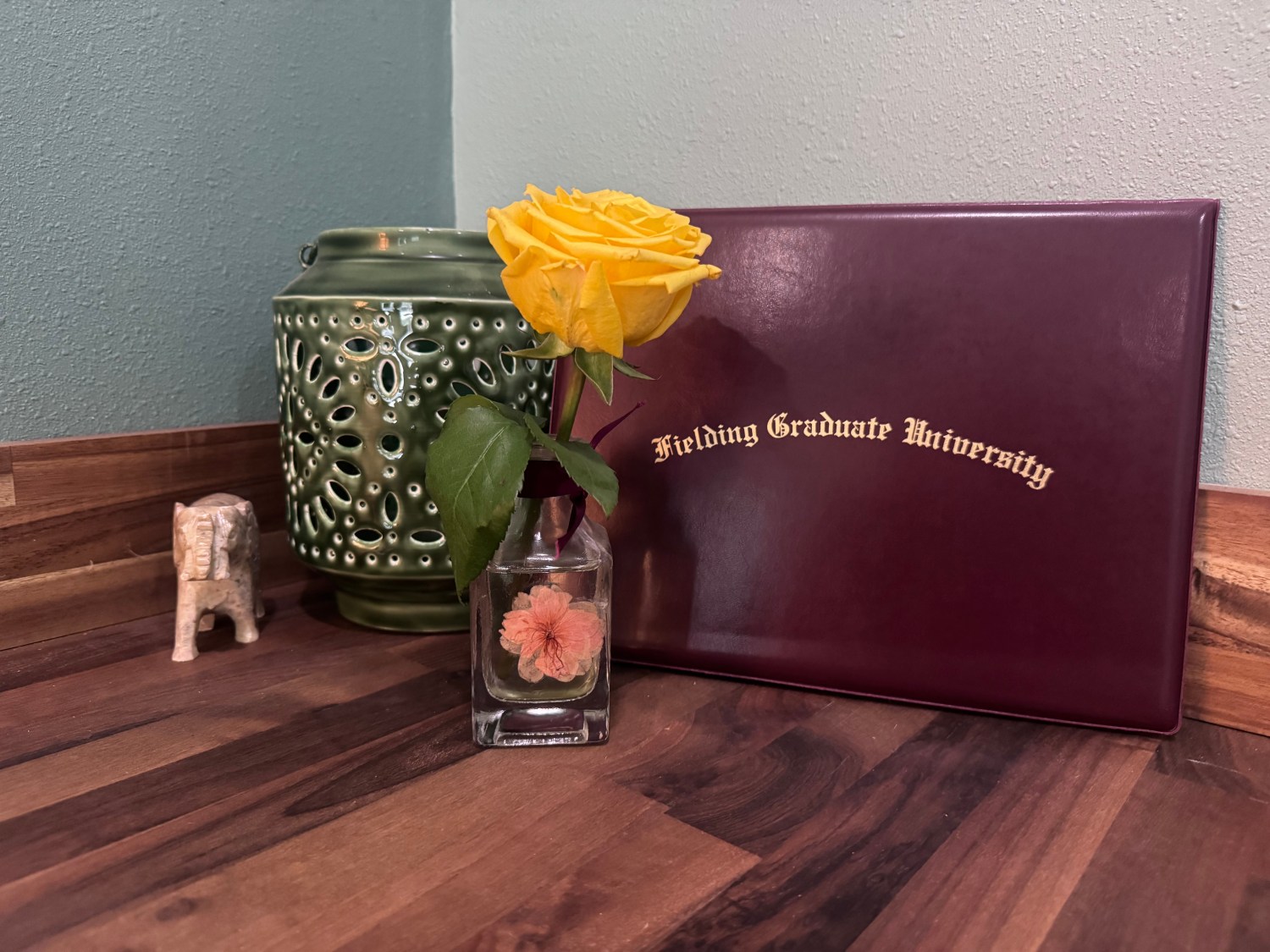
“The tassel was moved. The hood was placed. The degree was conferred. But the real work had already happened.”
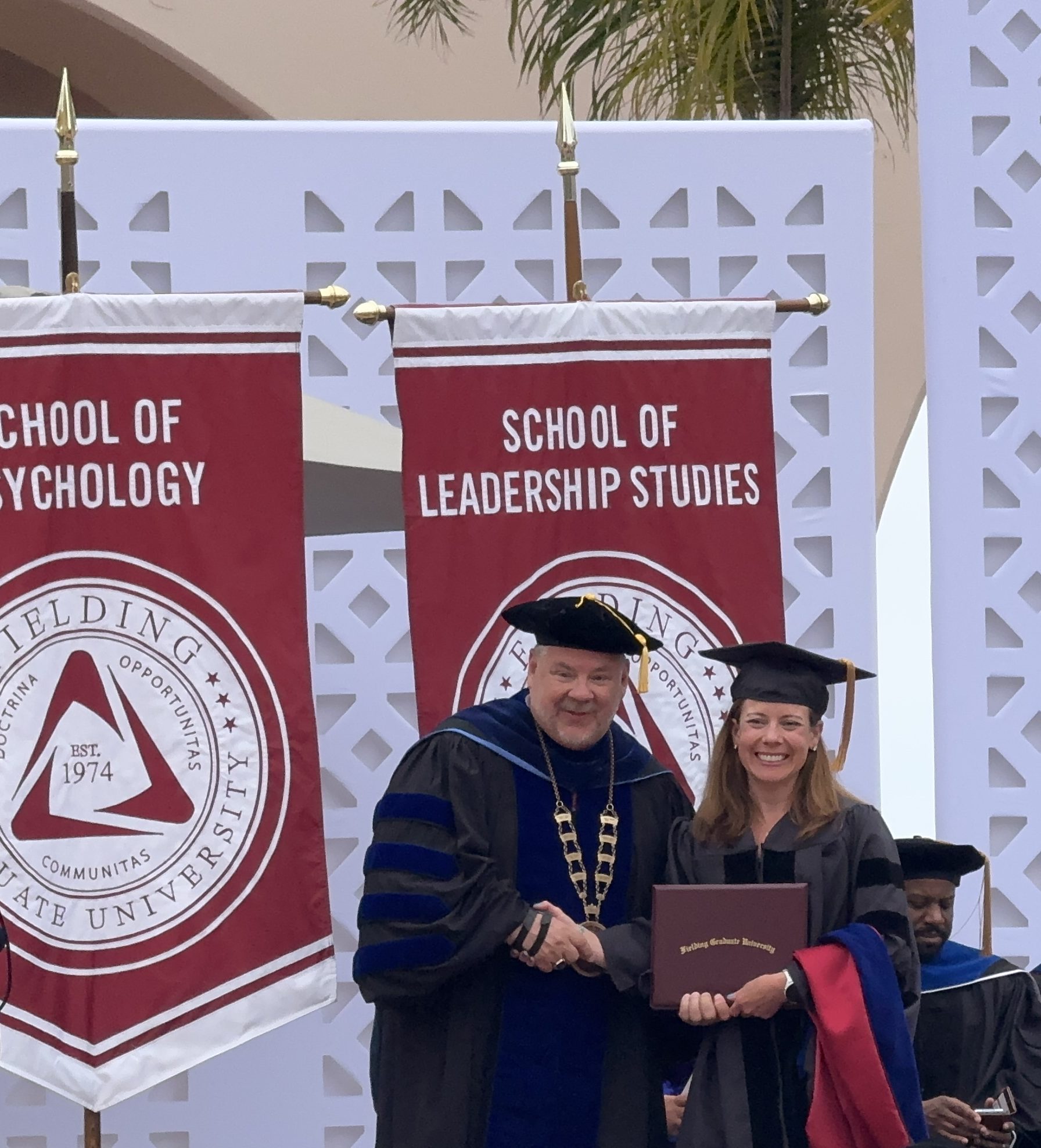
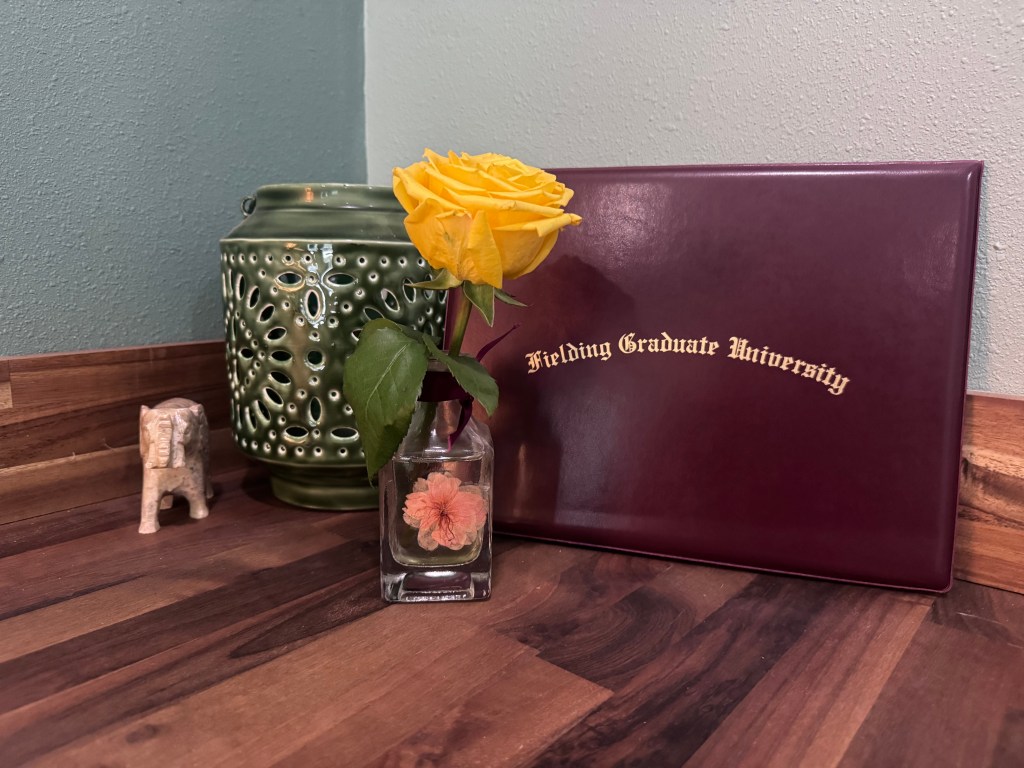
Last Monday, I had the opportunity to say a few words at the Hooding Ceremony for the doctoral graduates at Fielding Graduate University. Standing at the podium, looking out at my fellow graduates, faculty, and family, I realized something that had been quietly unfolding for years. Commencement wasn’t the culmination of my doctoral journey; rather it was simply the public recognition of a transformation that had already taken place. This ceremony was the closure I needed, my kids and husband needed to finally celebrate and close a chapter.
Like many milestones in life, people celebrate the visible moment – the diploma, the hood, the photographs, the applause. What they don’t often see is everything that came before it – the years of uncertainty, the revisions, the questions that changed three dozen times, the moments of wondering whether I had anything meaningful to contribute, the countless drafts, the balancing of work, teaching, coaching, motherhood, and research, THE BECOMING.
The Longest Pregnancy of My Life
Having carried three children, and now one dissertation, I’ve often joked that earning a PhD felt remarkably similar to pregnancy. There was the excitement of beginning. There was the exhaustion of carrying something that seemed to grow larger every month, the anticipation, the discomfort, the endless waiting.
Eventually there comes a point where you’re simply ready to give birth. You no longer worry as much about labor. You just know you can’t stay pregnant forever. This thing must come out!! The dissertation must eventually leave you.
What surprised me wasn’t simply that the dissertation was born, it was realizing how much I had changed while carrying it.
The Children Were Never the Obstacle
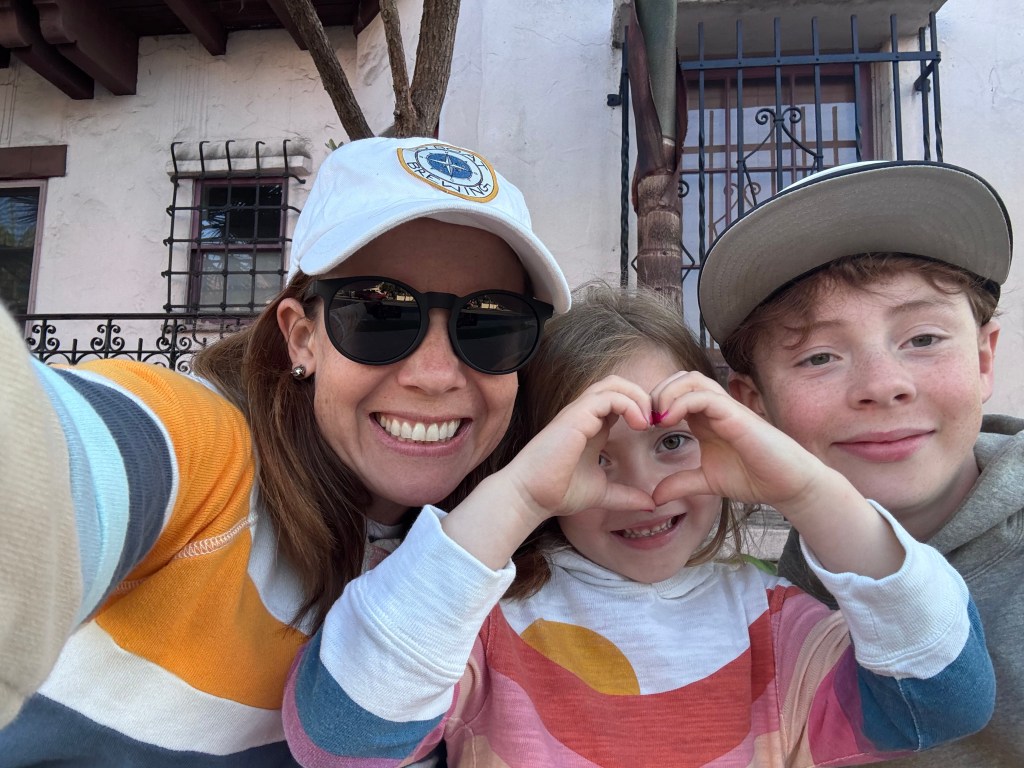
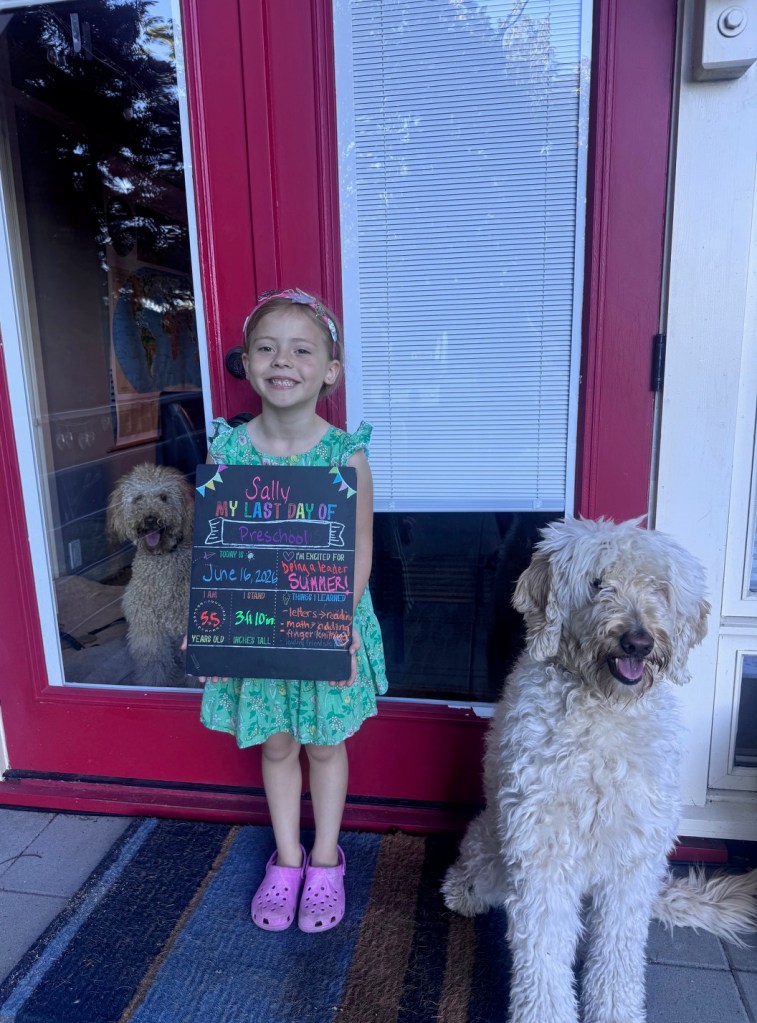
One week after I completed my doctoral coursework, my daughter Sally was born. People often ask how I managed to earn a doctorate while raising three children. The better question is whether I would or could have done it without them.
My children were the inspiration for my question and research, and they became my reason to continue. They watched me wrestle with difficult questions. They watched me revise papers late into the night. They watched me fail. They watched me begin again.
Perhaps the greatest lesson they received wasn’t that their mother earned a doctorate. Perhaps it was seeing that learning never stops, that meaningful work takes time, and that perseverance is often quiet.
Becoming Instead of Achieving
Our culture celebrates achievement – degrees, promotions, awards, crossing finish lines, but those moments are surprisingly brief. Transformation happens much more slowly. It happens in ordinary Tuesdays, in small decisions, in choosing to write another page, to ask another question, and to keep showing up when no one is watching.
Looking back, I don’t think earning the PhD was the greatest accomplishment; becoming the person capable of earning it was.
No One Talks About the Postpartum
What surprised me most wasn’t the journey, it was what happened after. I expected relief, excitement, momentum, like when a weight is lifted from a moving object and the object jets forward like a rocket. Instead, I experienced something I can only describe as postpartum – not with a baby, but with becoming.
The deadlines disappeared. The structure was gone. The identity I had carried for years suddenly shifted. The flowers stopped coming. The congratulations slowed. The question quietly emerged:
Now what?
For over a year, I found myself integrating, not simply the research I had conducted, but the person I had become through conducting it.
I’ve since realized this isn’t unique to earning a doctorate. We experience this after retirement, career changes, children leaving home, major illnesses, divorce, promotion. Every meaningful transition asks us to grieve who we were while learning to become someone new.
What My Research Actually Taught Me
Ironically, while I spent years researching how educators experienced implementing social and emotional learning, my greatest lesson wasn’t about schools, it was about people. Transformation doesn’t happen because someone tells us to change. Transformation happens when we are willing to stay present long enough for something inside us to change.
Whether in classrooms, organizations, families, or our own lives, meaningful growth requires more than knowledge. It requires courage, reflection, connection, and emotional intelligence.
The Beginning, Not the End
Receiving my doctorate felt like crossing a finish line. Looking back now, I think it was actually crossing a threshold.
This journey has deepened my conviction that emotions are not obstacles to growth, they are our guides. They are our universal human language, helping us make sense of change, connect more deeply with one another, and become more fully ourselves. Whether I am coaching a leader, teaching graduate students, consulting with organizations, or writing about the spaces between who we have been and who we are becoming, that belief continues to shape my work.
The diploma hangs on the wall. The dissertation is published. The most meaningful work, however, continues; it is the work of becoming.
I am deeply grateful to my family, friends, mentors, colleagues, faculty, and fellow graduates who walked alongside me throughout this journey. Thank you for believing in me, challenging me, and celebrating this milestone together.
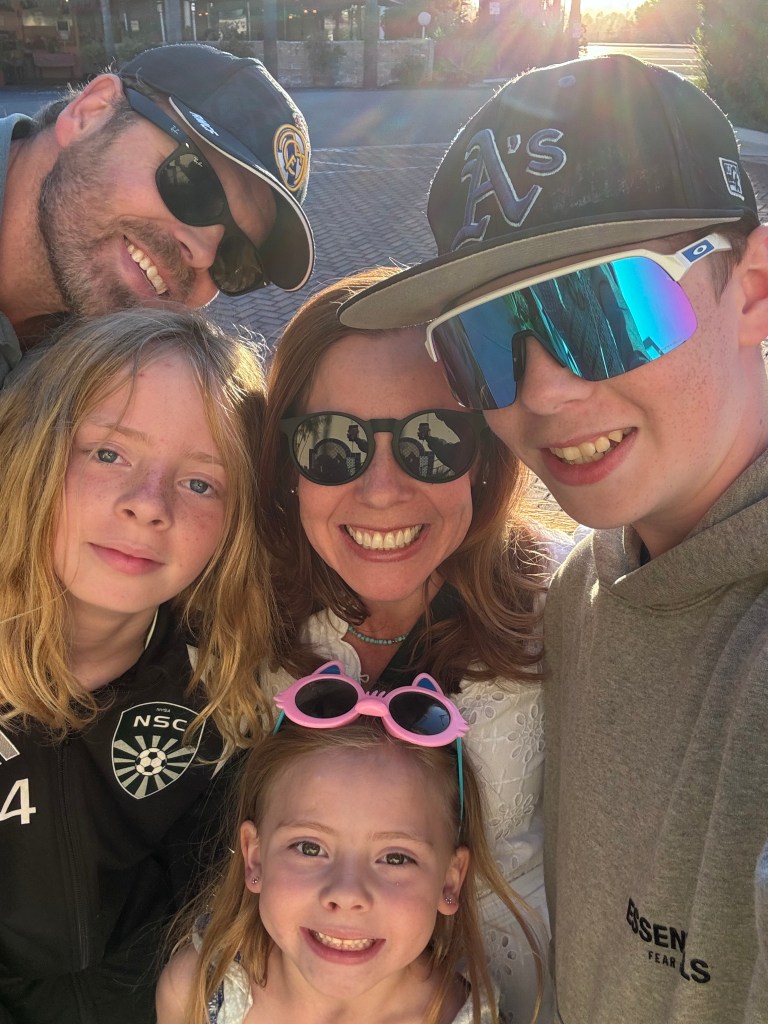
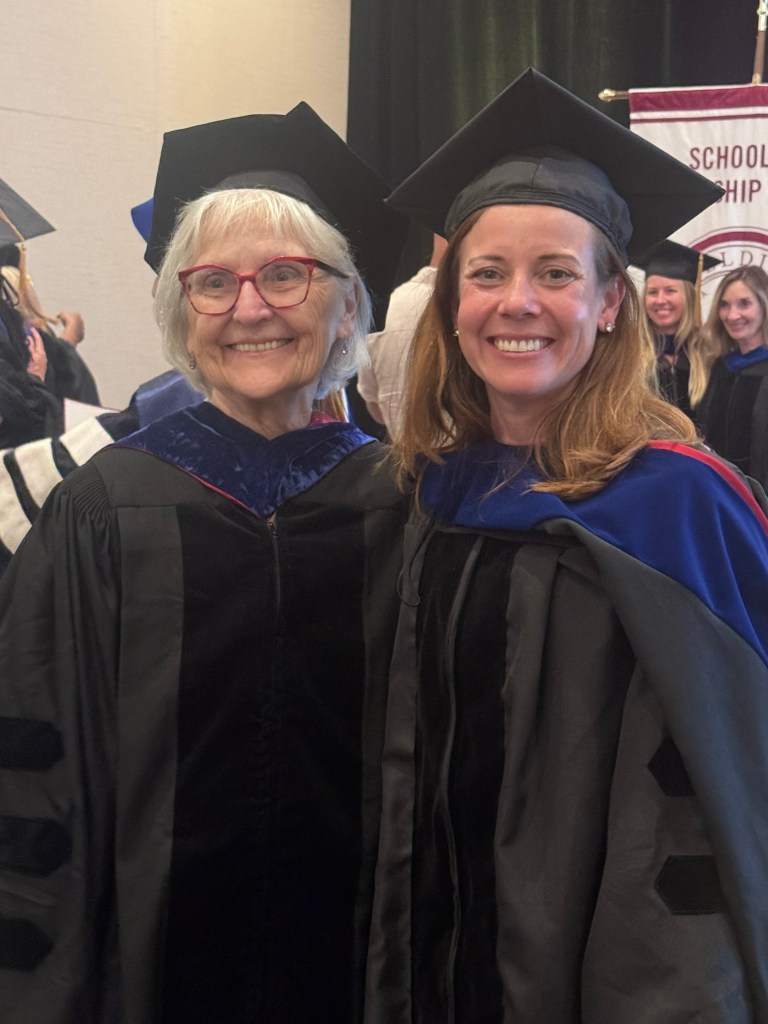
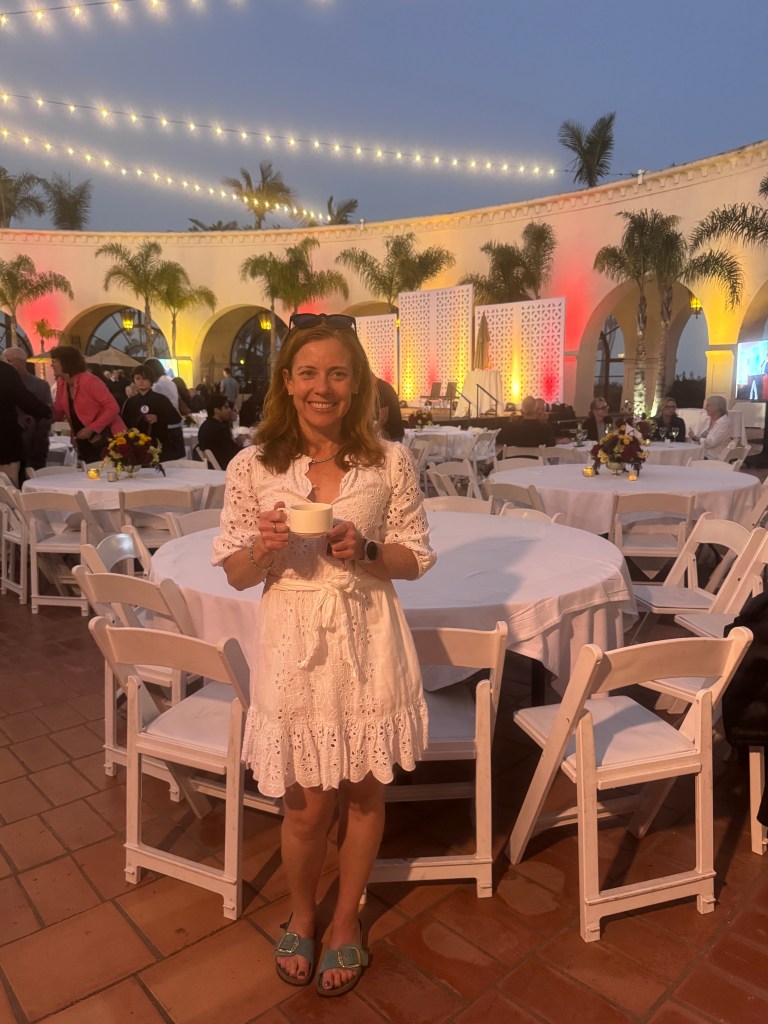
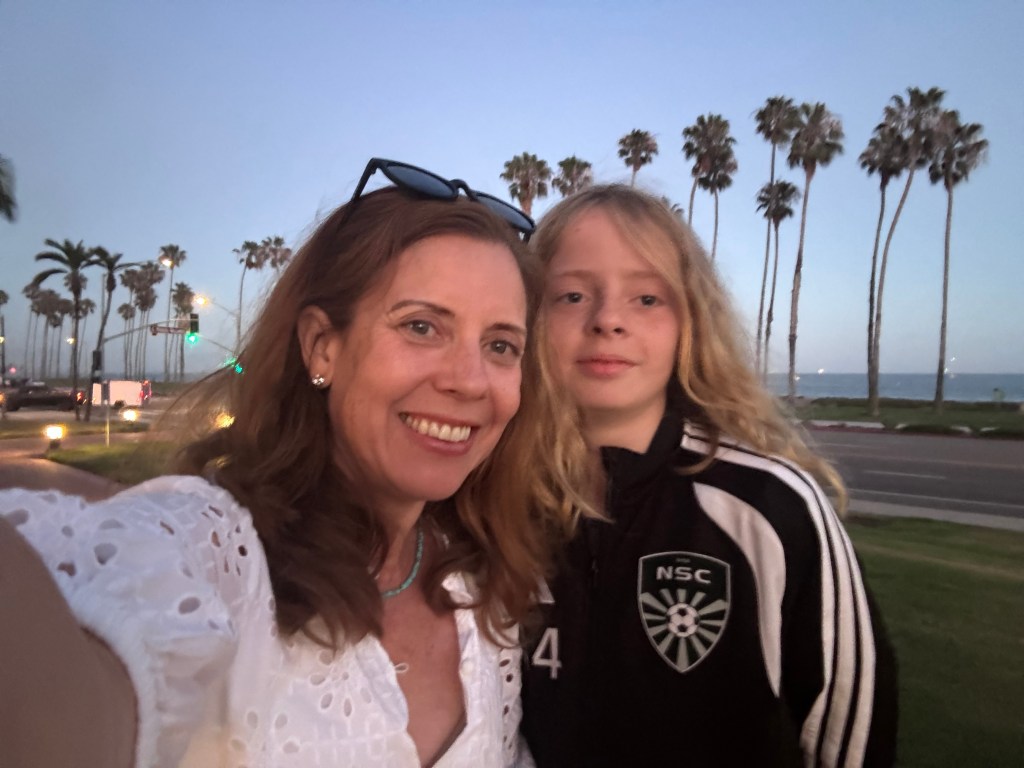
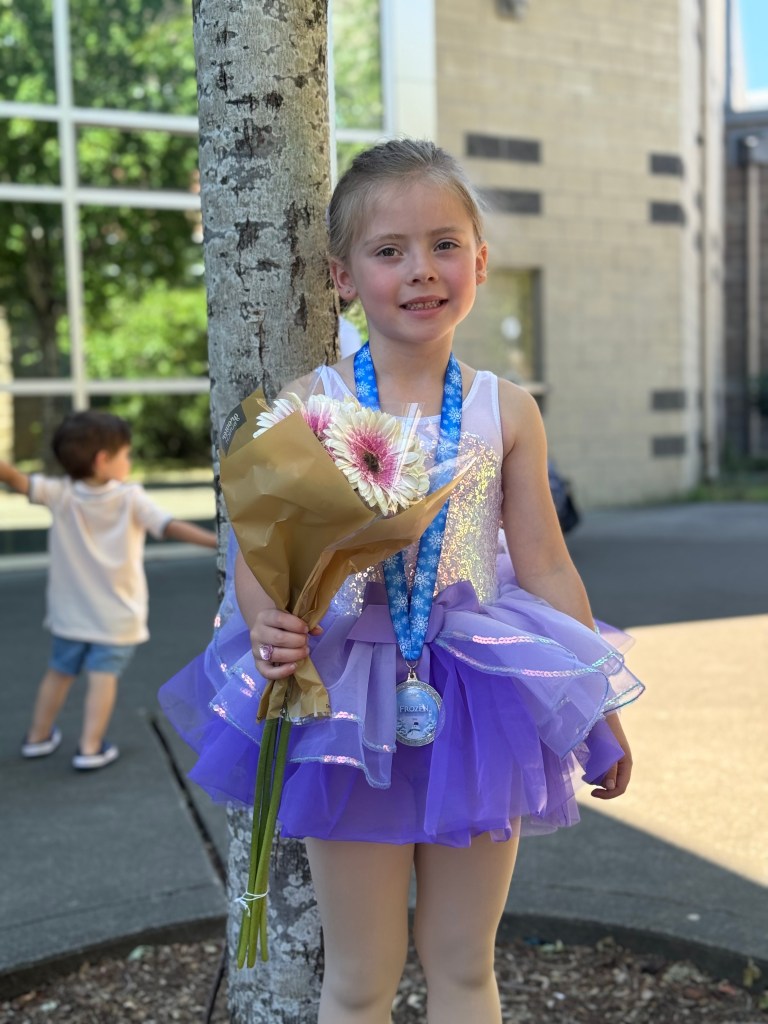
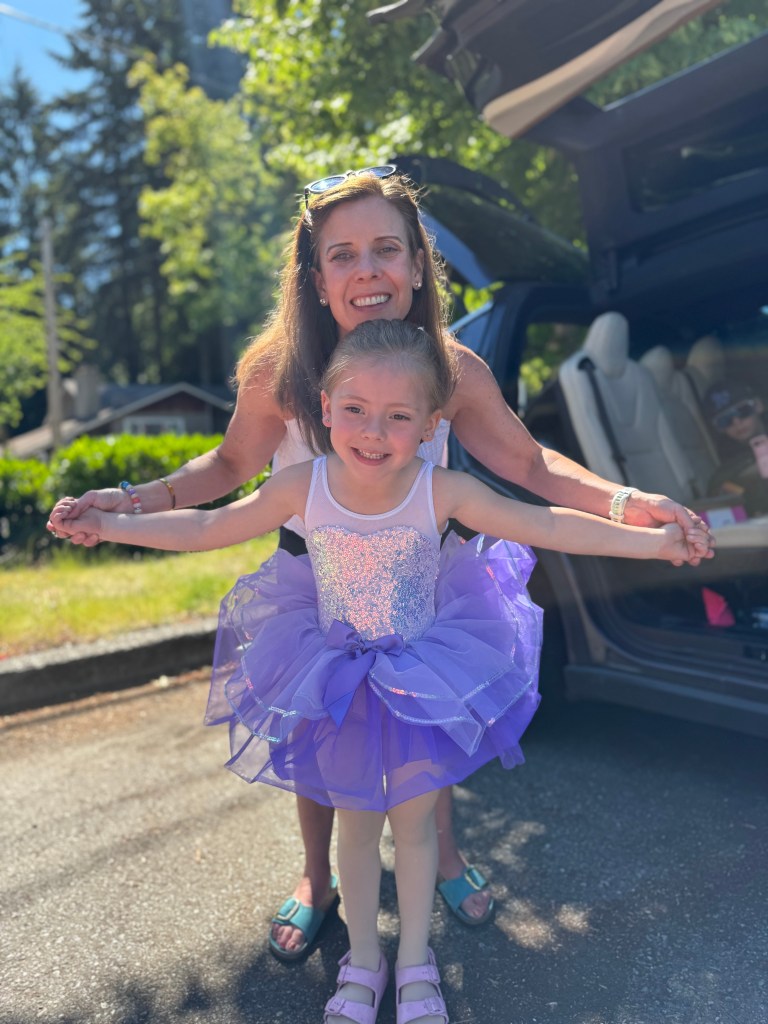
I’ve shared my commencement speech and a few photos from the day below. I hope they offer encouragement to anyone who is carrying something meaningful, even if the finish line still feels far away.
Keep going.
The work of becoming is hard work, but oh so rewarding!
You may be becoming more than you yet realize.
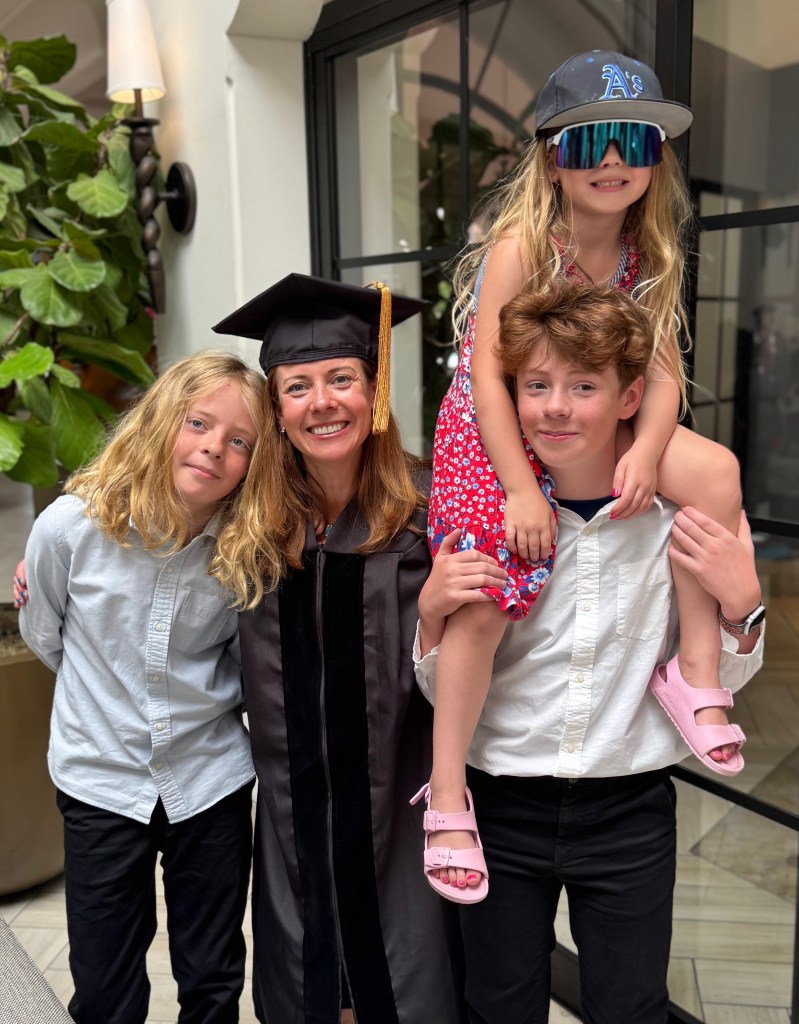
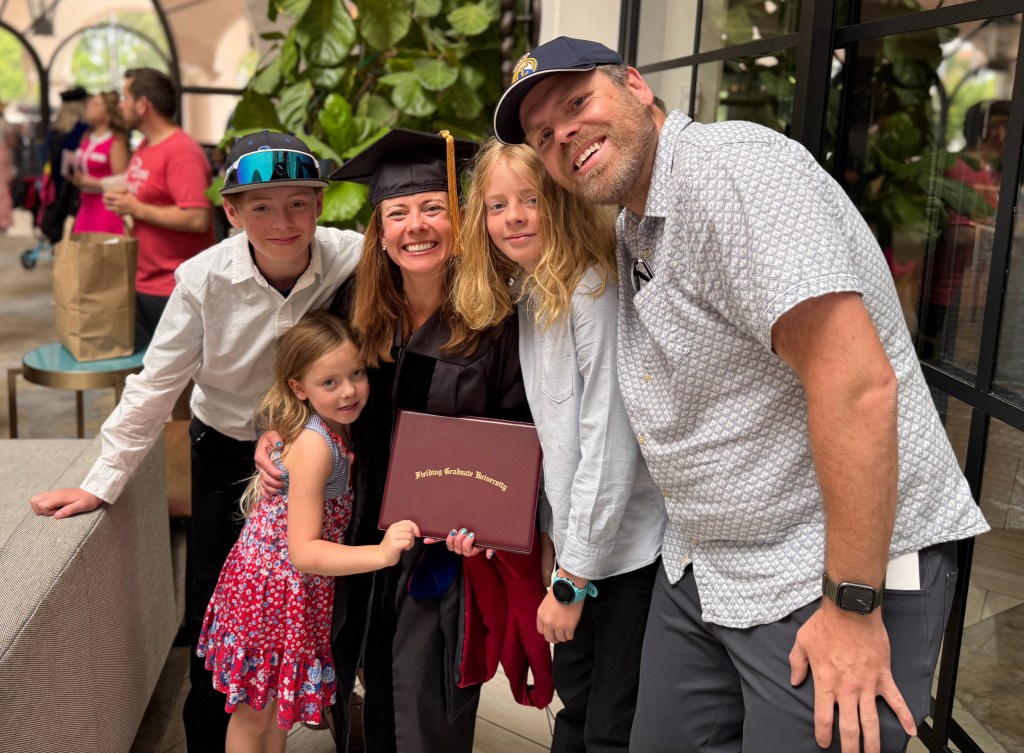
Commencement Speech
When I began my Ph.D., I remember feeling the excitement and anticipation, similar to that of discovering I was pregnant.
There was possibility.
There was hope.
There was this incredible sense that I was about to embark on something that would fundamentally and positively change me.
Of course, like most pregnancies, I had no idea what I was getting myself into.
Not long after beginning the program, our family moved back to Seattle. Then, just as I was settling into coursework and finding my rhythm, the world shut down. COVID changed how we lived, how we learned, and how we connected.
And then, just to make the metaphor literal…I became pregnant.
One week before I finished my doctoral coursework, our daughter Sally was born.
Apparently, one pregnancy wasn’t enough, I decided to have two at the same time. The PhD pregnancy was much, much longer and much, much harder!
I crossed the finish line of coursework with a newborn in my arms.
But anyone who has earned a doctorate knows that coursework isn’t the finish line.
It’s barely the halfway point. In many ways, it is just the beginning!
Then came what I can only describe as the longest third trimester in history.
There was the dissertation proposal.
The research.
The interviews.
The writing.
The rewriting.
The self-doubt.
The moments I was convinced I would never finish.
And FINALLY, the formal oral review.
Only to then return to MORE revisions.
And then…the email, just before the holidays, notifying me that the dissertation had been accepted and I was officially done, my degree awarded 12/15/2024.
Delivery of the PhD baby complete.
Or so I thought.
Because anyone who has had a baby also knows there is life before delivery…and there is life after.
For me, the eighteen months after finishing were my doctoral postpartum.
I was exhausted, recovering and healing, and rediscovering who I had become after carrying this dream for so long.
Without question, this was the hardest, longest, and most challenging pregnancy of my life.
And I have three children…
There were many moments when I wished I had earned my Ph.D. before becoming a mother. I imagined it would have been easier.
But there would not have been the PhD journey without my children. My children weren’t an obstacle to my doctorate, they were in large part, the reason for it.
They shaped the questions I asked.
They inspired the research I pursued.
They reminded me daily why understanding human growth, learning, leadership, and emotional development matters.
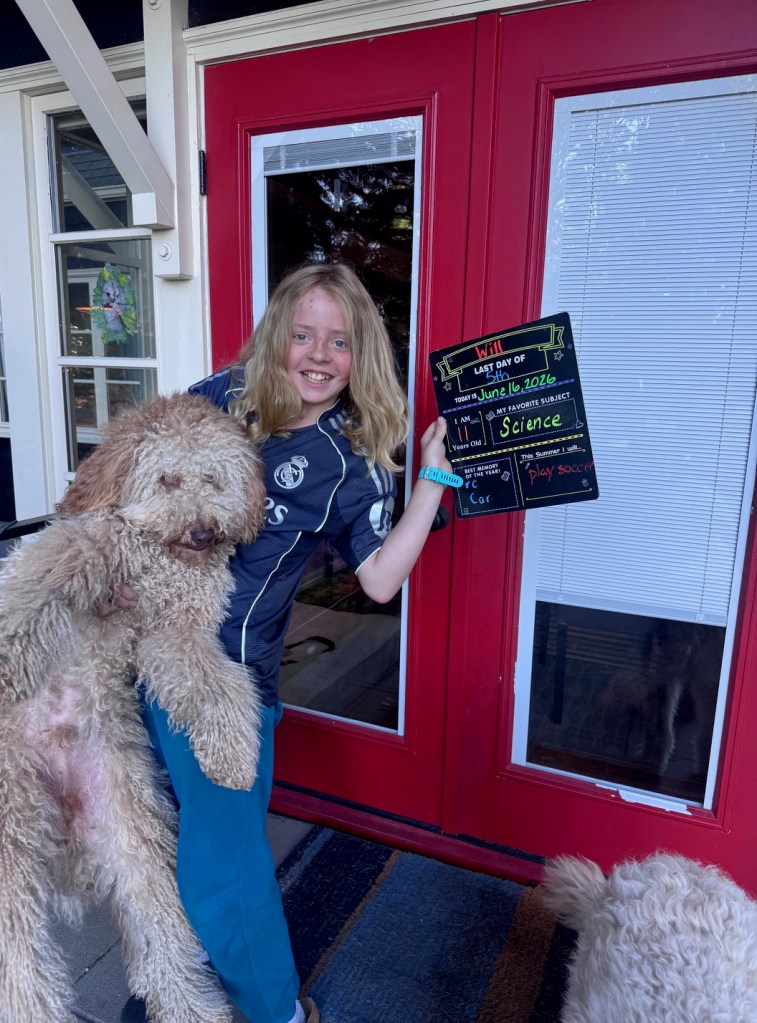
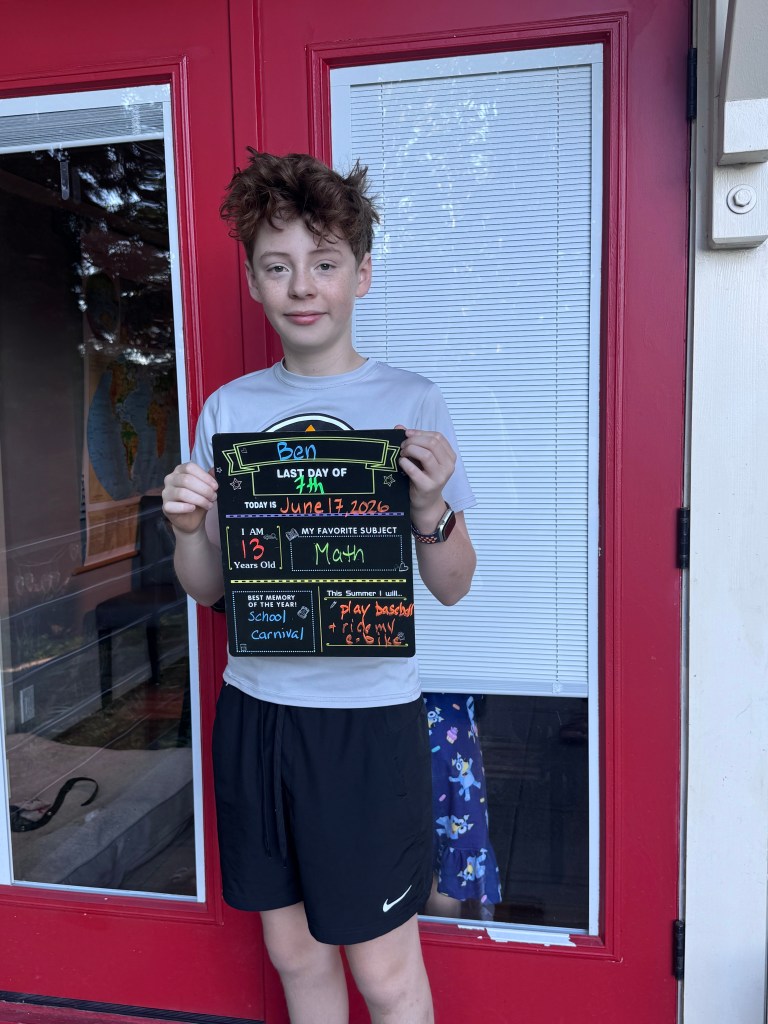
To Will, Ben, and Sally, and my husband, Rob—thank you.
Thank you for sharing me with this dream.
Thank you for the afternoons, evenings, and weekends when school too often had to come first.
Thank you for cheering me on, even when you didn’t fully understand why Mom always had “just one more paper” to write, one more evening at the library, one more game to miss.
I hope what you remember isn’t that I was busy, too busy. I hope you remember that you watched someone keep going.
Because perhaps the greatest lesson this journey gave me wasn’t the degree.
It was the opportunity to model something for my children—and for myself.
That meaningful work takes time.
That growth is rarely linear.
That hard things are worth doing.
And that we are the kind of family who can do hard things.
Thank you to my Student Reader, Jeff Smith, for his faithful humor, and to my External Examiner, Dr. Michael Stramber of Yale University. Thank you to my Committee Chair, Abigail Lynam who saw me through from start to finish, to my Faculty Reader, Frank Barrett who challenged me and asked hard questions, and to my Research Faculty, Dorothy Agger-Gupta, who welcomed me into the program and save me at the end as my birth doula, cheering me on until it was done.
Thank you to my mom who sent my dad, and to my dad for coming when I needed extra help getting my dissertation draft completed. Thank you to my Tia Gloria for coming to help me push through the final stages of the proposal. To my community of family and friends, thank you!
What hard things will we take on next?


What parts of childhood were never meant to be left behind?
Many of us spend adulthood acquiring skills – competence, expertise, responsibility, productivity, planning, efficiency. Adulthood, however, often asks us to recover things we once had naturally. I refer to this stage of adulthood as “unbecoming,” a time of reacquainting ourselves with our inner voice, which we could more clearly hear as children, the voice that knew who we were at our core. This is a shedding of the “shoulds” we’ve taken on, beliefs and influences we’ve absorbed that never belonged to us and weren’t really meant for us. Last month, I explored the idea of growing pains. This month, I explore some of the aspects of childhood that might help to soothe the growing pains of adulthood.
Not everything from childhood should come with us, of course, but some things absolutely should, like that inner confidence and knowing. These moments of uncertainty in adulthood are opportunities that invite us to get back in touch with ourselves, with our inner voice, and our inner child that could see uncertainty as possibility.
As children, we naturally possessed many of the capacities that help humans navigate uncertainty: curiosity, wonder, imagination, play, experimentation, resilience, presence, and the belief that things can be created. As adults, we often trade these capacities for certainty, control, expertise, and predictability. Yet when life becomes uncertain, as it inevitably does, we discover that the skills we need most are often the ones we left behind.
Some of my favorite memories from childhood were making forts and structures, stories and adventures out of blankets, a box, or the mud. Taming the tall weeks with a path through them to create a hidden sanctuary. As a kid, I moved quite often, so there was often a good box to be had. I loved creating an outdoor kitchen or house, creating a space of my own where I could anchor and escape into a world of my own. In times of uncertainty, I found my creativity.
Have you ever noticed that children run toward uncertainty? Children don’t know what they’ll find in the woods. That’s why they go. And then we grow up. Adults don’t know what they’ll find in the woods, that’s why they often stay home.
Children ask questions constantly. Their curiosity is one of their childhood gifts. “Why? Why? Why?” they ask, not because they need certainty, but because they are fascinated and want to learn about the world around them. In adulthood, there is a clear shift. Adults often seek answers more than questions, making assumptions rather than getting curious. As adults, we want plans, guarantees, predictions (reliable ones), and certainty. Curiosity, however, may be one of our greatest tools for navigating uncertainty.
Another gift of childhood is our imagination. Imagination transforms uncertainty into opportunity and possibility. Children see possibilities everywhere, creating a sword from a stick, a castle from a blanket, or, like me, building a kitchen from spare boxes. Adults, on the other hand, become constrained by what already exists. We stop imagining what could be and start thinking we need to work within the boundaries of the systems already in place.
Experimentation and our willingness to be scientists exploring the world is another gift of childhood. Children do not expect mastery; they expect to try and fail and try again, experimenting with movement and speech and song and dance and everything new, and everything is indeed new! They fall, and they try again. They build and rebuild, learning and refining and changing and growing. As adults, we often expect ourselves and one another to know, to get it right, to avoid mistakes. What might shift if we continued to consider life a series of experiments? I often think of life as small experiments represented by A + B = C, where C is the outcome, the experience, the impact I want, and I am A. What can I change or shift about myself and that which is in my control in order to shift C, in order to have the outcome, the experience, the impact I want to have? Feedback is data for creatively designing the next experiment.
Children know how to play! Many adults, including myself, too often associate play with frivolity. Neuroscience, however, links play consistently to learning, creativity, innovation, resilience, and connection. Play frees us from the constraints placed upon us and gives us energy, both necessary to thinking in new ways and to becoming new beings, adaptable and curious.
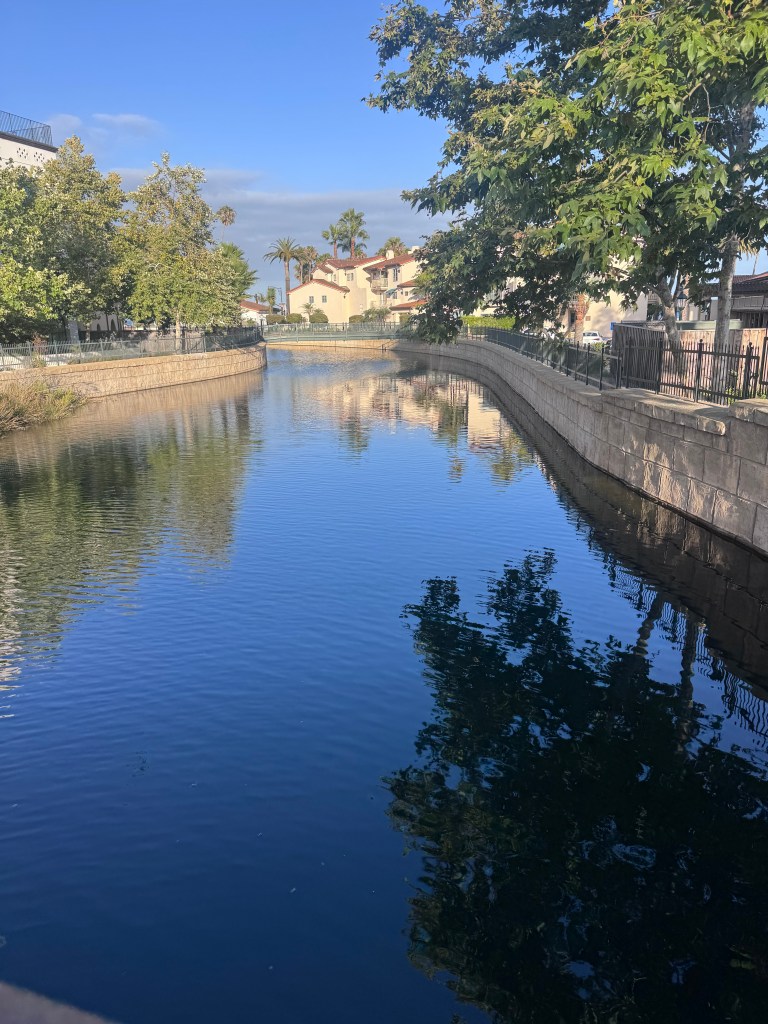
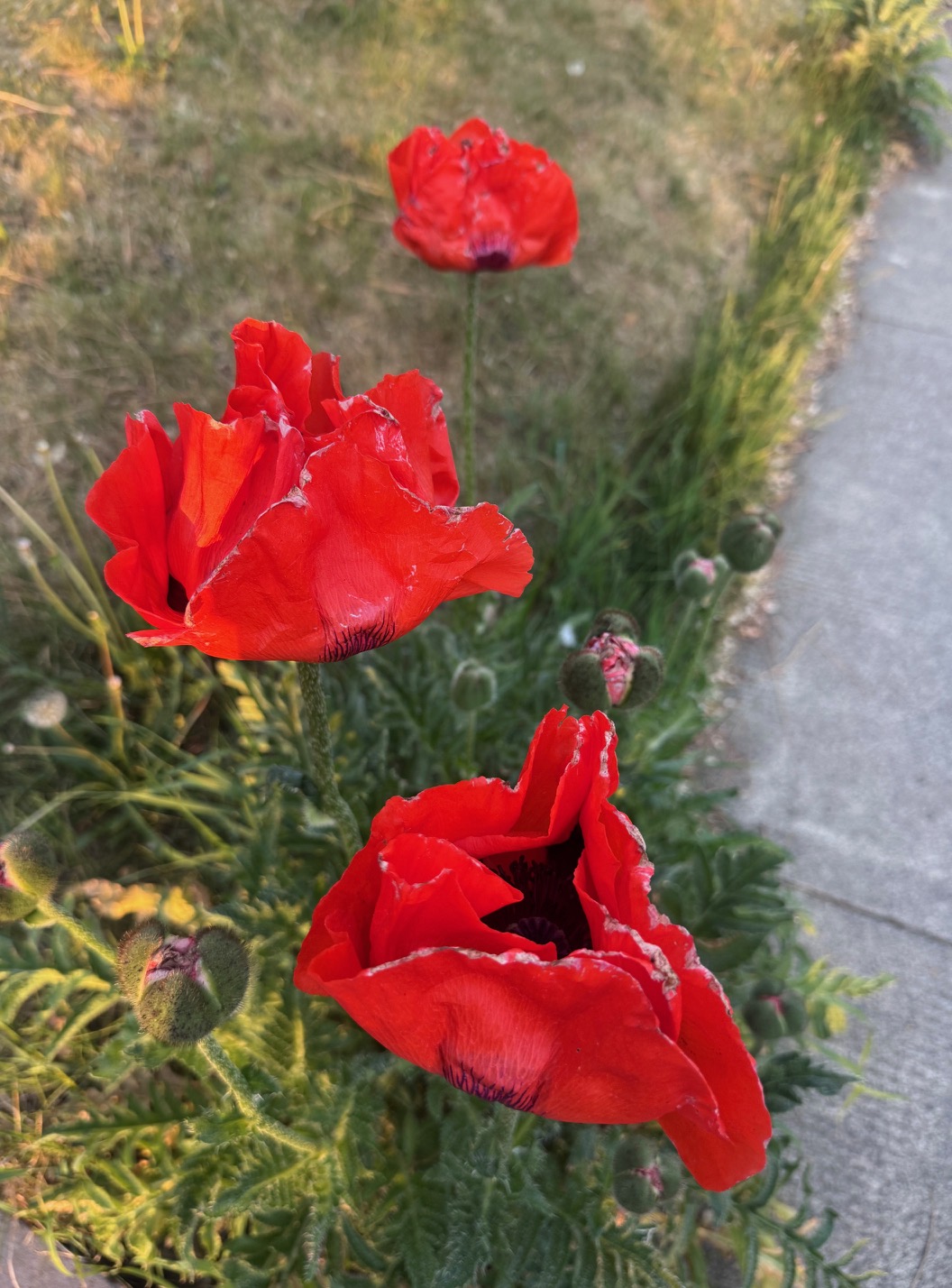
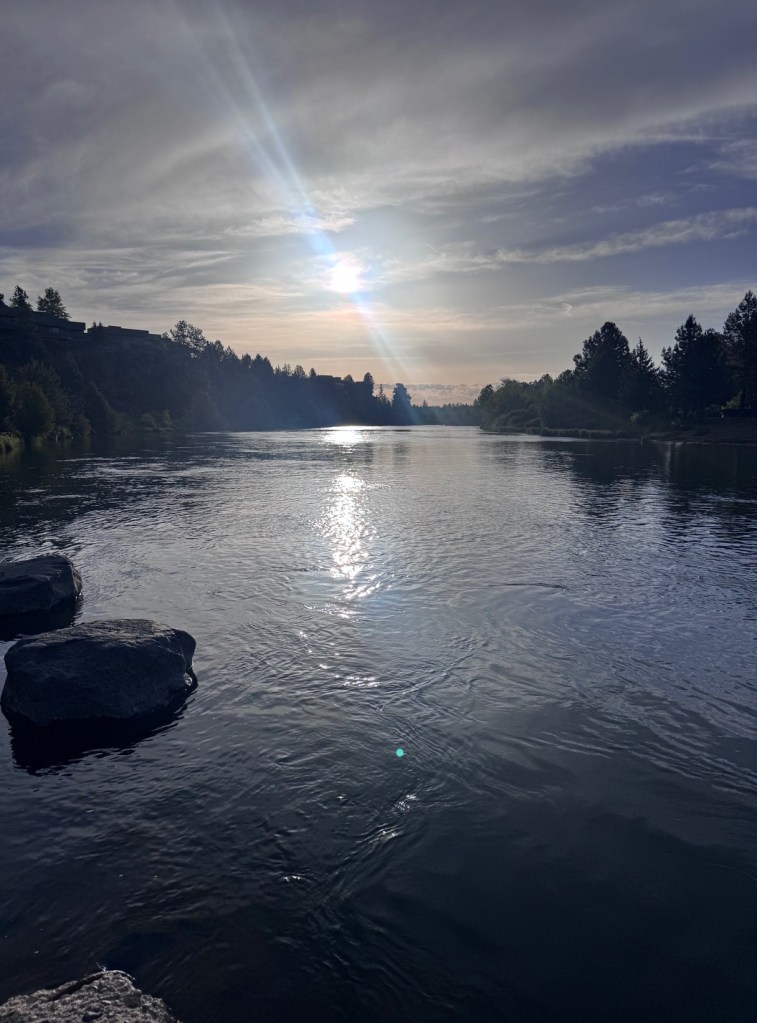
Children are remarkable at being present! As I mentioned when I wrote about my trip to Spain with my son, Will, one of my favorite characteristics of Will in particular is his ability to be fully in the moment and to appreciate the everyday aspects of life like a flower, the way the light hits the water, the sunset, or a ripple in a fountain. Children are what they are without expectation or apology. Adults spend countless hours and energy replaying the past and trying to predict the future, anxiously rehearsing for every scenario.
Children have a knack for believing even in the things they cannot see. They believe anything is possible. They believe they can and will learn and grow. They believe they are creative and capable.
Life teaches us caution, but caution and possibility do not need to be enemies. Perhaps uncertainty feels so uncomfortable because it asks us to put down some of our favorite adult tools and requirements of certainty, expertise, and control, and instead pick up some of our childhood tools and gifts. Childhood curiosity, wonder, play, experimentation, imagination, presence, may just be the keys to solving our complex adult problems, not because they call us to be childish, but because they allow us to become whole and to take with us, the tools from our past that will continue to serve us throughout our future.
Maybe the goal of adulthood isn’t to leave childhood behind. Maybe the goal is to carry forward the parts of childhood that help us remain creative, adaptable, courageous, present, capable, and fully alive.
Reflective Questions:
What part of childhood still serves you today? What if curiosity is more useful than certainty? What questions are you no longer asking? Where have you replaced wonder with assumption? What would change if you approached this season of life with curiosity instead of judgment? What possibilities have you stopped imagining? What if your next chapter doesn’t exist yet because you’re meant to create it? Where have you mistaken familiarity for reality? What have you stopped doing because it wasn’t productive? What brought you joy before achievement became the goal? What if play isn’t the opposite of work? What if play is the source of our best work? How much of your life is happening right now? What are you missing while trying to predict what comes next? What did your younger self believe that your adult self has forgotten? What dream deserves a second look? What possibility have you dismissed too quickly? What part have you unintentionally left behind? What would it look like to reclaim it? If uncertainty is the invitation, what childhood gift is it asking you to bring with you? What if this moment is enough?






“Underrated life advice:
Schedule your fun first. The vacation. The dinner. The concert. The weekend trip. Put joy on the calendar before work fills it. Most people work first, play with what’s left. There’s never anything left. Book fun like meetings. Treat joy like obligation.”
~ Scott Clary ~

Certain About Uncertainty: Build Resilience, Gain Confidence, and Thrive in a Chaotic World | John Austin, PhD
What Amazon Has to Say:
Uncertainty is not a passing phase. It’s the defining condition of modern work. For many mid-career professionals and leaders, the pace of change has accelerated beyond what their old playbooks can handle. These leaders are skilled, experienced, and relied upon by others, yet they still feel the strain of constant disruption and the pressure to make decisions in environments where the ground never stops shifting.
They’ve tried planning harder, working smarter, mastering productivity tools, and relying on the expertise that once guided them. But these familiar strategies often increase anxiety instead of easing it, leaving them frustrated, overloaded, and unsure how to lead themselves or their teams through the fog of uncertainty.
Certain About Uncertainty offers a new path forward—one built on a learnable set of capabilities John Austin calls uncertainty intelligence. Instead of treating unpredictability as a threat to control or avoid, Austin shows how to build true confidence by strengthening three core, learnable skills: anticipatory awareness, adaptability, and learning agility. These principles don’t eliminate uncertainty rather they teach you how to navigate it with clarity, competence, and steadiness.
Drawing on decades of research, teaching, and work with leaders in fast-changing fields, Austin introduces original tools that cannot be found in other books on decision-making or change, including uncertainty vectoring, situated expertise, and the three translation moments—practical frameworks designed to help you navigate complex situations with clarity and competence.
Inside, you’ll learn:
· How to map uncertainty more accurately using uncertainty vectoring.
· Why your past expertise may fail and how to update it effectively.
· How teams can build collective resilience through situated expertise.
· What causes good ideas to break down in practice and how to prevent it.
· How to shift from anxiety to capability, even in fast-moving environments.
If you want to feel steady in chaos, lead with confidence, and build the skills needed for a constantly changing world, Certain About Uncertainty will show you how.
My Thoughts:
The Adventure of the Unknown – Igniting Curiosity and Wonder
This book came at the perfect time! I have been sitting in my own spaces of uncertainty post-PhD, and living in an uncertain world. I, myself, have been pondering the concepts of fog and its gifts. Certain About Uncertainty offers a compelling reframe of uncertainty, not as something to eliminate, but as a fundamental condition of life that can fuel growth, creativity, and resilience. I especially loved the visual metaphors of childhood explorations and the call to hold onto the parts of childhood that serve us throughout life, particularly our childhood ability to see adventure and possibility in the unknown. As Austin writes, “Every challenge invites us to choose wonder over worry,” and “Certainty, for all its comfort, is a dead end. Uncertainty is where life happens.” These ideas come to life through the powerful image of the fog: “I choose to run into the fog now, not avoid it… it’s where we discover capabilities we didn’t know we had,” and “The future is foggy… It’s magnificent. It means we get to write the story as we live it.” Thoughtful, imaginative, and actionable, the book introduces “uncertainty intelligence” as a set of capacities – adaptability, learning agility, and awareness – that help us move from fear of the unknown toward a more curious and empowered relationship with it. With these capabilities, Austin challenges us with his own reframe, to embrace the fog, to “run into the fog” with fearlessness and enthusiasm, to create the future we imagine just as we once built forts in the woods, vast creations from playdough, and stories in the clouds. Thank you for this poignant reminder to see the possibility in the unknown, and to bring with us into adulthood, the aspects of our childhood that will forever serve us – curiosity and the excitement to create!
How Your Origin Story Runs Your Change Program | Ron Carucci | Modern Change Management & Leading Change
Change Signal: Modern Change Management That Works | Hosted by Michael Bungay Stanier
From the Host:
Change management, as most of us were taught it, assumes a linear path: a clear “from,” a clear “to,” and a plan to get there. In this conversation, Ron Carucci makes the case that those days are over. For leaders running complex change in large organizations, the real work now is less about managing transitions and more about building readiness for constant uncertainty.
Ron and I explore why so many well-designed transformations stall — not because the strategy was wrong, but because the leader’s inner patterns were never examined. He introduces the idea of “origin stories”: early narratives that shape how leaders set standards, respond to resistance, and tolerate risk, often without realizing it.
We also unpack Ron’s three-domain model of transformation: work within the leader, between people and teams, and among the systems of culture, strategy, and governance. Miss one, and change quietly unravels. This is a practical, humane, and slightly uncomfortable conversation for experienced change leaders who want results that actually stick.
Here are three questions that arise from this Change Signal conversation with Ron Carucci:
Change Signal. Cut through the blather, the BS, and the noise to find the good stuff that works in change. If you’re a transformational leader seeking modern change mastery, you’re in exactly the right place.
My takeaways:
“Find the stories about who we were and write the stories of who we want to be.” This call from Ron Carucci has stayed with me.
Change readiness is no longer optional. We are always standing on a frontier, and the line is always moving. Leaders today are constantly navigating uncertainty. Navigating the unknown requires more than resilience, it requires self-awareness. It requires knowing who we are and understanding the stories we carry with us. Many of those stories were written long ago. They shape our decisions, our cultures, our strategic choices, our willingness to take risks, and our capacity for change. These are our “origin stories.” What has shaped us as people has shaped us as leaders.
How did we develop our beliefs about change and transformation? Success and failure? Risk and safety? How do those beliefs continue to script our leadership today?
The stories we told ourselves as children, the patterns, behaviors, habits, and beliefs we developed to navigate our earliest experiences, often served an important purpose. They helped us make sense of the world and protect ourselves. But what once served us may no longer serve us. The challenge is first, learning to recognize the lens through which we see the world. What narratives did we create to survive, belong, or succeed? And second, to determine, do those narratives still support us, or do they now limit us as leaders?
Carucci shares a powerful story about a leader named Andy, whose childhood experiences shaped beliefs that initially contributed to his success but eventually became liabilities. The ways we were criticized and the ways we learned to criticize ourselves often become the internal voices directing our decisions decades later. Those voices may have protected us when we were young, but they are not always cheering us on as adults.
Our shadows don’t remain personal. They show up in our leadership. They influence the cultures we create, the teams we build, and the organizations we lead. In fact, we are often drawn to cultures that mirror our own narratives and reinforce the beliefs we hold about ourselves.
Uncovering these origin stories is not easy. People naturally resist examining the narratives that have guided them for years. To navigate that resistance, leaders must first earn trust, and find the space to trust, both in themselves and in others.
Carucci describes transformation occurring across three levels:
Within – the transformation that occurs within the leader.
Between – the transformation that occurs in the spaces between people, teams, and functions.
Among – the transformation that occurs at the systemic level through culture, strategy, governance, and organizational structures.
Real change requires attention to all three.
Another reminder that resonated deeply with me: there is no failure, only data. Change is messy. Life is messy. The goal is not perfection; it is curiosity. Be mindful of the shame you may be projecting onto yourself or others. Notice your reactions. Get curious about them. The data is often in the discomfort.
One of the most powerful insights from the conversation was this:
“Everyone wants the revelation to be the redemption.”
Revelation, however, is not redemption. Revelation is simply the beginning. Awareness creates possibility, but it is the choices and actions that follow that create transformation.
And finally, it is important in creating the environment for change to thrive and survive, to prepare the system for the journey. The changes we make within ourselves inevitably affect those around us. As leaders, we cannot assume our growth happens in isolation. The shifts in our beliefs, behaviors, and identities ripple through our relationships, teams, and organizations. If we are asking others to navigate change, we must prepare them for the journey we are on as well.
Perhaps leadership transformation begins with a simple but challenging question:
What story helped me become who I am, and what story do I need to write next?

~
You can sign up to receive my Three Thoughts for Thursday post as an email on the third Thursday of every month by clicking here. If you’ve missed any of my Three Thoughts, you can find them all on my blog. If you enjoyed this post, take a look at my recap of 2025 in December’s Three Thoughts and May’s Three Thoughts for Thursday. Also, take a look at my posts that featured other books on this topic of staying in your own lane, including February 2025’s post, “Growing from the Inside Out,” featuring The Courage to Be Disliked, and April 2025’s post, “Presence and Balance,” featuring the book Don’t Believe Everything You Think. You may also be interested in reading some of my other recent blog posts, like the four-part Lessons of the Run series –Endurance, Resilience, Rest, and Grit. Take a look at my latest post, The Gift of the Fog, and “YOU are the MISSING Piece!”
If you are interested or know someone who may be interested, I also offer leadership and emotional intelligence coaching and workshops. You can find more information on my website, or you can use this link to set up a free 30-minute introduction to coaching session.
I have partnered with my fellow Education and Coaching colleague, Dr. Joan Flora, to offer a new experience we are calling The Empathy & Attunement Studio. This new endeavor seeks to create space to take emotions and experiences to the “studio” to build and practice new tools and create new outcomes in emotionally charged conversations and relationships. This space explores emotions and their purpose, the information they hold about our human needs, and how we can learn to respond with intention and integrity instead of reacting and regretting. We are offering monthly Open Houses and Studio Practice Space where you can learn more and dive into creating new outcomes.
Come check out what we’re up to at The Empathy & Attunement Studio ~ Where Emotional Awareness Becomes Purposeful Action!
I also have the privilege of hosting the Emotional Intelligence Special Interest Group for ICFLA. We kicked off our 2025 explorations and learning journey on February 25th with guest Dr. J.D. Pincus of AgileBrain, who walked us through The LA Wildfires through the Lens of Emotional Needs: Coaching in Times of Loss. On Tuesday, June 24th, we both revisited and explored emotional intelligence in coaching through our topic, Emotional Intelligence Foundations for Coaching and Workplace Impact, with guest Maribel Hines, MBA, SPHR, CPLP. Maribel offered her insights, wisdom, and perspective through her in-house leadership and coaching and EQ practitioner lens. It was a great session as we translated theory and emotional intelligence into action and impact! Our August 26th session with Dr. Joan Flora focused on From Reactivity to Resilience: Coaching to Soften Reactivity and Strengthen Resilience. Our final session for the year was on Tuesday, October 28th, with guest speaker, Nicole Venner, who created space to explore, discuss, and practice ways of holding space for Emotional Intelligence in Threshold Spaces.
Please consider joining us for the ICFLA EI SIG in 2026! We began the 2026 series on February 24th with Re-grounding Coaching in Emotional Intelligence: Foundations That Deepen Presence, Insight, and Impact. In April, Elena Sarango-Muniz joined us to share on the topic of The Art of Approachability – Build Bridges, Create Connections, Unlock Possibilities. Please join us June 23rd by registering here for a presentation and conversation with Erika Parker Price, on the topic of What AI Can’t Do: The Case for Human Skills.
If you are interested in joining and co-creating these learning communities, please use the links above to learn more about The Empathy & Attunement Studio, ICFLA’s Emotional Intelligence Special Interest Group, and BrainByDesign, and email me to learn more about future Women’s Events. I hope you will come along for the journey!
I’m always looking for new inspiration, new books to read, and new podcasts to listen to, so please send your suggestions my way or comment on this post to offer some new recommendations!
Wishing you a season of looking inward with curiosity, integrating the lessons and gifts that have shaped you, and creating impact through the stories you choose to write next. May you reconnect with the parts of yourself that have always known how to navigate uncertainty with wonder, imagination, experimentation, and trust. As you move through the fog, may you remember that the future is not something to predict, but something to create. Create something authentic, aligned, and fabulous! Thank you for being a part of my journey!
As always, thank you for your continued support and readership! Stay strong, stay brave, stay true to you!

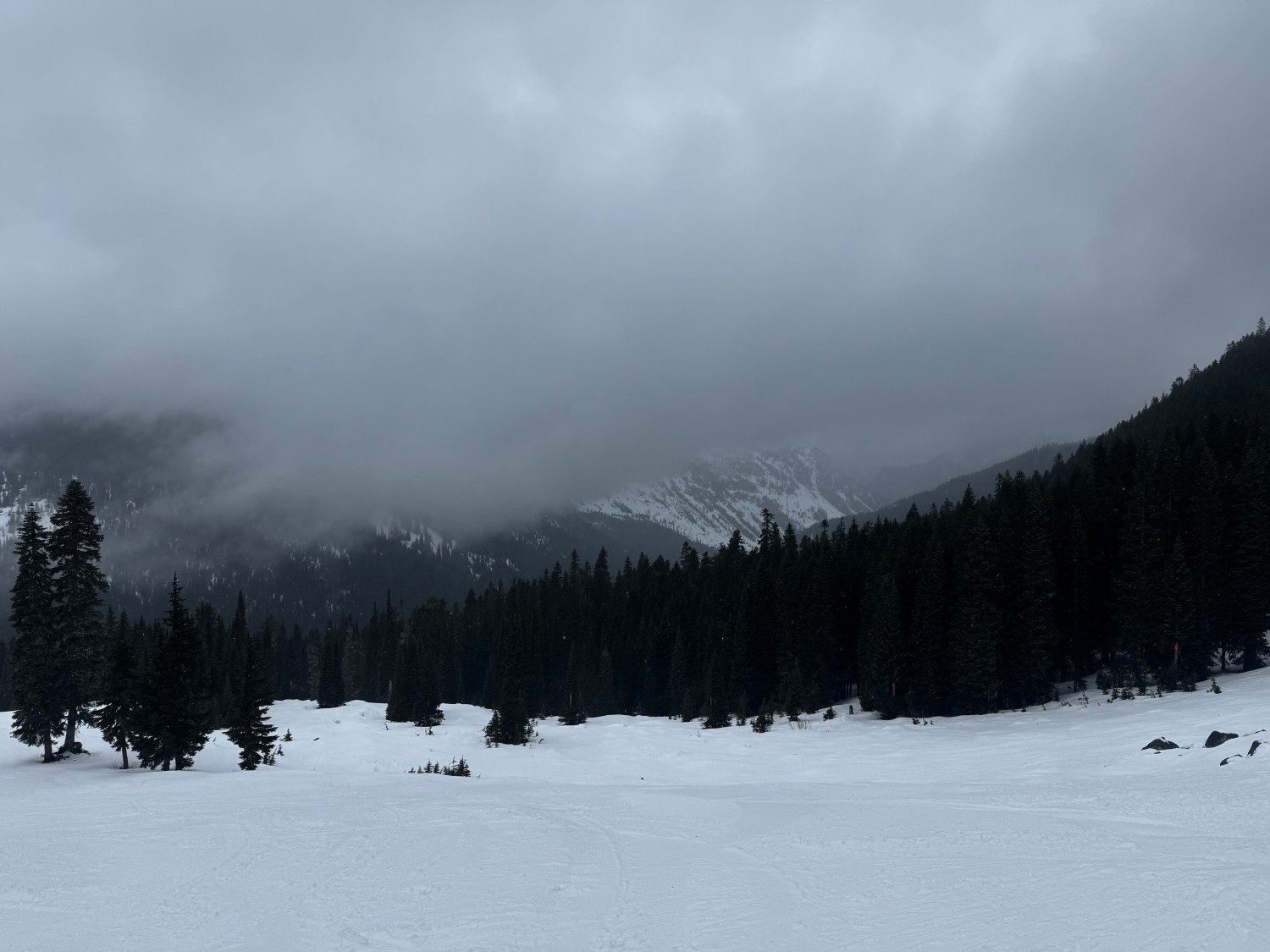
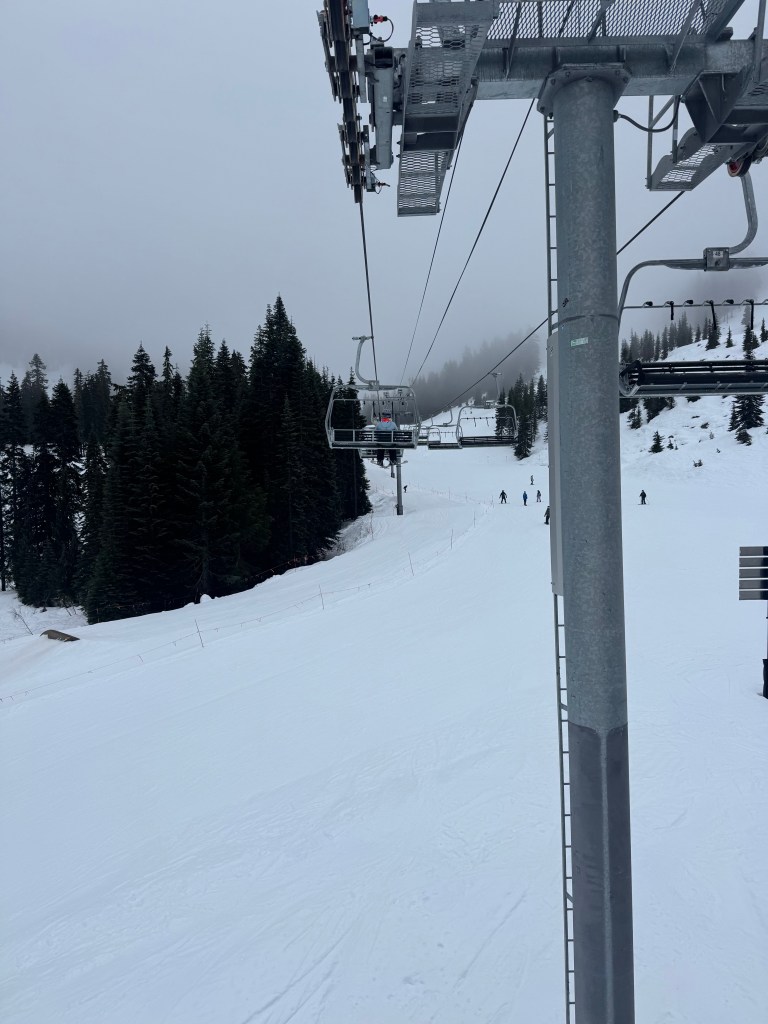
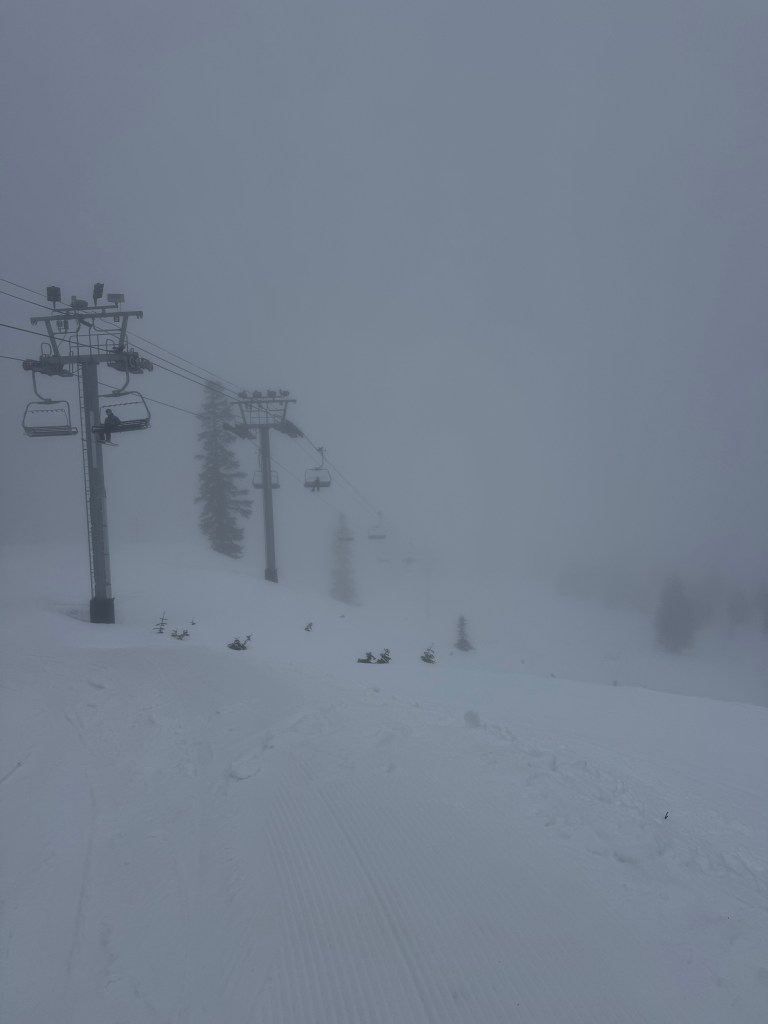
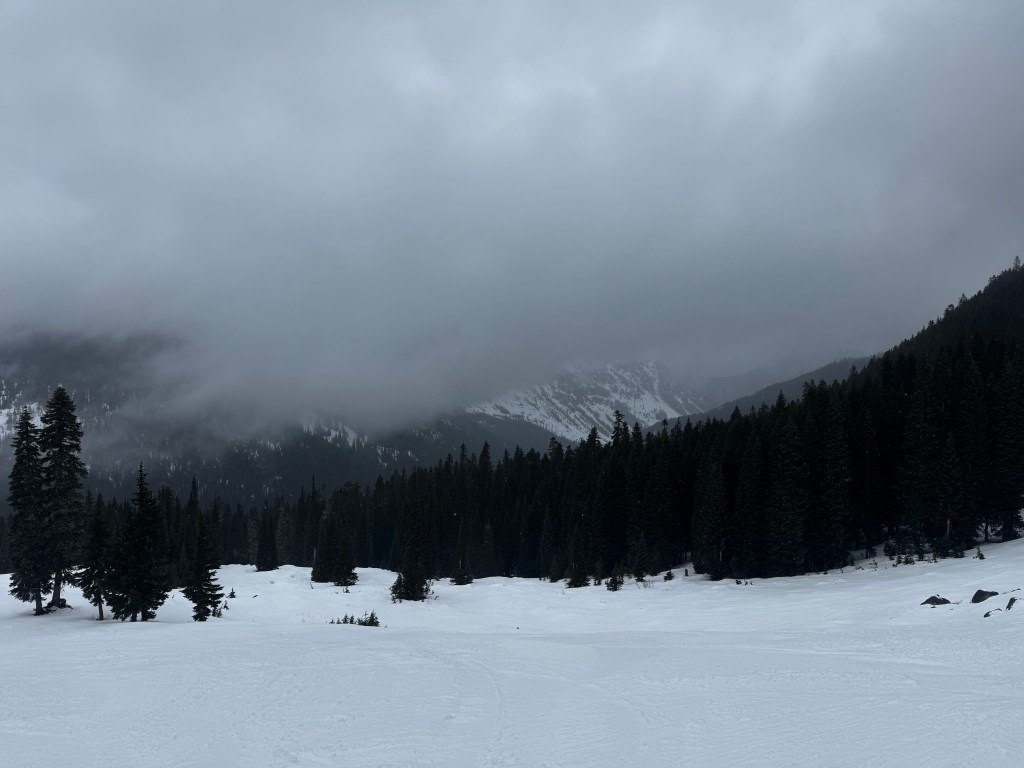
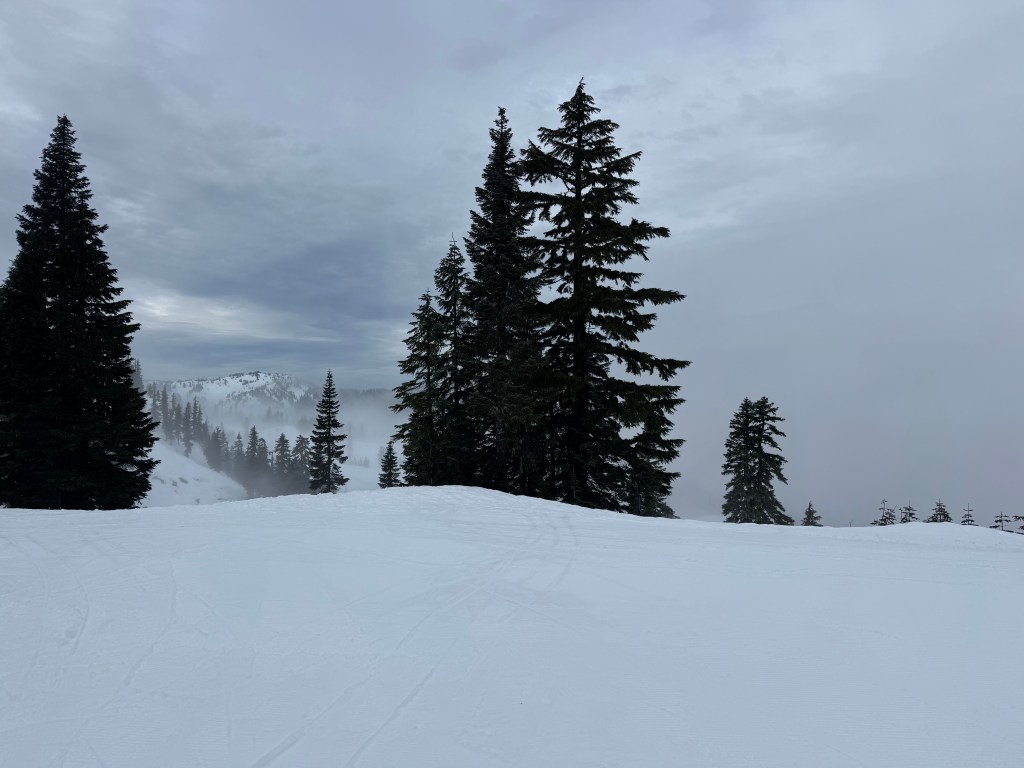
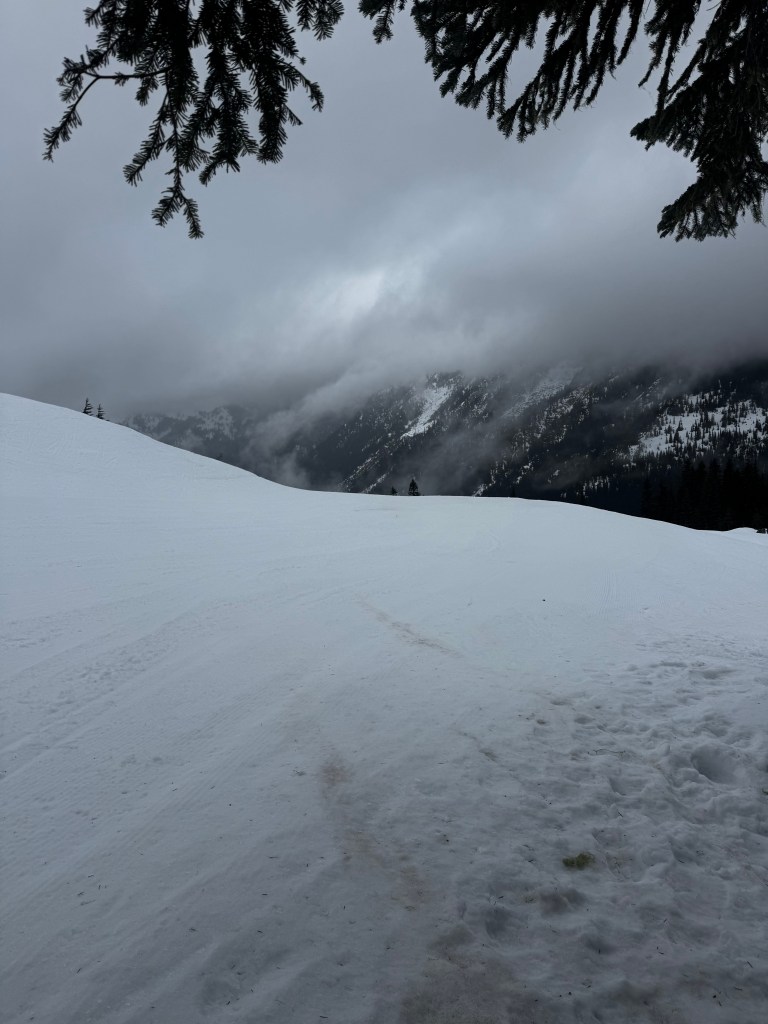
I was skiing recently on a day that had wrapped the mountains in fog. I have come to observe here in the Pacific Northwest, that fog on the slopes can be both beautiful and deeply disorienting. It softens the edges of the mountain, quiets the noise, and turns the world into shades of white and gray. It also obscures what lies ahead. I usually avoid the runs swallowed by fog and save them for later in the day, hoping the sky will clear and visibility will return.
One run didn’t look so foggy from below, so I hopped on the lift and made my way up. It wasn’t until I was on the lift that I realized my view from the bottom wasn’t reliable, either. As I rode higher, visibility shifted. At moments I could see clearly and observe patches of blue in the distance. At other times, everything dissolved into a blur of white. And yet, still in the distance, there were patches of blue sky.
When I stepped off the lift and began my descent, I had to change my approach to descending the mountain. It was in this approach, my lens shifted and I saw both the challenges and gifts of the fog. I slowed down, not because anyone told me to, nor because I was incapable. I slowed down because I could only see the path immediately in front of me.
It was in that narrowing of vision, that my mind paused and realized that I noticed more. I felt the texture of the snow beneath my skis. I paid attention to subtle shifts in terrain. I sensed my body more clearly. I paused occasionally, not out of fear, but to take in what was visible and to carefully choose my next move, to reassess my location and my plan. The fog prevented me from charging ahead or focusing my view down the mountain, into the future. It kept me from skiing toward a horizon I couldn’t actually see, from making a mistake in the present because my eye was focused too far ahead
The gift of the fog was presence. It prevented me from getting too far ahead of myself, from racing toward imagined turns, unseen obstacles, or distant markers of progress. The fog forced me into what was immediately here. Ironically, the very thing I thought might cause me to stumble, this limited visibility, was the thing that reduced my likelihood of falling. I wasn’t skiing toward what I couldn’t see, I was skiing with only the knowledge of what I could see.
We tend to think clarity means seeing far into the distance – five-year plans, career trajectories, strategic roadmaps. We equate confidence with speed toward the goal. We assume that if we cannot see what’s coming, something must be wrong.
The definition of anxiety is living too far in the future, worrying about a future that we can’t accurately predict. So, what if fog is not an interruption of progress, but an invitation to be present, to release anxiety and trust the path will unfold before us?
Fog slows us down. It narrows our focus to the next turn rather than the entire mountain. It heightens awareness. It asks us to trust the skills we’ve already built to navigate the unknown rather than the certainty or control we wish we had.
In leadership, in parenting, in transitions, in research, in career moves, there are seasons of fog, of uncertainty, discomfort and unknowing. There are moments when the horizon disappears and the path forward looks shorter than we would like and we find ourselves uncertain, uncomfortable, and even afraid. Our instinct is often to wait it out, to avoid movement until visibility improves.
Sometimes the fog is the teacher. Fog reminds us that control is limited, control is a mirage, in fact. We learn in the fog that speed is optional, awareness is protective, and presence is stabilizing. Fog, if we acknowledge and embrace it, keeps us from stumbling not by revealing everything ahead, but by anchoring us exactly where we are. Perhaps clarity is not always about distance. Perhaps it is about presence and depth. One step at a time is the answer.

Inward: Insight & Intuition
Integrate: Integrity & Intention
Impact: The Outcome/Experience You Want

This is my year to create with hope, fueled by joy. My challenge is to continue to find moments of goodness and awe, serenity and peace, gratitude and love, to support me in creating ripple effects of hope. Joy and hopeful creation are my way of facing and fighting oppression.
Read More "Create Hopefully ~ Three Thoughts for Thursday ~ January 2026!"

