
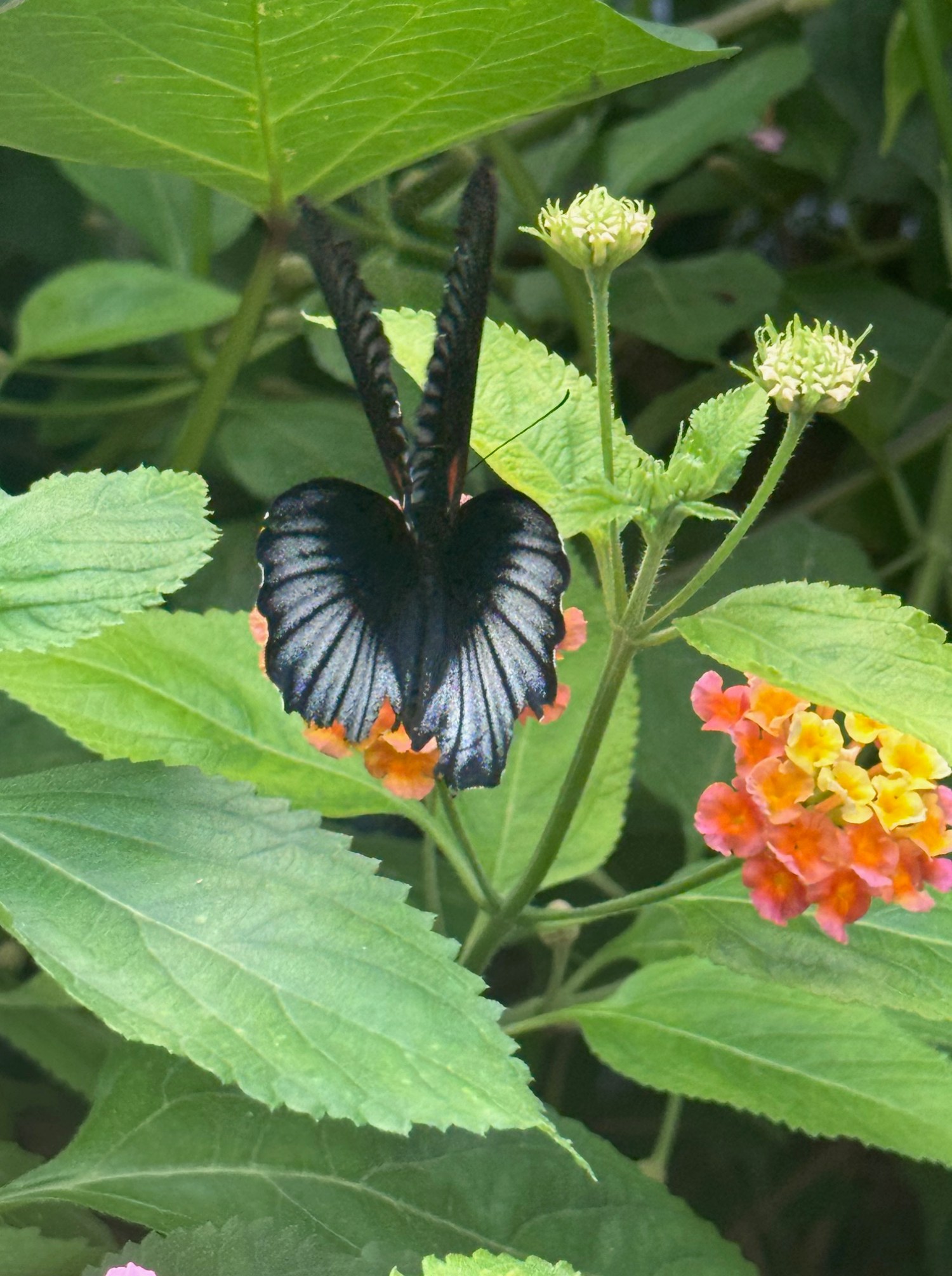
What if a beautiful life is less about finding something extraordinary and more about noticing the treasures already here and making space for more?
Desiree Briel Rodi Consulting & Coaching
Business and People Strategy Unite
What if a beautiful life is less about finding something extraordinary and more about noticing the treasures already here and making space for more?
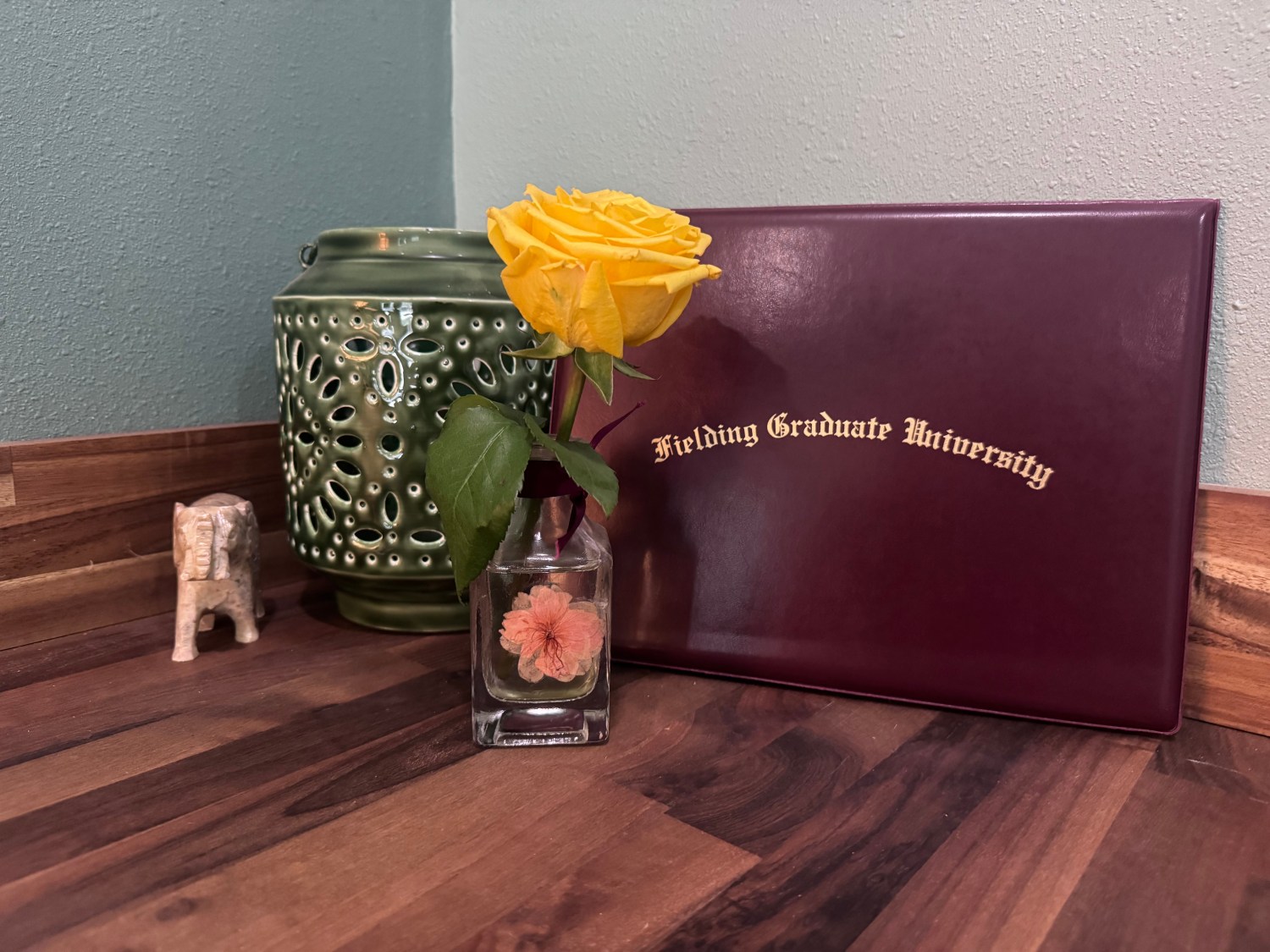
“The tassel was moved. The hood was placed. The degree was conferred. But the real work had already happened.”
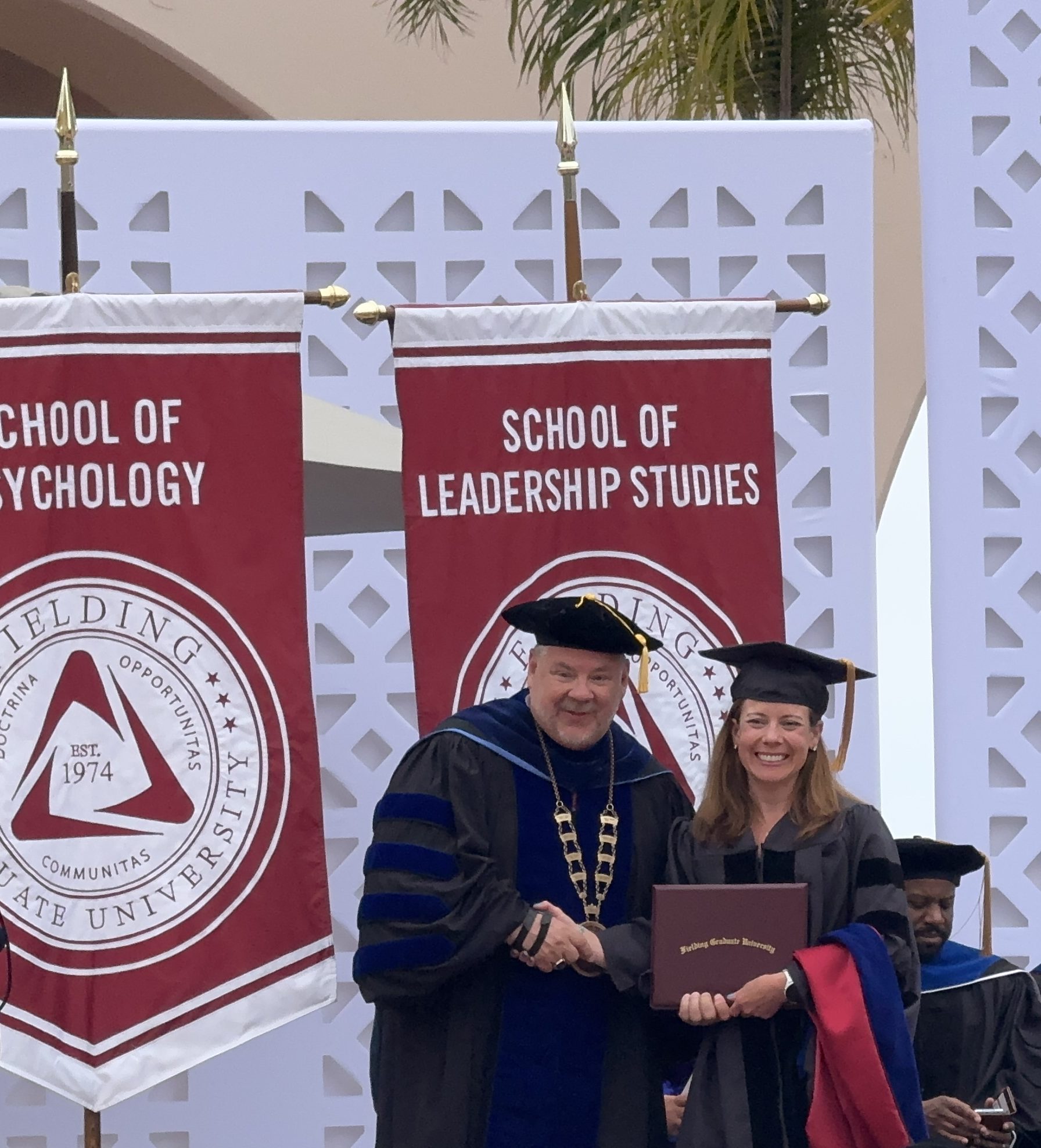
Last Monday, I had the opportunity to say a few words at the Hooding Ceremony for the doctoral graduates at Fielding Graduate University. Standing at the podium, looking out at my fellow graduates, faculty, and family, I realized something that had been quietly unfolding for years. Commencement wasn’t the culmination of my doctoral journey; rather it was simply the public recognition of a transformation that had already taken place. This ceremony was the closure I needed, my kids and husband needed to finally celebrate and close a chapter.
Like many milestones in life, people celebrate the visible moment – the diploma, the hood, the photographs, the applause. What they don’t often see is everything that came before it – the years of uncertainty, the revisions, the questions that changed three dozen times, the moments of wondering whether I had anything meaningful to contribute, the countless drafts, the balancing of work, teaching, coaching, motherhood, and research, THE BECOMING.
The Longest Pregnancy of My Life
Having carried three children, and now one dissertation, I’ve often joked that earning a PhD felt remarkably similar to pregnancy. There was the excitement of beginning. There was the exhaustion of carrying something that seemed to grow larger every month, the anticipation, the discomfort, the endless waiting.
Eventually there comes a point where you’re simply ready to give birth. You no longer worry as much about labor. You just know you can’t stay pregnant forever. This thing must come out!! The dissertation must eventually leave you.
What surprised me wasn’t simply that the dissertation was born, it was realizing how much I had changed while carrying it.
The Children Were Never the Obstacle
One week after I completed my doctoral coursework, my daughter Sally was born. People often ask how I managed to earn a doctorate while raising three children. The better question is whether I would or could have done it without them.
My children were the inspiration for my question and research, and they became my reason to continue. They watched me wrestle with difficult questions. They watched me revise papers late into the night. They watched me fail. They watched me begin again.
Perhaps the greatest lesson they received wasn’t that their mother earned a doctorate. Perhaps it was seeing that learning never stops, that meaningful work takes time, and that perseverance is often quiet.
Becoming Instead of Achieving
Our culture celebrates achievement – degrees, promotions, awards, crossing finish lines, but those moments are surprisingly brief. Transformation happens much more slowly. It happens in ordinary Tuesdays, in small decisions, in choosing to write another page, to ask another question, and to keep showing up when no one is watching.
Looking back, I don’t think earning the PhD was the greatest accomplishment; becoming the person capable of earning it was.
No One Talks About the Postpartum
What surprised me most wasn’t the journey, it was what happened after. I expected relief, excitement, momentum, like when a weight is lifted from a moving object and the object jets forward like a rocket. Instead, I experienced something I can only describe as postpartum – not with a baby, but with becoming.
The deadlines disappeared. The structure was gone. The identity I had carried for years suddenly shifted. The flowers stopped coming. The congratulations slowed. The question quietly emerged:
Now what?
For over a year, I found myself integrating, not simply the research I had conducted, but the person I had become through conducting it.
I’ve since realized this isn’t unique to earning a doctorate. We experience this after retirement, career changes, children leaving home, major illnesses, divorce, promotion. Every meaningful transition asks us to grieve who we were while learning to become someone new.
What My Research Actually Taught Me
Ironically, while I spent years researching how educators experienced implementing social and emotional learning, my greatest lesson wasn’t about schools, it was about people. Transformation doesn’t happen because someone tells us to change. Transformation happens when we are willing to stay present long enough for something inside us to change.
Whether in classrooms, organizations, families, or our own lives, meaningful growth requires more than knowledge. It requires courage, reflection, connection, and emotional intelligence.
The Beginning, Not the End
Receiving my doctorate felt like crossing a finish line. Looking back now, I think it was actually crossing a threshold.
This journey has deepened my conviction that emotions are not obstacles to growth, they are our guides. They are our universal human language, helping us make sense of change, connect more deeply with one another, and become more fully ourselves. Whether I am coaching a leader, teaching graduate students, consulting with organizations, or writing about the spaces between who we have been and who we are becoming, that belief continues to shape my work.
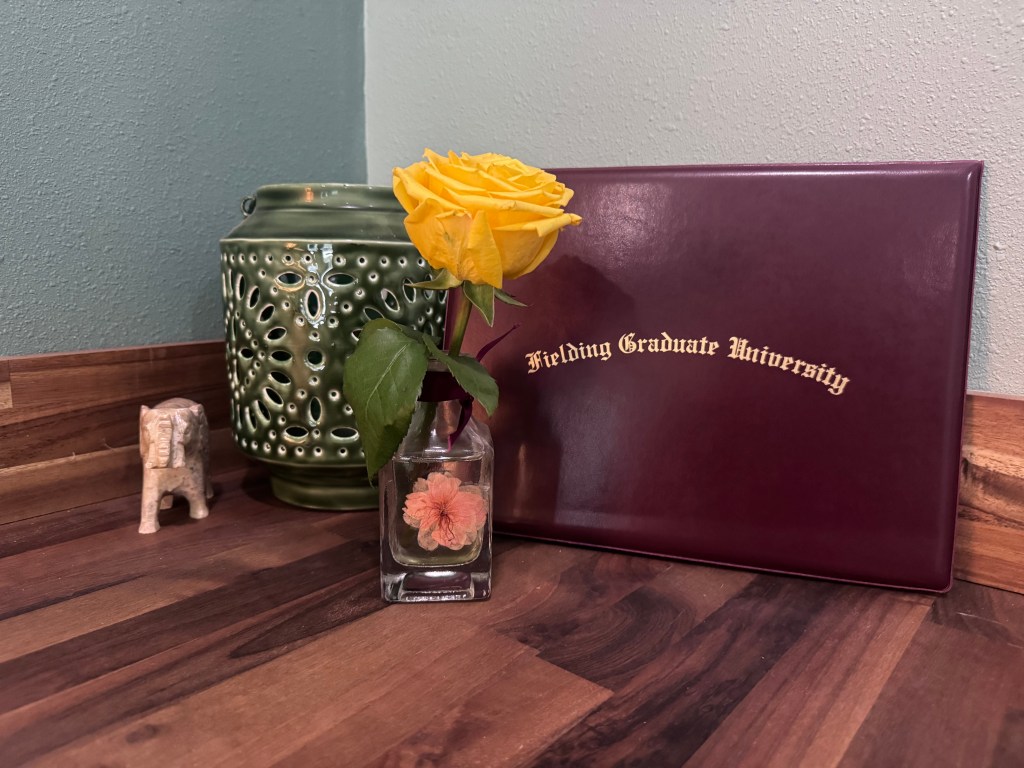
The diploma hangs on the wall. The dissertation is published. The most meaningful work, however, continues; it is the work of becoming.
I am deeply grateful to my family, friends, mentors, colleagues, faculty, and fellow graduates who walked alongside me throughout this journey. Thank you for believing in me, challenging me, and celebrating this milestone together.
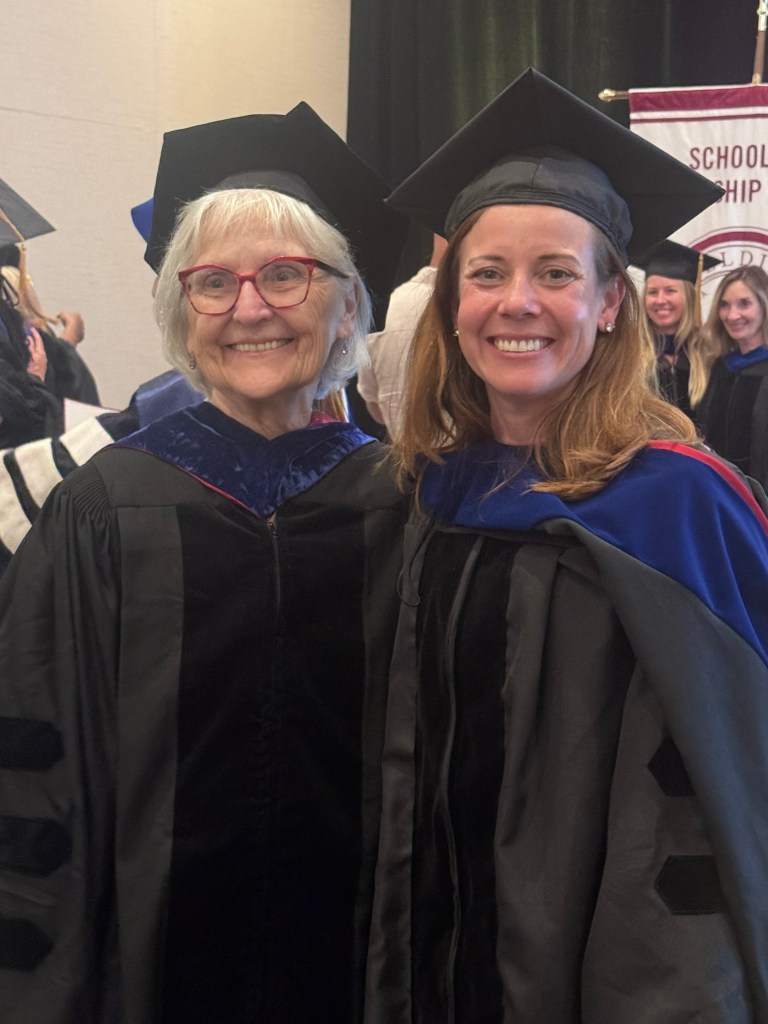
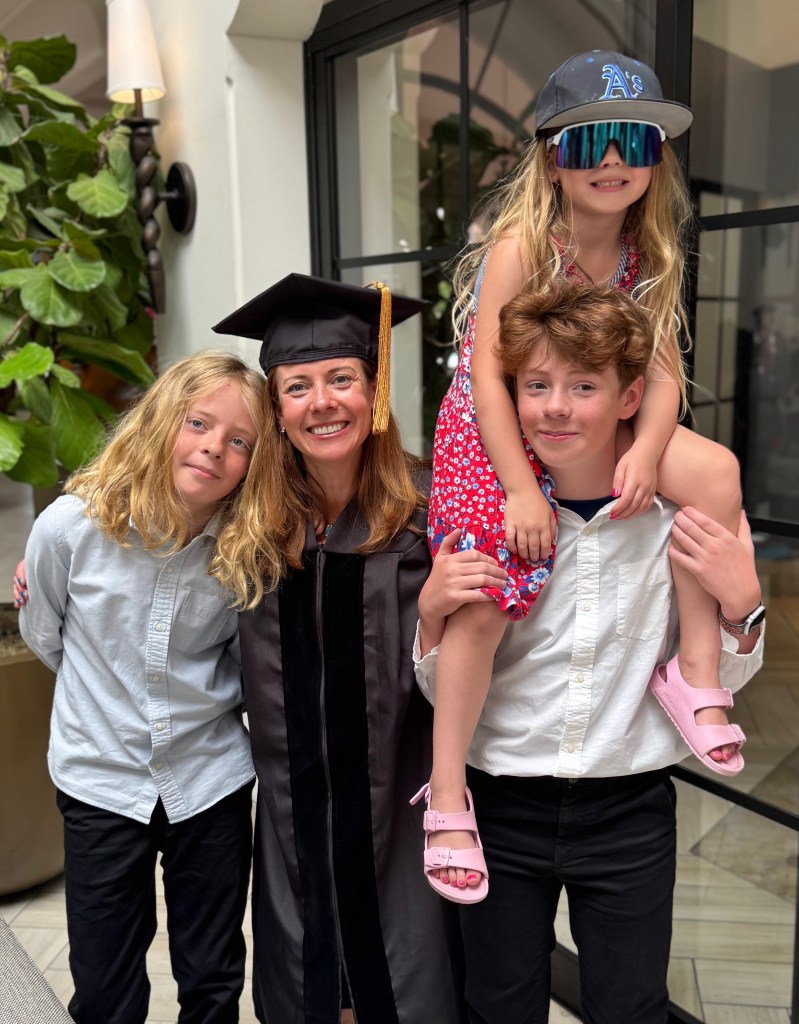
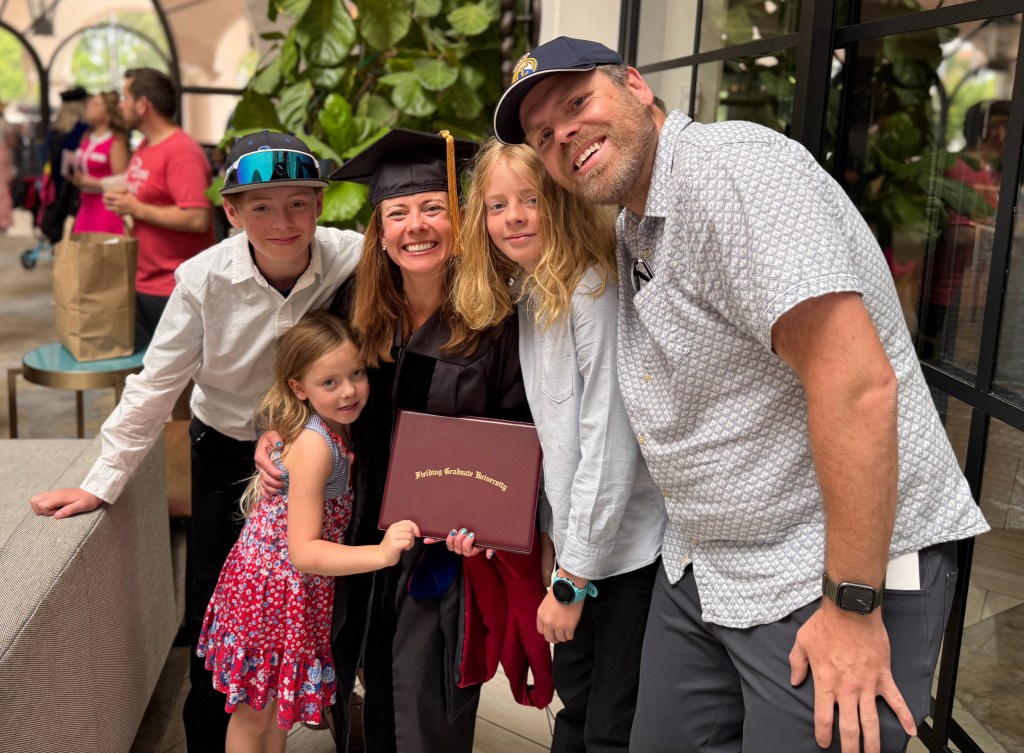
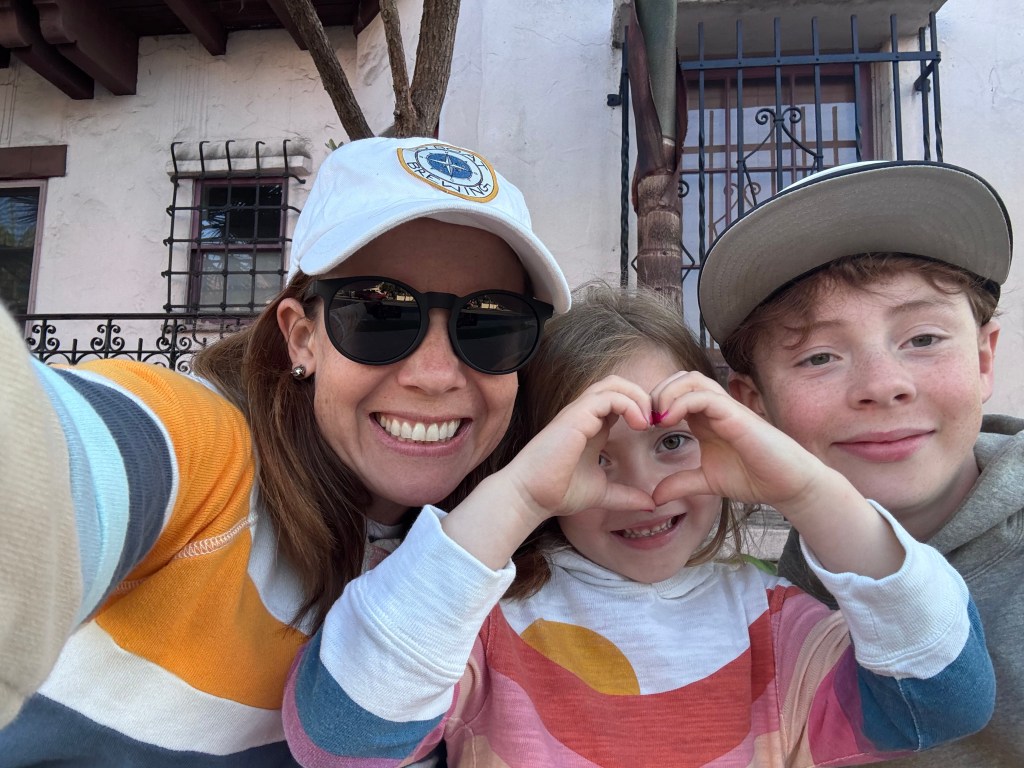
I’ve shared my commencement speech and a few photos from the day below. I hope they offer encouragement to anyone who is carrying something meaningful, even if the finish line still feels far away.
Keep going.
The work of becoming is hard work, but oh so rewarding!
You may be becoming more than you yet realize.
Commencement Speech
When I began my Ph.D., I remember feeling the excitement and anticipation, similar to that of discovering I was pregnant.
There was possibility.
There was hope.
There was this incredible sense that I was about to embark on something that would fundamentally and positively change me.
Of course, like most pregnancies, I had no idea what I was getting myself into.
Not long after beginning the program, our family moved back to Seattle. Then, just as I was settling into coursework and finding my rhythm, the world shut down. COVID changed how we lived, how we learned, and how we connected.
And then, just to make the metaphor literal…I became pregnant.
One week before I finished my doctoral coursework, our daughter Sally was born.
Apparently, one pregnancy wasn’t enough, I decided to have two at the same time. The PhD pregnancy was much, much longer and much, much harder!
I crossed the finish line of coursework with a newborn in my arms.
But anyone who has earned a doctorate knows that coursework isn’t the finish line.
It’s barely the halfway point. In many ways, it is just the beginning!
Then came what I can only describe as the longest third trimester in history.
There was the dissertation proposal.
The research.
The interviews.
The writing.
The rewriting.
The self-doubt.
The moments I was convinced I would never finish.
And FINALLY, the formal oral review.
Only to then return to MORE revisions.
And then…the email, just before the holidays, notifying me that the dissertation had been accepted and I was officially done, my degree awarded 12/15/2024.
Delivery of the PhD baby complete.
Or so I thought.
Because anyone who has had a baby also knows there is life before delivery…and there is life after.
For me, the eighteen months after finishing were my doctoral postpartum.
I was exhausted, recovering and healing, and rediscovering who I had become after carrying this dream for so long.
Without question, this was the hardest, longest, and most challenging pregnancy of my life.
And I have three children…
There were many moments when I wished I had earned my Ph.D. before becoming a mother. I imagined it would have been easier.
But there would not have been the PhD journey without my children. My children weren’t an obstacle to my doctorate, they were in large part, the reason for it.
They shaped the questions I asked.
They inspired the research I pursued.
They reminded me daily why understanding human growth, learning, leadership, and emotional development matters.
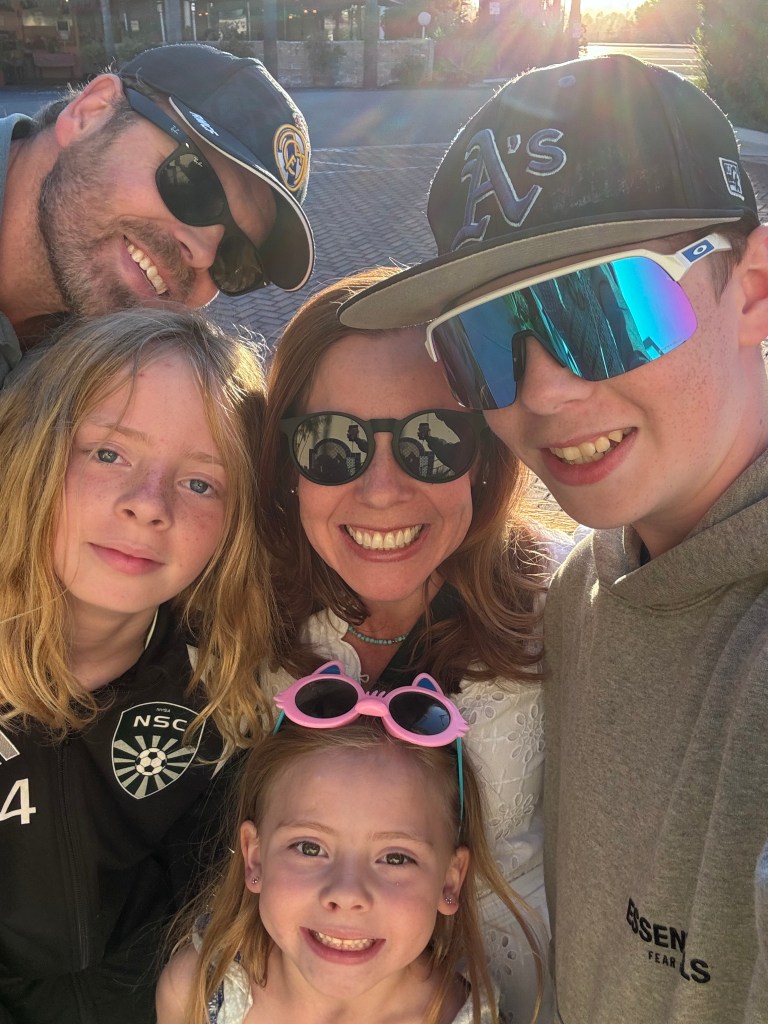
To Will, Ben, and Sally, and my husband, Rob—thank you.
Thank you for sharing me with this dream.
Thank you for the afternoons, evenings, and weekends when school too often had to come first.
Thank you for cheering me on, even when you didn’t fully understand why Mom always had “just one more paper” to write, one more evening at the library, one more game to miss.
I hope what you remember isn’t that I was busy, too busy. I hope you remember that you watched someone keep going.
Because perhaps the greatest lesson this journey gave me wasn’t the degree.
It was the opportunity to model something for my children—and for myself.
That meaningful work takes time.
That growth is rarely linear.
That hard things are worth doing.
And that we are the kind of family who can do hard things.
Thank you to my Student Reader, Jeff Smith, for his faithful humor, and to my External Examiner, Dr. Michael Stramber of Yale University. Thank you to my Committee Chair, Abigail Lynam who saw me through from start to finish, to my Faculty Reader, Frank Barrett who challenged me and asked hard questions, and to my Research Faculty, Dorothy Agger-Gupta, who welcomed me into the program and save me at the end as my birth doula, cheering me on until it was done.
Thank you to my mom who sent my dad, and to my dad for coming when I needed extra help getting my dissertation draft completed. Thank you to my Tia Gloria for coming to help me push through the final stages of the proposal. To my community of family and friends, thank you!
What hard things will we take on next?
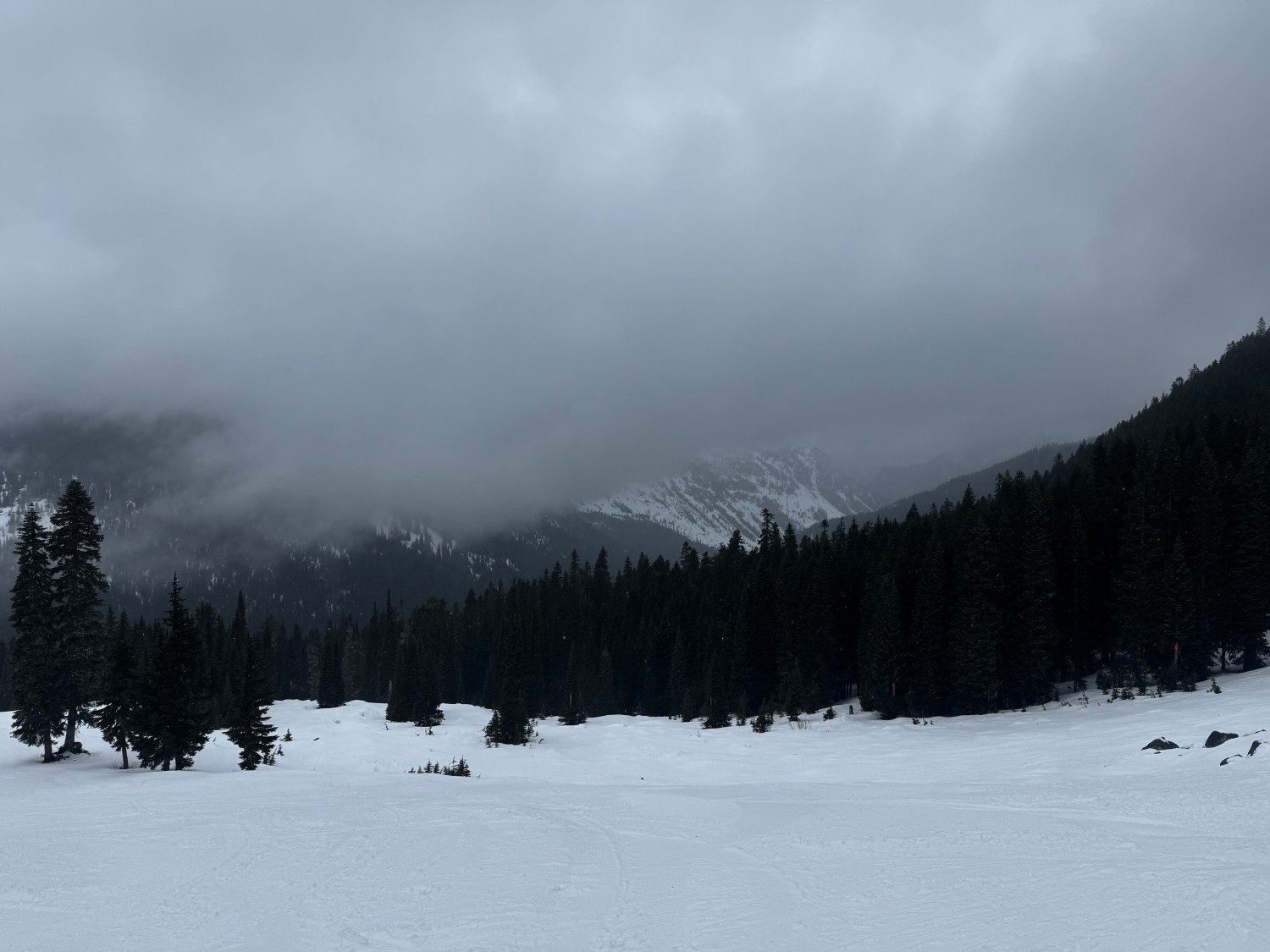
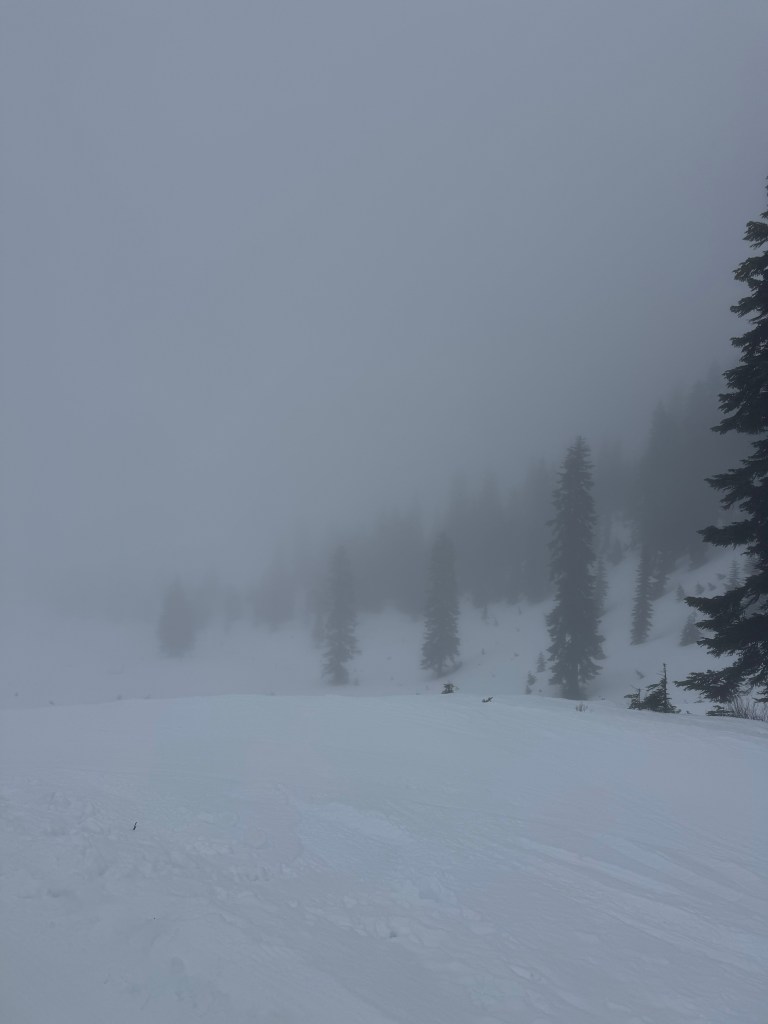
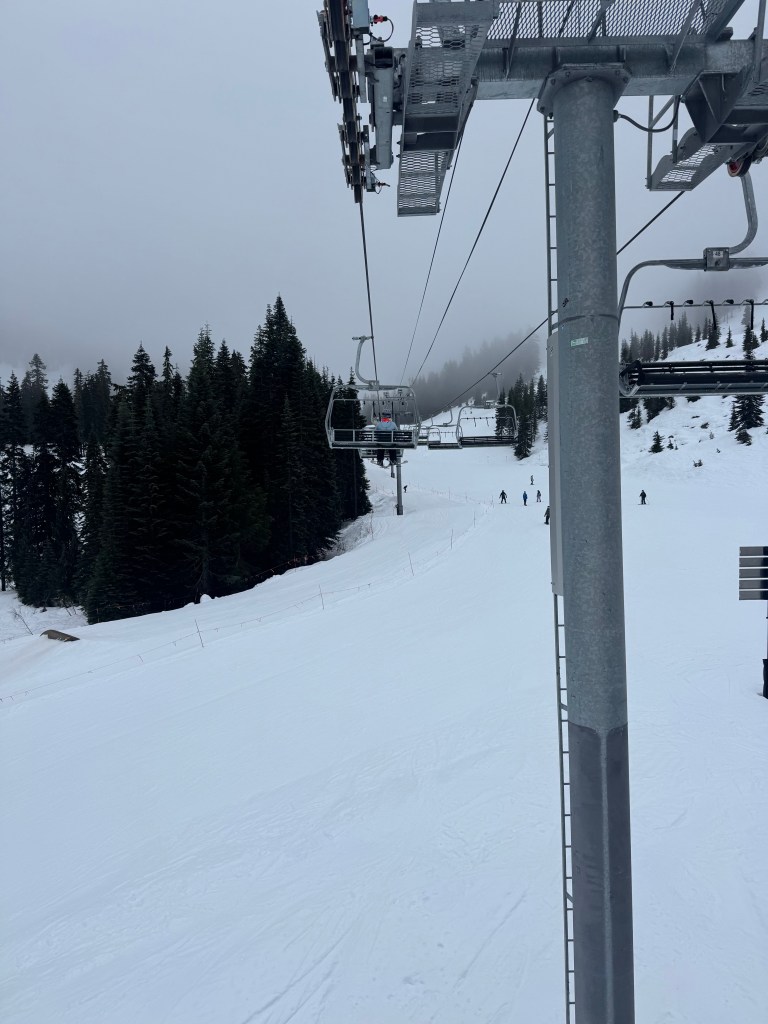
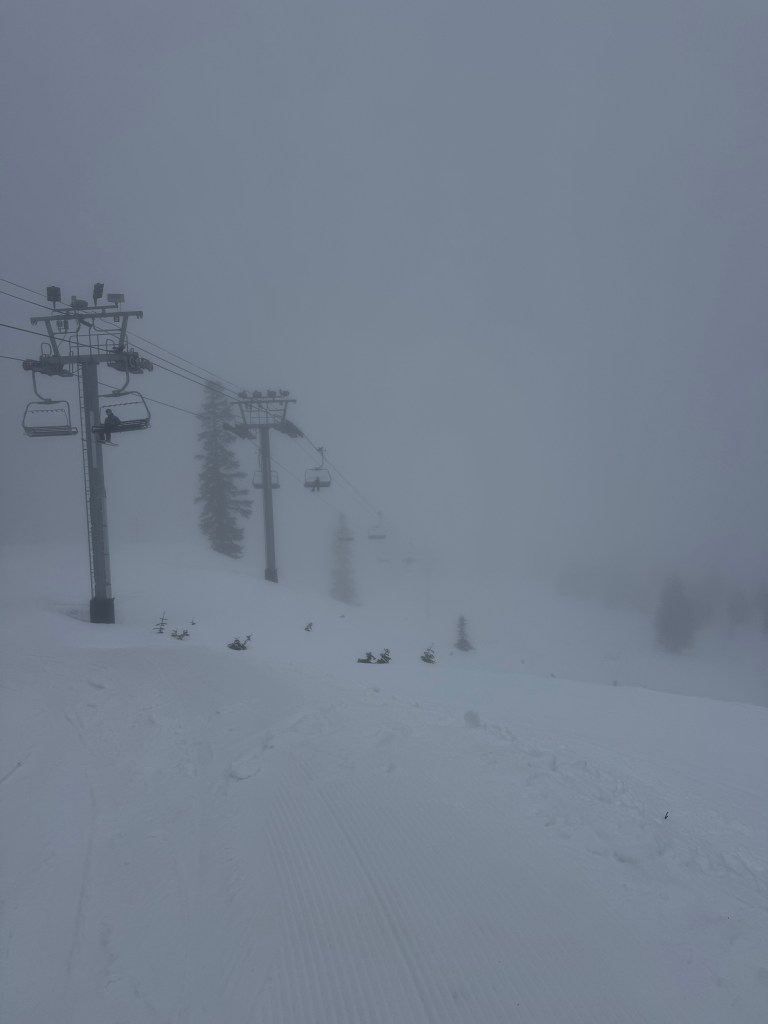
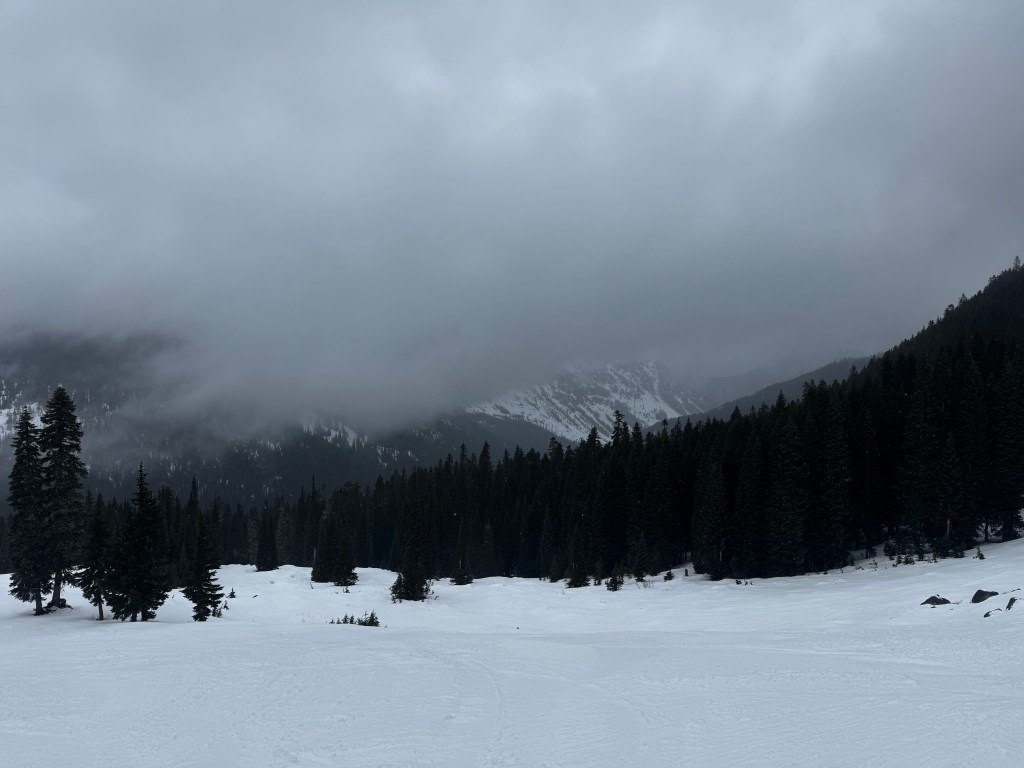
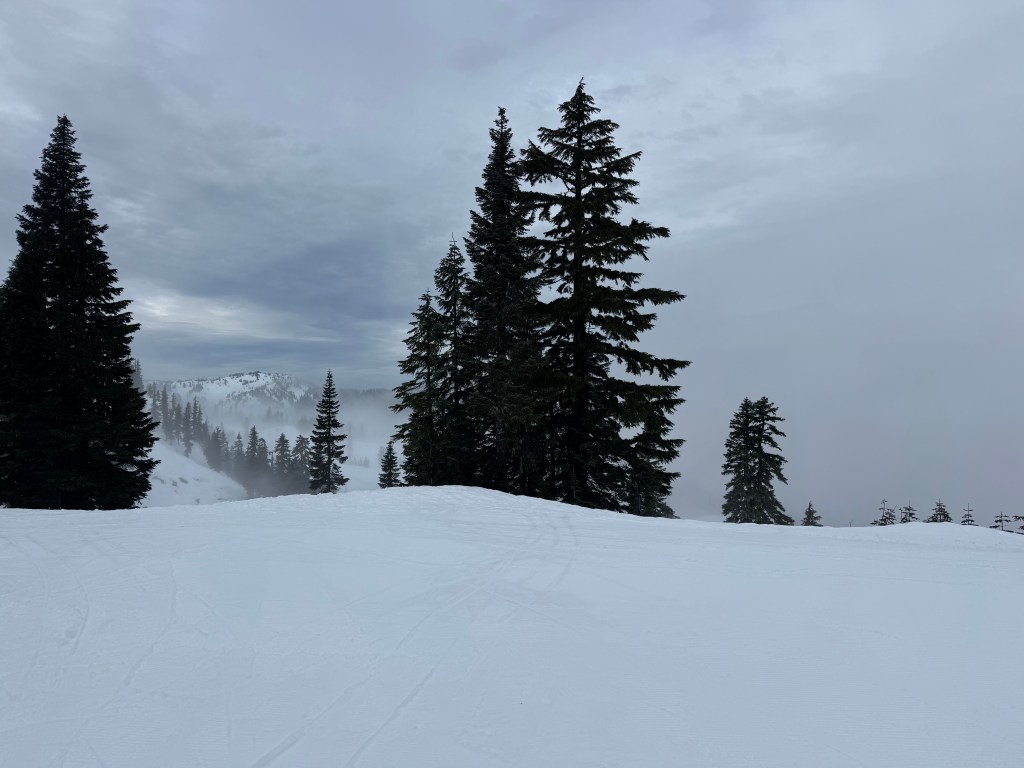
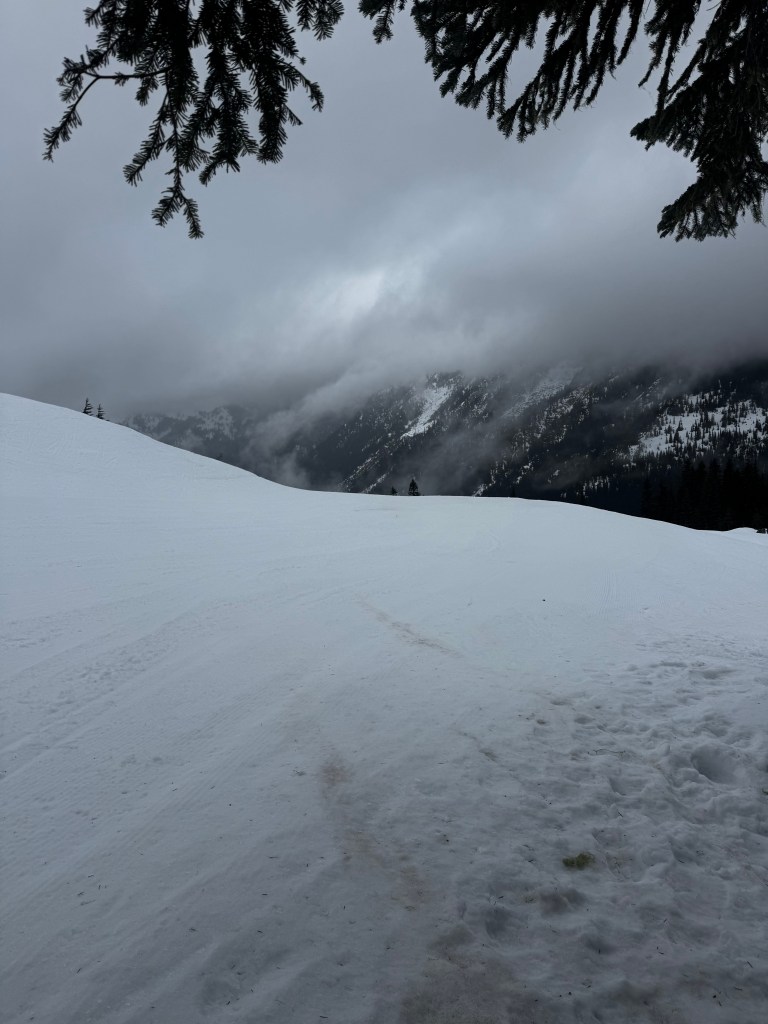
I was skiing recently on a day that had wrapped the mountains in fog. I have come to observe here in the Pacific Northwest, that fog on the slopes can be both beautiful and deeply disorienting. It softens the edges of the mountain, quiets the noise, and turns the world into shades of white and gray. It also obscures what lies ahead. I usually avoid the runs swallowed by fog and save them for later in the day, hoping the sky will clear and visibility will return.
One run didn’t look so foggy from below, so I hopped on the lift and made my way up. It wasn’t until I was on the lift that I realized my view from the bottom wasn’t reliable, either. As I rode higher, visibility shifted. At moments I could see clearly and observe patches of blue in the distance. At other times, everything dissolved into a blur of white. And yet, still in the distance, there were patches of blue sky.
When I stepped off the lift and began my descent, I had to change my approach to descending the mountain. It was in this approach, my lens shifted and I saw both the challenges and gifts of the fog. I slowed down, not because anyone told me to, nor because I was incapable. I slowed down because I could only see the path immediately in front of me.
It was in that narrowing of vision, that my mind paused and realized that I noticed more. I felt the texture of the snow beneath my skis. I paid attention to subtle shifts in terrain. I sensed my body more clearly. I paused occasionally, not out of fear, but to take in what was visible and to carefully choose my next move, to reassess my location and my plan. The fog prevented me from charging ahead or focusing my view down the mountain, into the future. It kept me from skiing toward a horizon I couldn’t actually see, from making a mistake in the present because my eye was focused too far ahead
The gift of the fog was presence. It prevented me from getting too far ahead of myself, from racing toward imagined turns, unseen obstacles, or distant markers of progress. The fog forced me into what was immediately here. Ironically, the very thing I thought might cause me to stumble, this limited visibility, was the thing that reduced my likelihood of falling. I wasn’t skiing toward what I couldn’t see, I was skiing with only the knowledge of what I could see.
We tend to think clarity means seeing far into the distance – five-year plans, career trajectories, strategic roadmaps. We equate confidence with speed toward the goal. We assume that if we cannot see what’s coming, something must be wrong.
The definition of anxiety is living too far in the future, worrying about a future that we can’t accurately predict. So, what if fog is not an interruption of progress, but an invitation to be present, to release anxiety and trust the path will unfold before us?
Fog slows us down. It narrows our focus to the next turn rather than the entire mountain. It heightens awareness. It asks us to trust the skills we’ve already built to navigate the unknown rather than the certainty or control we wish we had.
In leadership, in parenting, in transitions, in research, in career moves, there are seasons of fog, of uncertainty, discomfort and unknowing. There are moments when the horizon disappears and the path forward looks shorter than we would like and we find ourselves uncertain, uncomfortable, and even afraid. Our instinct is often to wait it out, to avoid movement until visibility improves.
Sometimes the fog is the teacher. Fog reminds us that control is limited, control is a mirage, in fact. We learn in the fog that speed is optional, awareness is protective, and presence is stabilizing. Fog, if we acknowledge and embrace it, keeps us from stumbling not by revealing everything ahead, but by anchoring us exactly where we are. Perhaps clarity is not always about distance. Perhaps it is about presence and depth. One step at a time is the answer.
Inward: Insight & Intuition
Integrate: Integrity & Intention
Impact: The Outcome/Experience You Want
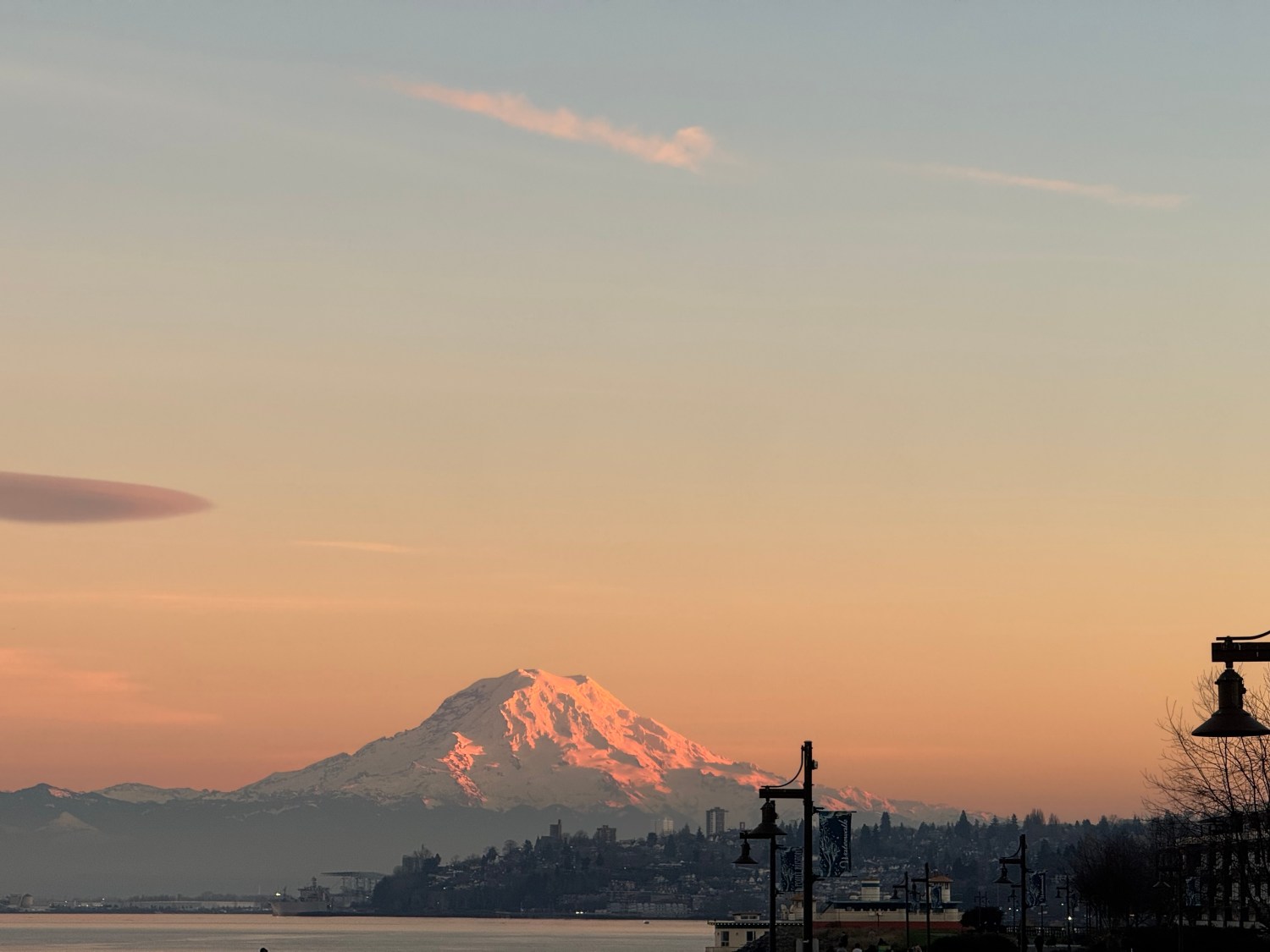
This is my year to create with hope, fueled by joy. My challenge is to continue to find moments of goodness and awe, serenity and peace, gratitude and love, to support me in creating ripple effects of hope. Joy and hopeful creation are my way of facing and fighting oppression.
Read More "Create Hopefully ~ Three Thoughts for Thursday ~ January 2026!"
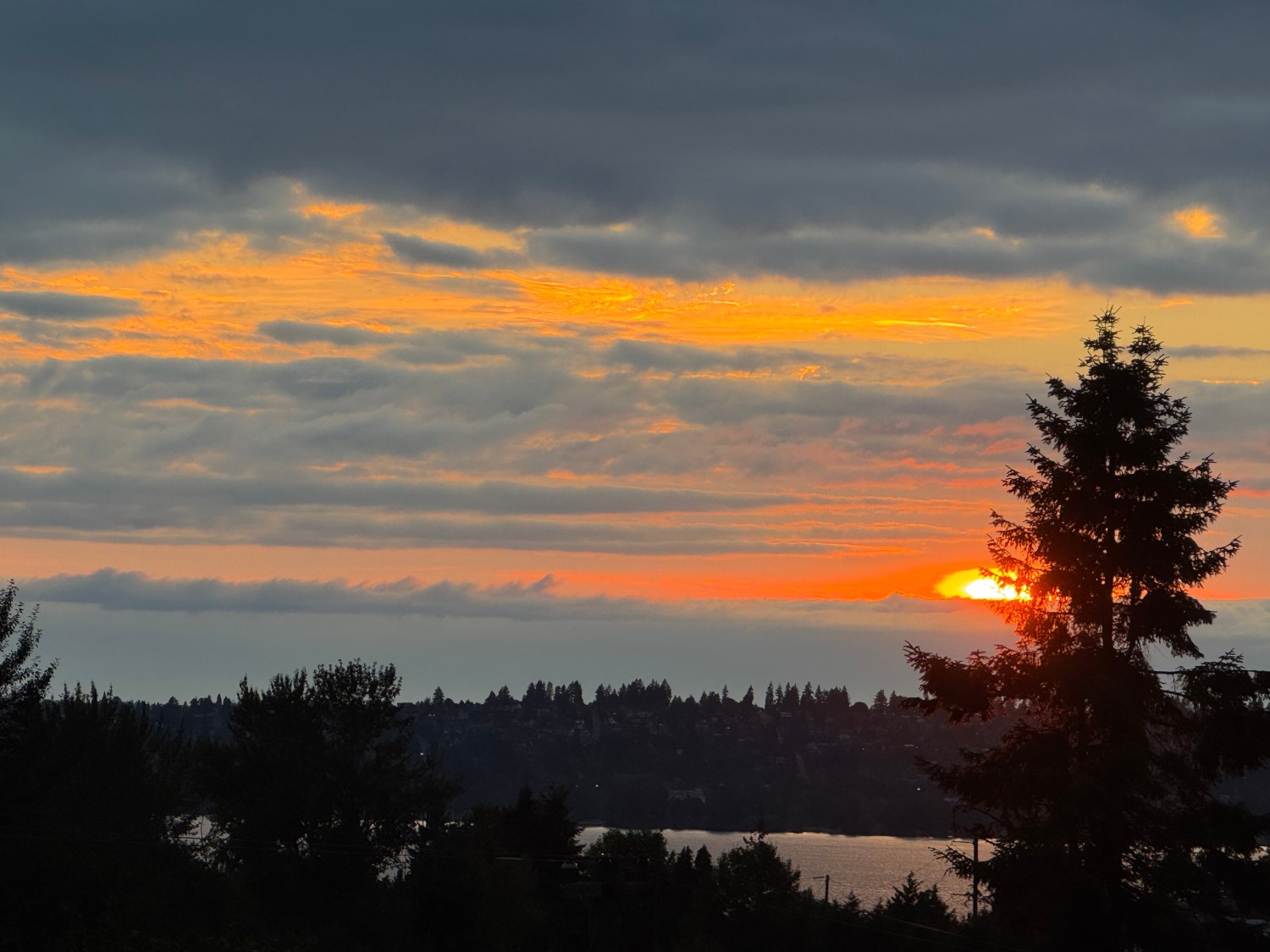
What moments in your life feel worth savoring right now? How do you typically balance moving “fast and hard” with slowing down?How does your environment—seasons, places, or rituals—influence your ability to be present? In what ways do you practice savoring in real time, rather than only in hindsight?How do you collect and hold onto the sparks of beauty and wonder in daily life?
Wishing you a season of savoring, of slowing down, reflecting, and doing nothing! Thank you for being a part of my journey!
Read More "Savoring! ~ Three Thoughts for Thursday ~ September 2025"

