

Happy New Year!!! I don’t know about you, but I like to choose a word that inspires the next steps in my journey at the beginning of the new year. My word for 2025 was JOY. After a five-year journey to the completion of my PhD, alongside continuing my work and growing into my personal roles as mom, wife, and friend, and professional roles of coach, consultant, and professor —plus a few unexpected challenges along the way—I felt a quiet conviction to take another look at joy. Making joy a priority was a worthy endeavor!
For a long time, joy had felt almost gluttonous to me, something indulgent or excessive. But last year, I studied joy more closely and made a conscious commitment to notice it, seek it, and make time for it. That meant paying attention to gratitude, serenity, interest, hope, pride, amusement, inspiration, love, and awe. I challenged the belief that joy was the cherry on top of a decadent sundae—something I should enjoy sparingly—and instead asked myself: What if joy is more like broccoli? Full of essential nutrients, vital for health and well-being, whether or not it’s flashy or dramatic.
Through the books I read, the podcasts I listened to, and the quotes I reflected on and shared, one message became clear: joy is essential. Joy fuels us. It fills the tank and supports optimal functioning—not just emotionally, but creatively, relationally, and spiritually. By the end of the year, I found myself wondering what was emerging next. Did I feel more hopeful? Or did I feel a stronger urge to create?
Rather than forcing myself to choose one word over the other, and with the gentle challenge of a trusted friend and colleague, I decided to adopt a phrase to guide my year instead: create hopefully.
Now that my tank is fuller, I feel energized. I am deeply committed to joy and her cousins—to “taking my vitamins and eating my vegetables,” if you will—so that I continue to nourish what sustains me. From that grounded place, I feel ready to hope and to create, fueled by joy rather than depleted by striving. This year, I want to experiment not only with joy itself, but with allowing more space for hope and creativity to take shape.
I am a firm believer that we are the authors of our lives. While we don’t control every event, we do have agency over how we tell our story—and the way we tell our story matters. I have experienced firsthand the healing that comes from releasing beliefs and baggage that no longer serve me and intentionally choosing those beliefs that do. That work has helped me uncover treasures in the mess of my past and narrate my story in a way that empowers me to write a new present and future.
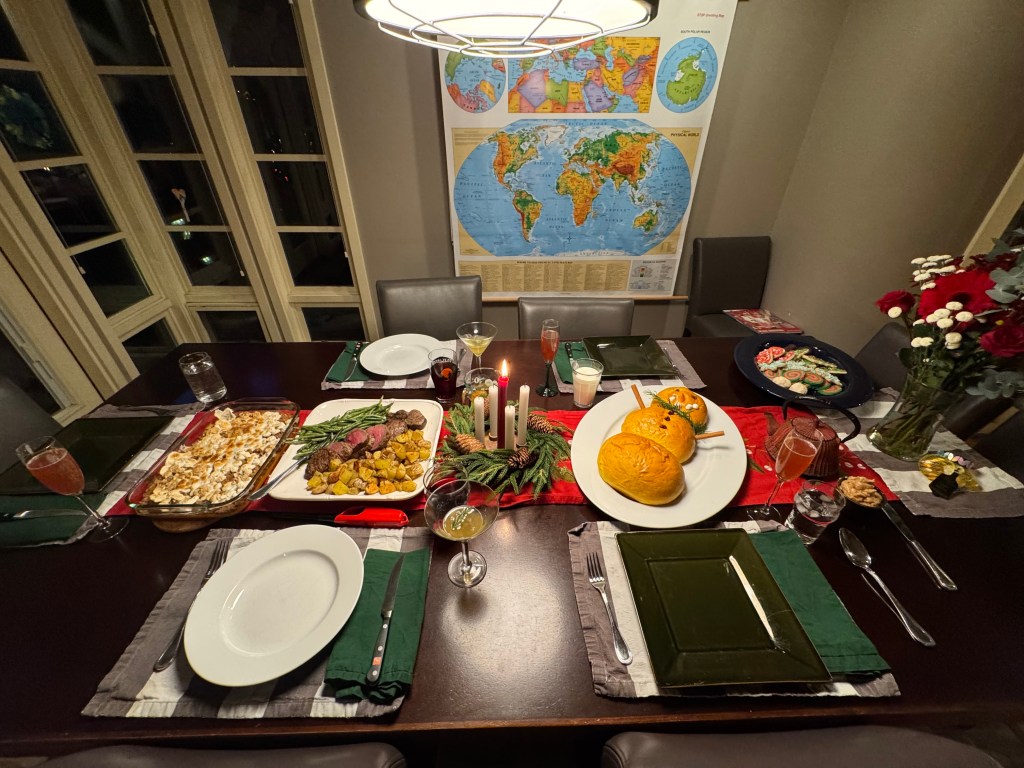
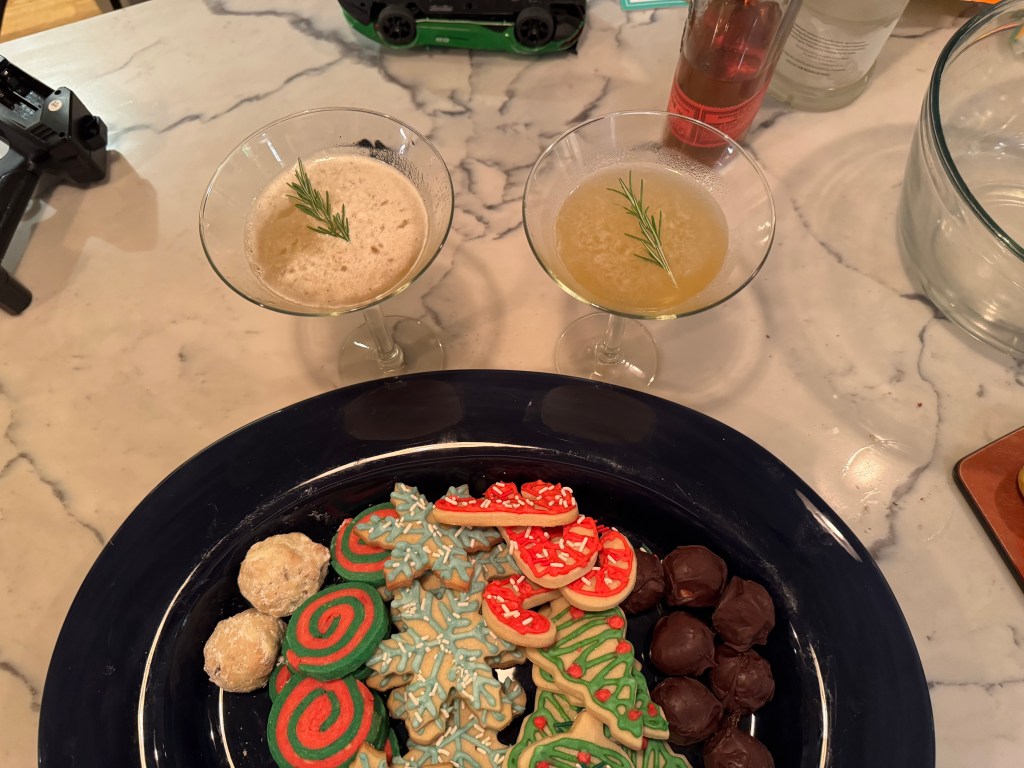
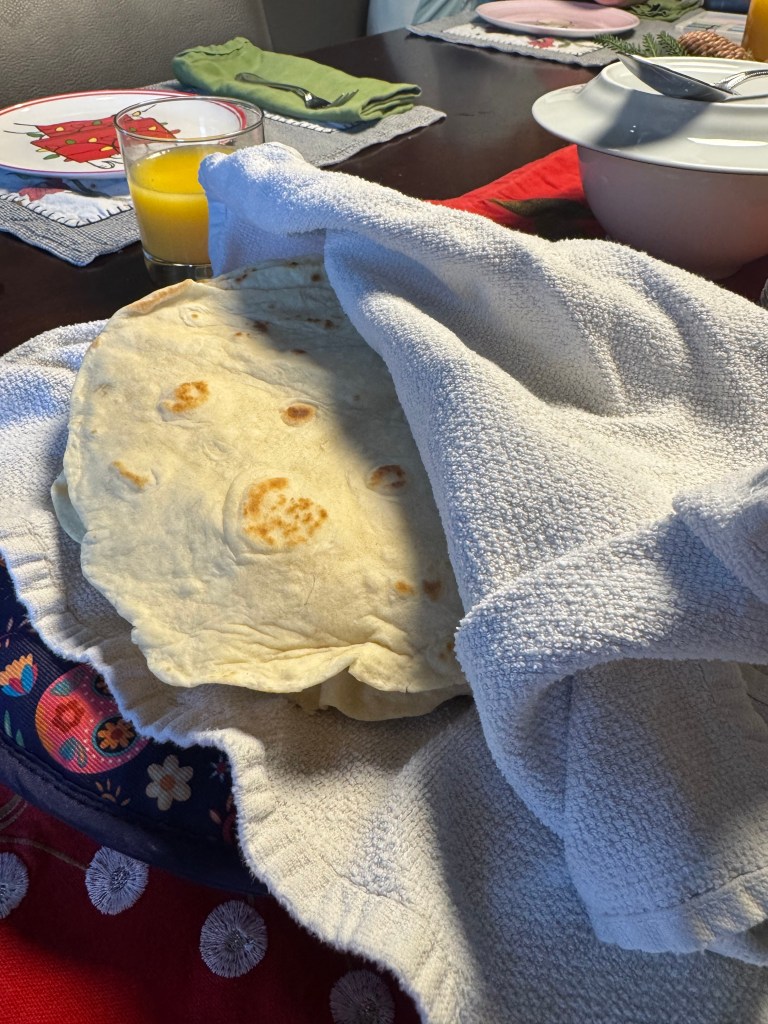
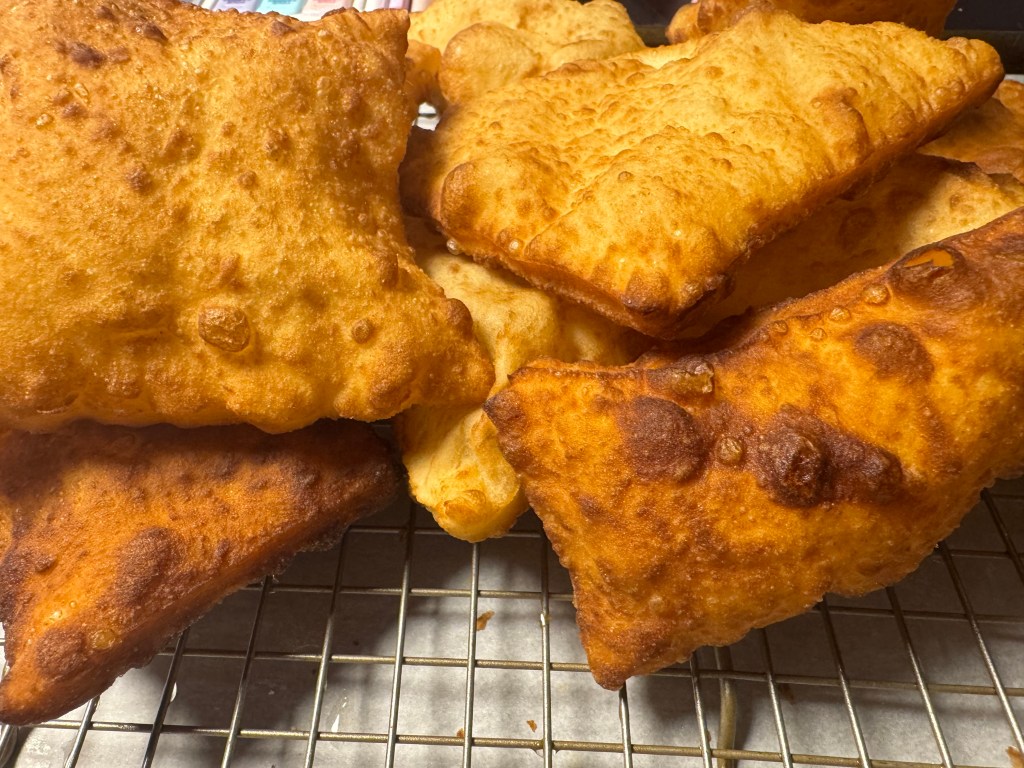
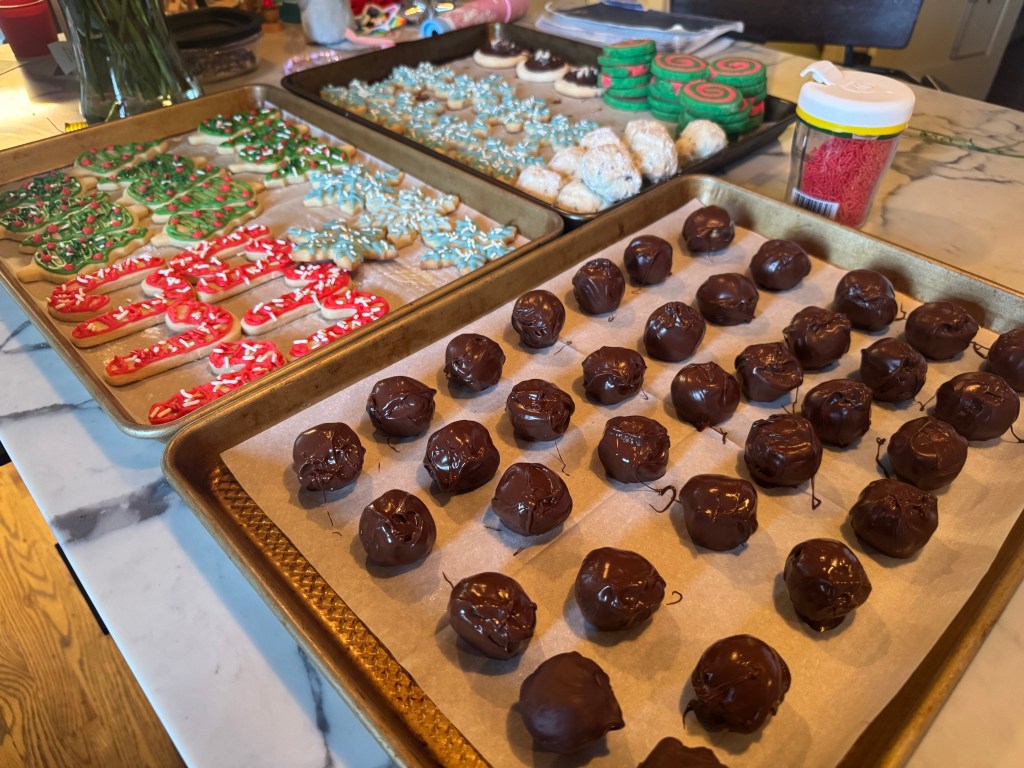
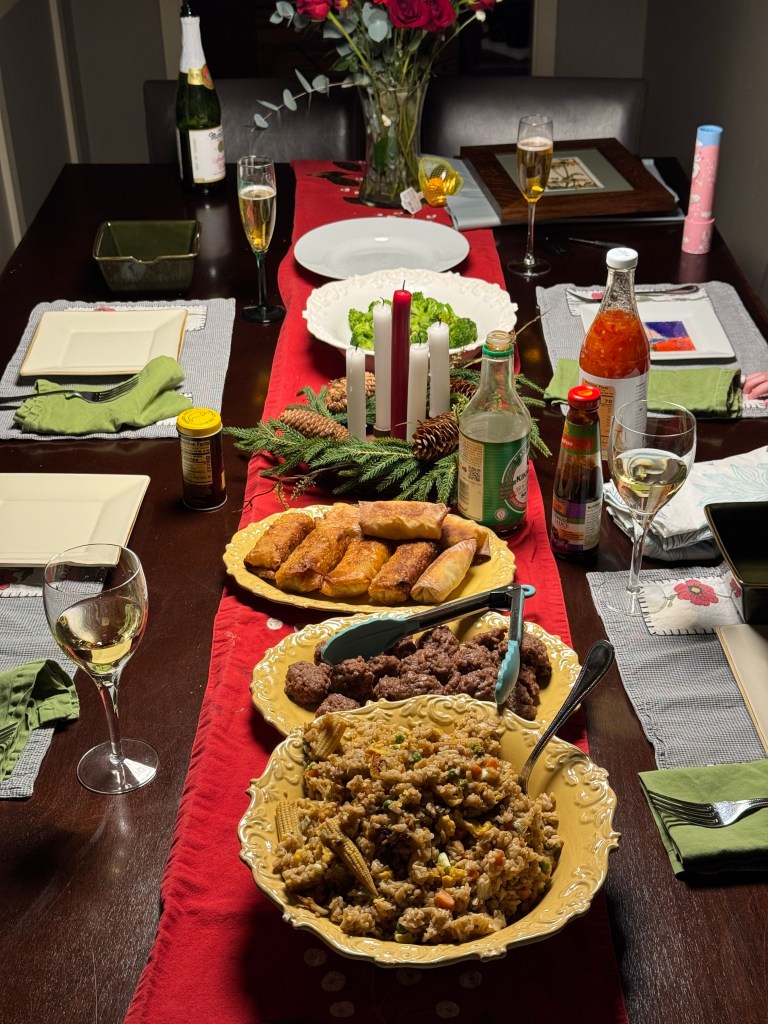
Recently, while watching Inside Out with my daughter, a line caught my attention. The character Joy says, “Maybe this is what happens when you grow up. You feel less joy.” The moment lingered with me. Do we really feel less joy as adults? Or do we simply get busier, less attentive, less willing to linger in it the way we did as children? What might shift if we were more intentional about creating opportunities for joy and noticing it when it appears? And how might joy—tended and trusted—support our capacity to hope and to create? How might hopeful creation add to my joy? I have begun the experiments, focusing this holiday season on creating delicious and beautiful food, creating moments, creating memories, and creating opportunities to love, hope, connect, and stand in awe more often; these are actions I will carry with me from 2025 into 2026.
Creating Hopefully Reflective Question:
Where have I been treating joy as optional rather than essential—and what might shift if I nourished it more intentionally? What forms of joy (gratitude, serenity, interest, hope, pride, amusement, inspiration, love, awe) feel most alive for me right now? What signals tell me when my “tank” is full—and when it’s running low? In what areas of my life do I feel a quiet invitation to hope, even if the path forward isn’t fully clear? What wants to be created this season—not from urgency or proving, but from alignment and curiosity? What beliefs or stories about my past am I ready to release or rewrite to support who I am becoming? How am I currently narrating my story—and does that narrative expand or limit what feels possible? Where might I slow down and linger in moments of joy rather than rushing past them? If I trusted joy as fuel, what small experiment in hopeful creation would I try next?
JOY → hope → creation
Joy fills the tank; hope guides the creation.


Quote(s) I’ve Been Pondering:
“You don’t think your way into a new kind of living, you live your way into a new kind of thinking”
~ Parker J. Palmer ~
“I am the master of my fate,
I am the captain of my soul.”
~ W.E. Henley, Invictus

Book I Recently Read:
The Mountain Is You: Transforming Self-Sabotage into Self-Mastery
by Brianna Wiest
My Key Takeaways & Ah-Ha Moments:
When I reflect on my own journey, it feels less like becoming someone new and more like a return—to who I originally was before the shoulds arrived to redirect me. A return to creating and living in alignment with what I already knew deep down. I’ve come to believe that we begin life knowing who we are and why we’re here, but as we grow, that inner voice is gradually crowded out by the expectations and narratives of the world telling us who we ought to be.
This understanding took on new meaning for me during a particularly formative season. I had just moved to Los Angeles with my husband and two young children, was beginning my coach training program, and was reading Playing Big by Tara Mohr and Made for Goodness by Desmond Tutu—when I suffered a stroke. In that season of vulnerability and reflection, Wiest’s words felt especially resonant. As she reminds us:
“When we were kids, all we did was imagine and play. Our lives were canvases, and we inherently understood that we could make believe absolutely anything and spend the day living it out.
The same is true in adulthood, but over the course of a few decades, the world tends to have a way of beating the magic out of you. If you really want to enjoy life, you have to make time to do what you loved when you were young.”
After the stroke, I experienced what I can only describe as an ah-ha moment—a God moment. I saw, with startling clarity, that the parts of myself I had hidden or felt embarrassed by were not flaws at all. They were my gifts. The very traits shaped by challenge were the ones that made me strong, resilient, courageous, and kind. Wiest’s words echoed my experience so precisely that I felt deeply affirmed:
“When you get to the end of your life, you will begin to see your mountains for what they really were. Gifts.
When you look back on your life, you won’t remember the hardships. You’ll see them as pivot points, growth opportunities, the days of awakening right before everything changed.”
I often ask myself—and now you—how might we adopt this perspective now, rather than waiting for the end?
I frequently think of life as the ocean: the more I fight or try to control it, the more likely I am to be pulled under. Wiest captures this beautifully when she writes:
“Most people live barely realizing that they are creating most of the waves in their lives and that it is also their job to learn to ride them.”
I find this observation both grounding and empowering. It aligns deeply with what I have come to know about myself:
“Mastery is to realize that we are equipped with the exact traits we need to overcome the mountains before us… We are not only capable; we are destined.”
This perspective has renewed my hope and reminded me of something essential: I am the author. The narrator. The artist. And how I tell my story determines how that story unfolds.
Wiest writes:
“Mastery is to finally understand that the years of discomfort you endured were not some sort of purgatory you had to just get through… They were your deepest inner self informing you that you are capable of more, deserving of better, and meant to transform into the person of your dreams. You must claim it. You must create it.”
And perhaps most poignantly:
“But who you become in learning to climb it? That will stay with you forever.
That is the point of the mountain.”
What Amazon Has to Say:
- Amazon Best Seller
- An international best seller translated into 40+ languages
- Selected by Inc. as one of the top 5 books to improve leadership mindset
- Listed on Entrepreneur’s “These 10 Bestselling Books Will Help Improve Your Self-Esteem”
- Ranked #1 on the Associated Press “US Audiobooks Top 10”
This is a book about self-sabotage. Why we do it, when we do it, and how to stop doing it—for good. Coexisting but conflicting needs create self-sabotaging behaviors. This is why we resist efforts to change, often until they feel completely futile. But by extracting crucial insight from our most damaging habits, building emotional intelligence by better understanding our brains and bodies, releasing past experiences at a cellular level, and learning to act as our highest potential future selves, we can step out of our own way and into our potential. For centuries, the mountain has been used as a metaphor for the big challenges we face, especially ones that seem impossible to overcome. To scale our mountains, we actually have to do the deep internal work of excavating trauma, building resilience, and adjusting how we show up for the climb. In the end, it is not the mountain we master, but ourselves.
Also by Brianna Wiest – The Pivot Year: 365 Days to Become the Person You Truly Want to Be

Podcast I’ve Listened To:
Finding Your True Calling Through Life’s Darkest Moments | Parker J. Palmer
October 17, 2025 | The Good Life Project
What if you could find meaning and purpose by embracing both your light and shadow? Parker Palmer shares how three profound seasons of depression shaped his understanding of life, belonging, and authenticity. After graduating Berkeley with a PhD in ’69, Palmer’s path took an unexpected turn from academia to activism to an 11-year sojourn in a Quaker learning community. Through this journey, he discovered how letting go of who we think we should be creates space for who we truly are.
In this moving conversation, Palmer opens up about his struggles with depression, vocational uncertainty, and aging with rare vulnerability and wisdom. You’ll learn why asking honest questions matters more than giving advice, how to discern your true calling through life’s challenges, and what it means to show up authentically in both darkness and light.
Palmer explores themes from his books and shares profound insights about:
• Finding meaning through suffering and struggle
• Building genuine community through deep listening
• Embracing uncertainty and letting go of false certainty
• Living authentically by integrating all parts of yourself
• Aging with grace while staying true to your calling
This conversation offers hope and practical wisdom for anyone questioning their path, facing inner darkness, or seeking to live more authentically. Palmer’s gentle guidance shows how our greatest challenges can become doorways to our most meaningful work.
You can find Parker at: Website | Facebook | Episode Transcript
If you LOVED this episode:
You’ll also love the conversations we had with Sharon Salzberg about mindfulness, lovingkindness, and inner resilience.
My thoughts and takeaways:
This podcast caught my eye, and ear, as I have come to find my greatest treasures in the challenges and messes of life. I’ve also learned that how I tell the story of my past influences my present and the way I navigate the future. By owning and reshaping my past, I’ve come to feel more aligned and whole, and more able to navigate authenticity, knowing that I can weather whatever storms come my way because of these challenges I’ve faced in my past. My struggles have strengthened me. May you also find hope and light in the darkness, and meaning in the struggles!



~
You can sign up to receive my Three Thoughts for Thursday post as an email on the third Thursday of every month by clicking here. If you’ve missed any of my Three Thoughts, you can find them all on my blog. If you enjoyed this post, take a look at my recap of 2025 in December’s Three Thoughts for Thursday. You may also be interested in reading my four-part Lessons of the Run series –Endurance, Resilience, Rest, and Grit. Take a look at my latest post, “YOU are the MISSING Piece!” and stay tuned for an update to this piece, along with a recent and new 5th Lesson of the Run – Humility and Adaptability! If you are interested or know someone who may be interested, I also offer leadership and emotional intelligence coaching and workshops. You can find more information on my website, or you can use this link to set up a free 30-minute introduction to coaching session.
As I mentioned, the stroke I had in February 2018 was a pivotal event and valuable turning point in my life; you can read more in my commemorative post. Please join me in celebrating these milestones, turning points, and calls to “winter,” by taking time to celebrate your own milestones and by fully embracing the opportunities in front of you, the value in the little things, and the beauty that surrounds you in this wonderful, messy life. I will forever be grateful for my stroke and the path of integrity I found in its wake.
I am currently partnering with my fellow Education and Coaching colleague, Dr. Joan Flora, to offer a series on Resolving Emotional Reactivity. This series explores emotions and their purpose, the information they hold about our human needs, and how we can learn to respond with intention and integrity instead of reacting and regretting. We are offering monthly Open Houses to learn more.
Over the course of the last two years, I’ve hosted a few local, in-person events here in the Seattle area, like Savor the Sweetness and the Serenity Retreat. The Serenity Retreat was another success! This relaxing and delightful event took place again June 14, 2025; learn more! Savor the Sweetness took place again September 20, 2025, and was also divine! I’m excited to play more in these spaces of creating opportunities for connection and reflection If you are interested in such local events, please contact me with any questions, or to join the invite list for future events!
I have the privilege of hosting the Emotional Intelligence Special Interest Group for ICFLA. We kicked off our 2025 explorations and learning journey on February 25th with guest Dr. J.D. Pincus of AgileBrain, who walked us through The LA Wildfires through the Lens of Emotional Needs: Coaching in Times of Loss. On Tuesday, June 24th, we both revisited and explored emotional intelligence in coaching through our topic, Emotional Intelligence Foundations for Coaching and Workplace Impact, with guest Maribel Hines, MBA, SPHR, CPLP. Maribel offered her insights, wisdom, and perspective through her in-house leadership and coaching and EQ practitioner lens. It was a great session as we translated theory and emotional intelligence into action and impact! Our August 26th session with Dr. Joan Flora focused on From Reactivity to Resilience: Coaching to Soften Reactivity and Strengthen Resilience. Our final session for the year was on Tuesday, October 28th, with guest speaker, Nicole Venner, who created space to explore, discuss, and practice ways of holding space for Emotional Intelligence in Threshold Spaces. Please consider joining us for the ICFLA EI SIG in 2026! We begin the series on February 24th with Re-grounding Coaching in Emotional Intelligence: Foundations That Deepen Presence, Insight, and Impact.
I have also joined forces with James Garrett at BrainByDesign, where I have had the distinct privilege of working with colleagues, Paula Miles and Sandra Clifton, to support aspiring female leaders in the workshop series, The Brain Science Advantage for Women Leaders. Also check out the latest work at BrainByDesign – The Confidence Challenge and The Confident Finisher Program (where I have the delight of serving as a coach) – where we leverage neuroscience to overcome the roadblocks in your brain to achieve your most important goals!
If you are interested in joining and co-creating these learning communities, please use the links above to learn more about ICFLA’s Emotional Intelligence Special Interest Group, BrainByDesign, and the Women’s Events. I hope you will come along for the journey!
I’m always looking for new inspiration, new books to read, and new podcasts to listen to, so please send your suggestions my way or comment on this post to offer some new recommendations!
As always, thank you for your continued support and readership! Stay strong, stay brave, stay true to you!
Wishing you a season of hopeful creation, of taking an opportunity to see your past through new eyes, and to narrate your story in a voice that empowers you to create the future you desire! Thank you for being a part of my journey!



 Desiree Briel Rodi Consulting & Coaching