
Skip to content
  • Home
  • About
  • Events
  • Services for Businesses
  • Services for Schools and Families
  • Services for Individuals
  • Blog
  • Contact
  • Quotes and Inspiration
  • Testimonials
  • Facebook
  • LinkedIn
  • Twitter
  • Instagram
  • Home
  • About
  • Events
  • Services for Businesses
  • Services for Schools and Families
  • Services for Individuals
  • Blog
  • Contact
  • Quotes and Inspiration
  • Testimonials
  • Facebook
  • LinkedIn
  • Twitter
  • Instagram

Desiree Briel Rodi Consulting & Coaching

Business and People Strategy Unite

  • Home
  • About
  • Events
  • Services for Businesses
  • Services for Schools and Families
  • Services for Individuals
  • Blog
  • Contact
  • Quotes and Inspiration
  • Testimonials
  • featured
  • Uncategorized

Part II: Lessons of the Run – Resilience

Desiree Briel Rodi Consulting & Coaching's avatar Desiree Briel Rodi Consulting & Coaching June 3, 2020
Resilience Image

Photo by Karim MANJRA on Unsplash

I have been thinking about, mulling over this idea of resilience, and have seen many articles and discussions around the theme lately as Covid-19 has forced us all into uncharted territory. I have pondered resilience many times as I have reflected upon my past, as I watched my boys learn to crawl and walk and stumble and try again. Perhaps my biggest “aha moment” around resilience however came two years ago.  I was training for the Boston Marathon for which I had finally earned a qualifying time.  I hadn’t set out when I began running marathons, to run Boston, but rather had set the intention on simple self-improvement with each race, as after the first marathon I felt compelled to run another and another.  As my times crept closer to Boston requirements and qualifying actually became achievable, however, I reconsidered and decided to go for it.  I qualified during my 10th marathon and my 5-year-old son, Ben, ran across the finish line with me – it was a great day!

Eight months later, I found myself in the ER at UCLA Westwood, receiving the diagnosis that what I had chalked up to be a complicated migraine had actually been a stroke that morning, causing my left arm, hand, and parts of my face to go, and remain, numb.  The first question out of my mouth was, “Can I still run the Boston Marathon?” which was just six weeks away and for which I’d been training faithfully.   The doctor told me, “There will be other marathons.”  I replied, “You don’t understand!  I’ve run 10 marathons to qualify for this race and have trained for several more. There may not be more Boston Marathons in my future.”

A week later, I followed up with a cardiologist and posed the same question.  As the dust had settled a bit and I had recovered most of the sensations in, and use of, my left hand, arm and face, the response was, “Well, I can’t tell you not to” which I quickly translated to “yes”. On April 16, 2018, I ran the Boston Marathon.  Despite what Time Magazine noted as “..grueling conditions on Monday as heavy rain poured and wind gusts hit more than 25 miles per hour — all among the coldest temperatures for the 122nd annual Boston Marathon race in three decades” (Calfas, 2018). My watch died halfway through and I felt utter despair in not being able to know my pace and how many minutes until the finish line.  If you read my previous Lessons from the Run: Endurance post, you’ll understand when I note that during the Boston Marathon, the “bonk” came at just mile 13, the halfway point.  I thought about quitting – no one would have blamed me given the abysmal weather conditions.

And then the voice that had responded in defiance to the doctors after my stroke reminded me, “You have run 10 marathons to be here today.  You are crossing that finish line!  This will not be a personal record, but you will not quit! You do not quit!” This sentiment perhaps summarizes my life so far – I may reroute, but I do not quit!

When people later asked me about my stroke and the Boston Marathon and looked at me as if I was completely insane, I realized perhaps I had taken resilience to an uncommon level, and I began to ponder their questions of “How???” and “Why???”  How and why did I bounce back so quickly from the stroke to run Boston?

Resilience for babies and children seems to be automatic.  As I thought back to my childhood, one in which I had two brain surgeries, an emergency appendectomy, a broken collar bone, and in which I moved around a lot, living in 14 different houses and going to 8 different schools, I realized these experiences had shaped who I’d become.  In those early months and years, as I learned to crawl and walk and overcame my first brain surgery, a battle with a staph infection, and later at 2-years-old, a broken collar bone, I realized I only knew to fight for my life, to fight to heal – it was inherent to overcome and survive in those early months and years.  However, these early experienced shaped me and taught me to fight, and to overcome became a reflex.  So then later, as I faced other obstacles, new challenges, I had the experiences of triumph to reflect upon, and this reflex to find a way forward.

Resilience, as we grow and develop, seems to be a culmination of experience, learning to endure, reroute, move forward, and overcome.  I had been shaped by my experiences, not only by these profound personal experiences but by running, as well.  As a sophomore in high school, new to another school, I went out for the cross country running team. I trained all summer, to prepare for the infamous 2-a-day practices.  Just weeks into the season and before the first competition, the coach noticed me limping through my run and called me back.  Soon, I could barely walk, I was in so much pain.  I was diagnosed with a stress fracture and relegated to the sidelines with a purple cast for the next six weeks, the remainder of the season.  What I learned from the experience – maybe I am not someone who should run every day.  I chose to look for a lesson rather than letting the experience define me as someone who will not be a runner.  I still ran throughout high school and college.  Running became my stress relief, I just didn’t run every day.

Fast forward to a couple of years after college, all of my friends were heading to grad school, law school, med school, or taking fancy jobs in banking in New York City, and I had no idea what I wanted to do.  So, I returned to the run and signed up for a marathon.  I found a training plan and focused on this next personal achievement.  Weeks into the training plan and the ache in my shin reminded me running every day was a mistake.  Rather than quitting, I revised the training plan to run 3-4 days a week, using swimming, spinning, yoga, and weights to maintain my muscle mass, maximize my lung capacity, and improve my stretching habits.  I ran my first marathon successfully crossing the finish line, injury-free, and looking for the next challenge.

Years later, as I fell into the pattern of running a few marathons a year, I again fell into the trap of trying to run every day.  I felt good, I was getting faster, surely I’d passed that previous threshold of not being able to run every day.  Nope, just two weeks before the Napa Valley Marathon 2010, I was once again barely able to walk and this time, diagnosed with a stress fracture and two partial muscle tares. I turned to the pool to scratch the itch running had scratched and to get that high running had given me.  I learned another lesson – cross-train!

The pool became my refuge and as I returned to the run and training for marathons, I continued to rotate swimming into my training to keep me from getting hurt. I have run several marathons since then and have continued to learn the important lessons of adaptation and flexibility, both essential to resilience. I don’t quit, I adapt, and this is what has allowed me to overcome, and what allowed me to run the Boston Marathon six weeks after a stroke. As I sat in the aftermath of the stroke and the achievement of crossing the finish line of the Boston Marathon in the worst weather in history, I finally came to realize how important the theme of resilience is to my life and my character.  Resilience, the ability to overcome, to adapt, to reroute, has made me strong and determined and courageous in the face of adversity, and what has made me resilient are the many opportunities I have been given to overcome.  Resilience is hard-earned, but the lessons and outcomes are worth the battle. I only fail if I fail to learn the lesson.

In this time of great personal and national challenge, I encourage you to look for opportunities to learn, adapt, and face the fear that threatens to overcome with boldness, flexibility, determination, and endurance. Visualize you on the other side…what have you learned? How have you changed? Who have you become? Who do you want to become? What are you learning now? What are your choices? What do you not have the power to control? How can you let that go? What do you control? Own what you can change. Chase after that vision of the future you, the you who you would like to become, and don’t let anything or anyone stand in the way of becoming the best version of you, the version of you you deserve to become! Be resilient!

Highway 20 sign, Newport, OR the day after qualifying for Boston
Crossing the finish line of the Boston Marathon

If you missed Lessons from the Run, Part I: Mile 18 – Endurance, you can find it here. Please stay tuned for Lessons from the Run, Part III: Rest and Lessons from the Run, Part IV: Grit and Determination

References:

Calfas, J. (2018, April 16). “This Year’s Boston Marathon Weather is Rainy and Windy. Runners Say It’s ‘Awesome/Terrible'”. Time Magazine. Retrieved from http://www.time.com/5241504/boston-marathon-2018-wind-rain/


 

  • Three Thoughts for Thursday
  • Uncategorized

Seasons and Sunsets: Three Thoughts for Thursday – May 2020

Desiree Briel Rodi Consulting & Coaching's avatar Desiree Briel Rodi Consulting & Coaching May 22, 2020

Three Thoughts for Thursday – May 2020

We have been having beautiful sunsets! I really appreciate this time of year as I watch these sunsets and the view change and evolve from our bedroom window.  As winter comes to an end and spring begins, the trees have not yet bloomed yet the days are becoming longer.  The colors are stunning and while the trees are still bare, but the days are getting longer and less rainy, we can glimpse Lake Washington and the Olympic Mountains in the distance.  Of course, when the trees do begin to bud, a new beauty replaces that of the lake in the distance, and the blossoms are spectacular.  Soon, the blossoms, too, drop away, and our view is that of lush, green forest wetlands.  The view continues to change and time goes forward, each view offers its own beauty, and I can’t help but think as I watch the sunsets, what else the sun is setting upon and what will bloom from this time of slowing down, of isolation, of change and transition. This is a time of mourning and of opportunity as the sun sets on life as we knew it and we await the dawn of what will be, and as we wait, the sun continues to set and somewhere else it rises, and change and transitions continue to occur as we explore our way forward.

What will come from necessity and what will come from the abundance of which there are both right now in different ways? How do I grieve the passing of another day, an old way as the sun sets, and yet hold tightly to hope and wonder as the dawn comes again bringing and illuminating new views and new ways? What do I want to remain and what do I hope will shift?  What do I hope the dawn will bring and how might I change to offer something new and more refined?

IMG_5641

Quote I am sitting with, pondering and finding inspiration:

A Deeper View of Life

The work of acknowledging everything in mindfulness leads us to a deeper view of what life is.  It is very important to understand that impermanence is not a negative aspect of life. Impermanence is the very basis of life.  If what exists were not impermanent, no life could continue. If a grain of corn were not impermanent, it could not become a corn plant. If a tiny child were not impermanent, she could not grow into an adult.

            Life is impermanent, but that does not mean that it is not worth living. It is precisely because of its impermanence that we value life so dearly. Therefore we must know how to live each moment deeply and use it in a responsible way. If we are able to live the present moment completely, we will not feel regret later. We will know how to care for those who are close to us and how to bring them happiness. When we accept that all things are impermanent, we will not be incapacitated by suffering when things decay and die. We can remain peaceful and content in the face of continuity and change, prosperity and decline, success and failure.

~ Thich Nhat Hanh, Your True Home: the everyday wisdom of thich nhat hanh, #83

IMG_5748

Podcast I’m Listening to:

What I’ve been appreciating about the Coaching for Leaders podcast hosted by Dave Stachowiak is the variety of topics and guests, the resonance of the topics, the relevance and tips offered that I can employ in my own life and that he always offers additional materials and podcast recommendations for further work and connection. During this time of being at home, I have been homing in on what is essential, relevant, and fills me up, as well as considering how to be more flexible and adaptable.  These two podcasts hit on these themes and also made me think more about the idea that different types of organizations (non-profit, public sector, big corporations, etc.) all have lessons that cross over as they are all still made up of humans and human lessons are relevant across organizations.

Coaching for Leaders, Episode #469: See What Really Matters with Greg McKeown

Greg McKeown is the author of the New York Times and Wall Street Journal bestseller, Essentialism: The Disciplined Pursuit of Less. His book is frequently listed as #1 Time Management book on Amazon and challenges the core assumptions about achievement to get to the essence of what really drives success.

His writing has appeared in or been covered by the New York Times, Fast Company, Fortune, HuffPost, and many others. He is among the most popular bloggers for the Harvard Business Review and LinkedIn’s Influencers group averaging a million views a month.

In this conversation, Greg and Dave discuss why success can be such a poor teacher and how to avoid what Jim Collins calls, “The undisciplined pursuit of more.” We explore how the principles of journalism can help us arrive at what’s essential and why journaling may be the place to start.

Key Points:

  • Success is a poor teacher and may lead to the undisciplined pursuit of more.
  • Essentialists listen for what is not being explicitly stated. They read between the lines.
  • Nonessentialists hear what is loud. Essentialists listen for the signal in the noise.
  • Journaling is a useful practice to begin reviewing what is coming up in your life and discovering the leads you may be missing.
  • Make time every 90 days to review and determine what’s next.

Related Episodes:

  • Getting Things Done, with David Allen: Episode #184
  • How to Make Deep Work Happen, with Cal Newport: Episode 233
  • Six Tactics for Extraordinary Performance, with Morten Hansen, Episode 337
  • Finding Joy Through Intentional Choices, with Bonni Stachowiak, Episode 417

Coaching for Leaders, Episode #470: How to Build an Invincible Company, with Alex Osterwalder

Alex is obsessed with making strategy, innovation, and entrepreneurship simple, practical, and applicable. He invented the Business Model Canvas, co-founded Strategyzer.com, and lead-authored Business Model Generation which sold a million copies in 30 languages. He’s one of the top-ranked management thinkers in the world by Thinkers50.

He is the author of the book, The Invincible Company: How to Constantly Reinvent Your Organization with Inspiration From the World’s Best Business Models.

In this conversation, Alex and Dave explore the distinction between exploration and exploitation that invincible organizations must hold in tandem. Alex teaches us the five most common myths of the innovation journey and what leaders can do to compete and stay relevant in a changing world.

Key Points:

Myths of the innovation journey:

  1. The most important part of the innovation and entrepreneurship journey is to find and execute the perfect idea.
  2. The evidence will show you a clear path forward while you systematically test ideas. The solution will magically emerge if you just test and adapt your idea often enough.
  3. A small number of big bets will lead to a large return.
  4. The skills required to explore a new business and to manage an existing one are pretty similar. Business is business.
  5. Innovation teams are renegades or pirates that are out to disrupt the old business. They need to operate in stealth mode to survive inside a company.

Invincible companies constantly reinvent who they are and where and how they compete in order to stay relevant and ahead.

Related Episodes:

  • How to Transform Your Limitations into Advantages, with Mark Barden, Episode #207
  • The Way to Nurture New Ideas, with Safi Bahcall, Episode #418
  • How to Start Seeing Around Corners, with Rita McGrath, Episode #430

IMG_5747

Book I am Reading:

Dare to Lead by Brené Brown

#1 NEW YORK TIMES BESTSELLER • Brené Brown has taught us what it means to dare greatly, rise strong, and brave the wilderness. Now, based on new research conducted with leaders, change-makers, and culture shifters, she’s showing us how to put those ideas into practice so we can step up and lead.

Don’t miss the hourlong Netflix special Brené Brown: The Call to Courage!

NAMED ONE OF THE BEST BOOKS OF THE YEAR BY BLOOMBERG

Leadership is not about titles, status, and wielding power. A leader is anyone who takes responsibility for recognizing the potential in people and ideas and has the courage to develop that potential.

When we dare to lead, we don’t pretend to have the right answers; we stay curious and ask the right questions. We don’t see power as finite and hoard it; we know that power becomes infinite when we share it with others. We don’t avoid difficult conversations and situations; we lean into vulnerability when it’s necessary to do good work.

But daring leadership in a culture defined by scarcity, fear, and uncertainty requires skill-building around traits that are deeply and uniquely human. The irony is that we’re choosing not to invest in developing the hearts and minds of leaders at the exact same time as we’re scrambling to figure out what we have to offer that machines and AI can’t do better and faster. What can we do better? Empathy, connection, and courage, to start.

Four-time #1 New York Times bestselling author Brené Brown has spent the past two decades studying the emotions and experiences that give meaning to our lives, and the past seven years working with transformative leaders and teams spanning the globe. She found that leaders in organizations ranging from small entrepreneurial startups and family-owned businesses to nonprofits, civic organizations, and Fortune 50 companies all ask the same question:

How do you cultivate braver, more daring leaders, and how do you embed the value of courage in your culture? 

In this new book, Brown uses research, stories, and examples to answer these questions in the no-BS style that millions of readers have come to expect and love.

Brown writes, “One of the most important findings of my career is that daring leadership is a collection of four skill sets that are 100 percent teachable, observable, and measurable. It’s learning and unlearning that requires brave work, tough conversations, and showing up with your whole heart. Easy? No. Because choosing courage over comfort is not always our default. Worth it? Always. We want to be brave with our lives and our work. It’s why we’re here.”

Whether you’ve read Daring Greatly and Rising Strong or you’re new to Brené Brown’s work, this book is for anyone who wants to step up and into brave leadership.

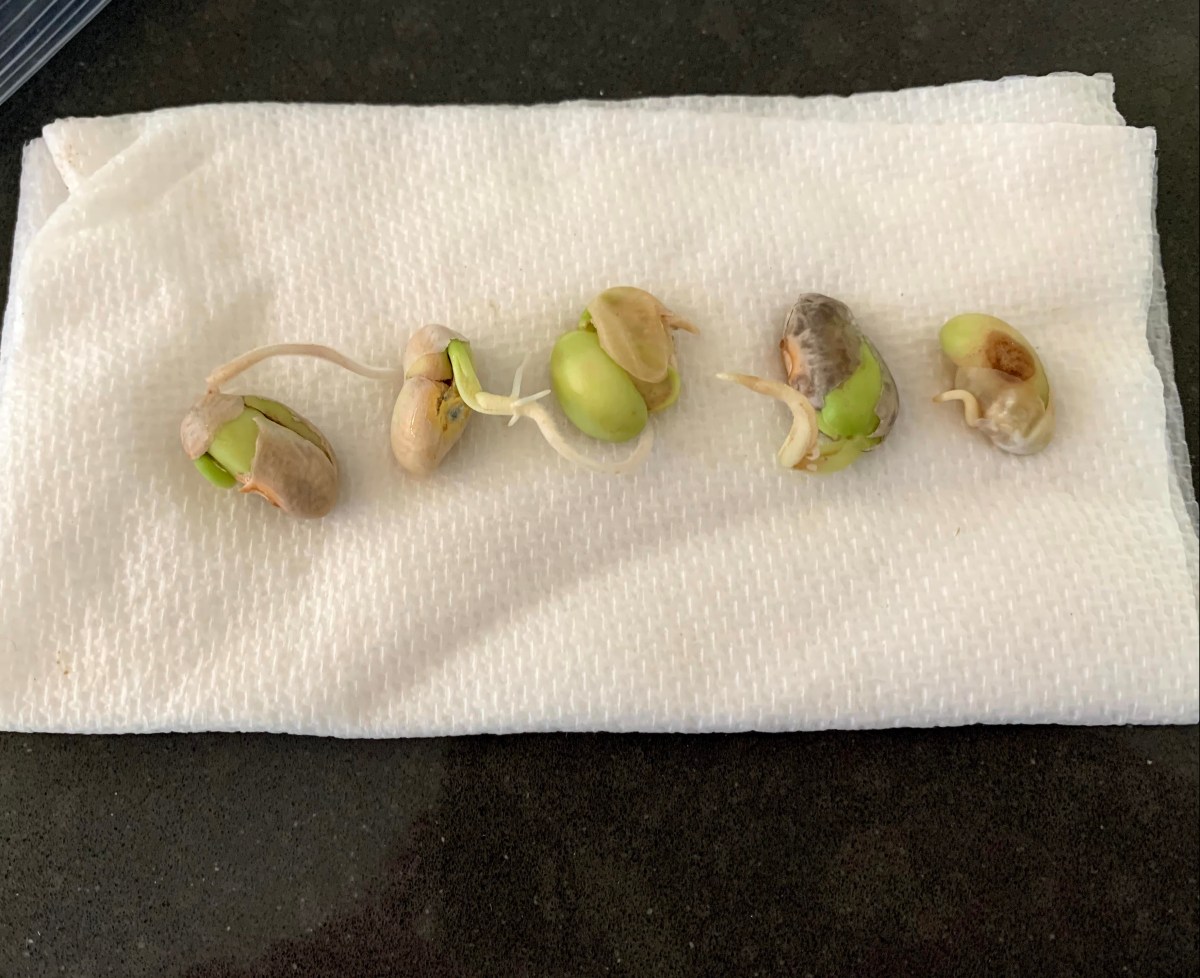
sprouting beans

Please check out my latest blog post on Lessons from the Run, Part 1: Mile 18 – Endurance, and stay tuned for the next addition Lessons of the Run, Part 2: Resilience!  As always, thank you for your continued support and readership! If you have any comments, questions, feedback, requests for future topics, or would like to share a moment/part that resonated with you, your emails are welcome! Stay strong, stay brave, stay true to you!

  • Uncategorized

Part I – Lessons from the Run: Mile 18 – Endurance

Desiree Briel Rodi Consulting & Coaching's avatar Desiree Briel Rodi Consulting & Coaching April 30, 2020

Mile 18, ENDURANCE

I recently listened to a podcast with Brené Brown and Dr. Marc Bracket, Unlocking Us: On “Permission to Feel.”  Brené compared the events of 9/11 to a sprint in which tragedy struck and then we quickly came together and moved forward to focus on recovery. Meanwhile our current situation she compared to a marathon. Just a few days later, a friend said to me, “So Des, you’re a marathon runner, what do you know? What do we need to know in this ongoing situation?”

Then yesterday, a friend and coach asked me how I am doing.  Having been pondering this comparison to a marathon, I responded, “It’s mile 18 of a marathon, “the bonk,” the part where I question my sanity, devise multiple plans of escape, calculate how I will explain quitting the race, determine how far it is to the next aid station and what I will tell them to get them to help me escape.  It is now a mental game.  I know from past marathons that in a few more miles, just 20-30 more minutes of running, resolve will kick in and I will finish.  At the moment, my brain is wild with doubt and panic and desperation (not really but in the sense of what I feel in that place of mile 18 of a marathon).  This is a marathon, and I’m in the intense struggle to find my resolve.  I know my body can finish the race but keeping my mind in the game feels somewhat impossible right now. I miss people and need some encouragement!”

There is no clear finish line to focus on in this marathon we are running. There are no fellow runners to keep up with or talk to, no fans line the course encouraging us to finish. True, at that moment, mile 18, in a marathon, I know how much distance I still have to cover and there is a finish line there, unlike now where we do not know when this will end.  But, in that moment of the “bonk”, whether that comes at mile 13 or mile 15, or mile 18, while the final distance is known, the mind cannot comprehend that distance as tangible.  The thought of another 8.2 miles after hitting mile 18 seems no different than the thought of running for all eternity.

Until I make it to mile 20 or 21 and then it clicks and my mind begins preparing and visualizing the finish line, that moment of accomplishment and celebration. From running 11 marathons now, while the “bonk” or that space of mental anguish, may come at a different point, I now know how to play the mental game, to adjust my self-talk to encourage myself to persevere, to find the resolve.  I know I can endure.  Endurance has come with training and experience, and fierce determination.  I hope we find mile 20/21 and that sense of resolve kicks in, but right now, my mind is wild and in the thick of the struggle.

So, I am focusing on my training and on the lessons from life that have taught me I can and will finish this race, too.  My choice of how the marathon ends is mine – will I cut off the course, will I take a rescue ride out, or will I cross that finish line with a relieved and proud smile of accomplishment on my face?  I am leaning into my daily runs, yoga, meditation, writing, and practicing appreciation for the little things.  I am working to give myself, and those around me, grace and space to struggle, reminding myself that the journey looks different for everyone.  And I continue to remind myself of all the times I have overcome, and to coach myself to remember I will once again cross the finish line victorious, whenever and wherever that line might finally appear.

When have you endured and overcome? What can you learn from the struggles of your past when you have overcome that will help to carry you through to the future once again?  How can you embrace the struggle and calm your mind, knowing you will endure?  What does it look like and feel like to endure and overcome, to cross the finish line? How can you hold on to that feeling in anticipation of successfully completing this endeavor? What do you need to do right now to steel your mind for this mental game? How can you make space to train for the finish line while remaining focused on the journey?

joshua-sortino-5581-unsplash

Boston Marathon 6
Boston Marathon 2
Boston Marathon 1

Boston Marathon, 2018 – The weather took the endurance lessons to another level…more to come!

Stay tuned for more Lessons from the Run!

Photo by Priscilla Du Preez on Unsplash
  • Parents and Children
  • Uncategorized

Repair Conversations – How to recover from word wounds and misunderstandings in the workplace and at home

Desiree Briel Rodi Consulting & Coaching's avatar Desiree Briel Rodi Consulting & Coaching April 23, 2020

Whoever said “Sticks and stones may break my bones but words will never hurt me” was mistaken!  Words can be hurtful and often times things unsaid can also do damage. In this time of high anxiety, with so many complicated situations at home, there is plenty of opportunity for misunderstandings and wounds inflicted by words.  Emotions are running high, and there seems to be a global cloud, low-lying and hard to see, but heavy upon us, of fear, anxiety, and gloom.

I ache for those who are navigating this crisis without a job or the means to weather this unpredictable situation.  I shudder to comprehend the added stress and pressure of financial insecurity while also being in isolation. I honor those deemed essential employees who are courageously still going to work to allow the world to still run, even if at a significantly slower pace.  And while many of us ought to be grateful for the opportunity to work from home, this still creates a new and challenging dynamic.  If you’re anything like me, you like choices and control, so the loss of choice and control is frustrating and hard to accept. Whether you’ve lost your job, are overworked and tired, or are able to work from home, none of us is likely functioning at our best.

When emotions run high, and we fail to have empathy with our co-workers, our spouse, our children, our neighbors, our friends, we fail to show up the way we’d like to and often say or do things that only make the situation worse.  In this time, these misunderstandings and wounds are going to happen, it is just a fact.  However, there is something we can learn to do to strengthen relationships rather than harm them – we can learn to embrace and have repair conversations.

What is a repair conversation?  It is pretty much exactly as it sounds, but goes a bit further than simply saying sorry to make peace.  Here are the steps to successfully have a repair conversation and ensure that the repair isn’t just a cheap bandaid that’s lost its stick, but rather one that truly aids in the recovery of the wound.

  1. Make space to cool down and reflect
  2. Take note of what you were feeling and your reaction. How did you feel physically and emotionally?
  3. Consider the trigger. What caused the reaction? Where did your mind go?
  4. Own your part. What was your story or understanding/misunderstanding that led to the trigger then reaction?
  5. How could you have reacted differently? How would you have liked to have responded?
  6. What insights would be helpful to share? What do you want for the relationship? What do you want for yourself?

Use these reflective questions and considerations to have an honest and open conversation.  Be authentic while taking into consideration how the other person will perceive your words and being careful to choose them wisely.  Be intentional, humble, and be willing to have these conversations again and again.

perry-grone-lbLgFFlADrY-unsplash (3)Photo by Perry Grone on Unsplash

  • Three Thoughts for Thursday
  • Uncategorized

Three Thoughts for Thursday – April 2020

Desiree Briel Rodi Consulting & Coaching's avatar Desiree Briel Rodi Consulting & Coaching April 16, 2020

I have been running more than usual, going on longer and longer runs to inhale the fresh air and maintain some semblance of sanity in this craziness, to steady my mind and remind me of an important lesson of distance running – endurance.  For me, running is when I process the chaos, and my brain can connect the dots and make sense of things. The run is where I leave my anxious thoughts and energy on the trail and, I find peace and connect to myself, to the earth and air, and to something bigger. On one of my Saturday morning runs, when I typically take the opportunity of the weekend to go a little further, I captured this beautiful sunrise as I ran back to the eastside, across the 520 bridge.

IMG_5019

I’d been meaning to run the bridge since it opened with a pedestrian space a few years back, but then we moved to LA. When we moved back to the Seattle-area,  I wasn’t running the distance needed to get me there and back. Suddenly I found myself able to cover the distance and in need of pushing myself to go a little further. Since this run, I have run the bridge several more times and keep pondering bridges. Bridges connect us and unite us, they span the gaps between spaces and places, between the past and the future, the old and the new.

The world as we’ve known it has changed drastically in just the course of a few weeks. Here we are sitting in the middle of what was and what will be, treading water at best.  I keep hearing people say, “I can’t wait for things to return to normal.”  I keep thinking, I hope we don’t simply run back to the side from which we came, but rather that we have the courage to build a bridge to the other side.  I keep thinking about all that we could learn and take forward from what we’ve seen and learned from both the side from which we came and the deep waters we now swim in to build a better world than the one we were forced to leave.

With this idea of bridges in mind, I encourage you to reflect. What bridges are you building?  What is difficult about this time for you? What do you miss about life before?  What are you grateful for in this moment?  What are you learning that you hope to take forward into the new world beyond the coronavirus? What bridges will you build to get to the new and better future that surely awaits if we dare to build it?

IMG_5014

Quote(s) I am sitting with, pondering and finding inspiration:

“The darkest night is often the bridge to the brightest tomorrow.”

~ Jonathan Lockwood Huie

“In the moment of crisis, the wise build bridges, and the foolish build dams.”

~ Nigerian Proverb

“He that would be a leader must be a bridge.”

~ Proverb

Podcast I’m Listening to:

Pema Chödrön: Dealing with Difficult Times – SuperSoul Sunday with Oprah Winfrey

Born in New York City, Pema Chödrön is one of the first Western women to be fully ordained as a Tibetan Buddhist nun. Pema explains how difficult times can be an opportunity for growth and change if you’re willing to embrace the situation and the feelings that come with it. One of the basic Buddhist tenets, Pema says, is that change is constant. “Things are going to keep changing,” she says. “If you’re invested in security and certainty, then you’re not going to feel good a lot of the time.”

Pema Chödrön: Welcoming the Unwelcome – SuperSoul Sunday with Oprah Winfrey

Buddhist nun, author and a pioneer of the mindfulness movement, Pema Chödrön discusses her new book, Welcoming the Unwelcome. Pema reminds us how to connect to our basic goodness. She shares the first thing we should do when things show up for us that are uncomfortable, stressful or hopeless.

Book I am Reading:

The Coaching Habit – Say Less, Ask More and Change the Way You Lead Forever

by Michael Bungay Stanier

 In Michael Bungay Stanier’s The Coaching Habit, coaching becomes a regular, informal part of your day so managers and their teams can work less hard and have more impact.
Drawing on years of experience training more than 10,000 busy managers from around the globe in practical, everyday coaching skills, Bungay Stanier reveals how to unlock your peoples’ potential. He unpacks seven essential coaching questions to demonstrate how–by saying less and asking more–you can develop coaching methods that produce great results.

  • Get straight to the point in any conversation with The Kickstart Question
  • Stay on track during any interaction with The Awe Question
  • Save hours of time for yourself with The Lazy Question, and hours of time for others with The Strategic Question
  • Get to the heart of any interpersonal or external challenge with The Focus Question and The Foundation Question
  • Finally, ensure others find your coaching as beneficial as you do with The Learning Question

A fresh innovative take on the traditional how-to manual, the book combines insider information with research-based in neuroscience and behavioral economics, together with interactive training tools to turn practical advice into practiced habits. Witty and conversational, The Coaching Habit takes your work–and your workplace–from good to great.


Posts pagination

Previous 1 … 16 17 18 … 22 Next
Blog at WordPress.com.
Desiree Briel Rodi Consulting & Coaching
Blog at WordPress.com.
  • Subscribe Subscribed
    • Desiree Briel Rodi Consulting & Coaching
    • Join 36 other subscribers
    • Already have a WordPress.com account? Log in now.
    • Desiree Briel Rodi Consulting & Coaching
    • Subscribe Subscribed
    • Sign up
    • Log in
    • Report this content
    • View site in Reader
    • Manage subscriptions
    • Collapse this bar
 

Loading Comments...