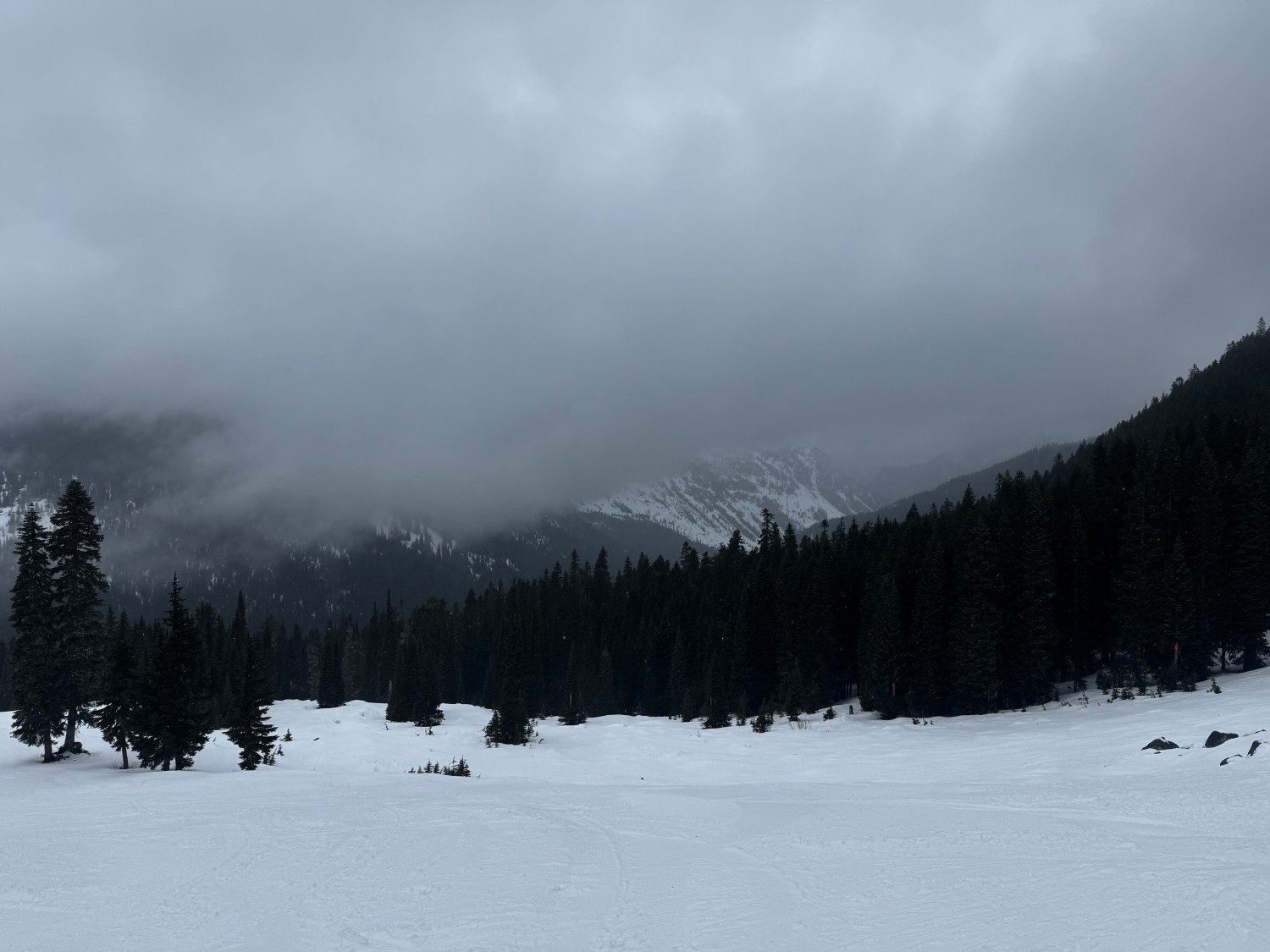

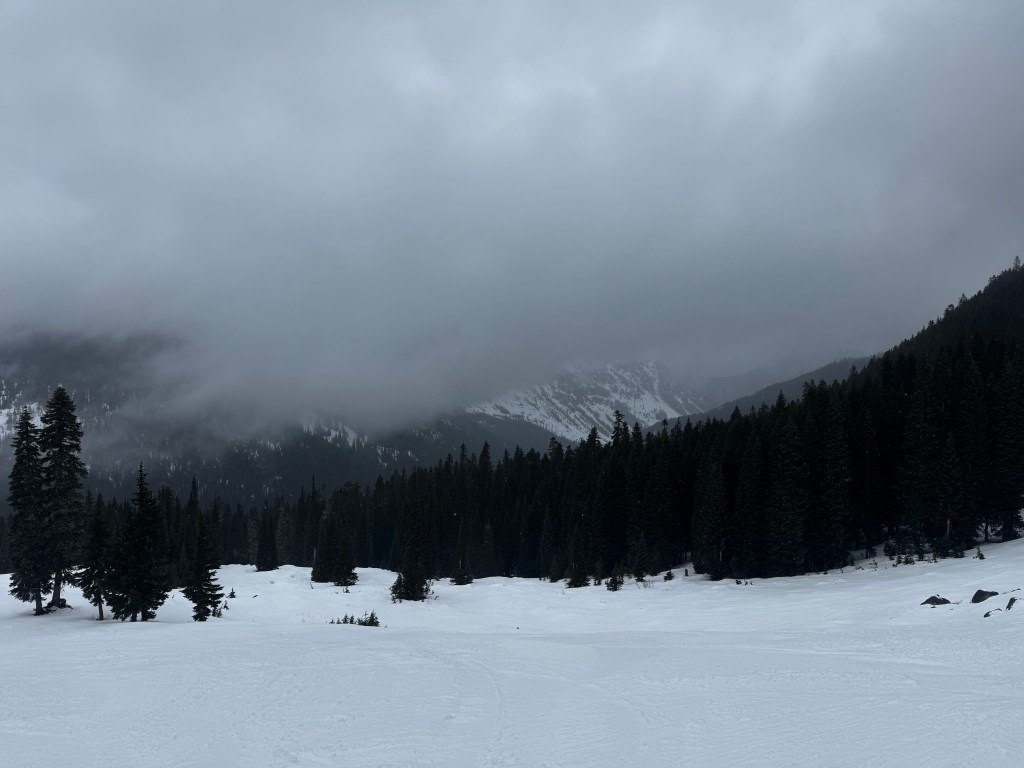
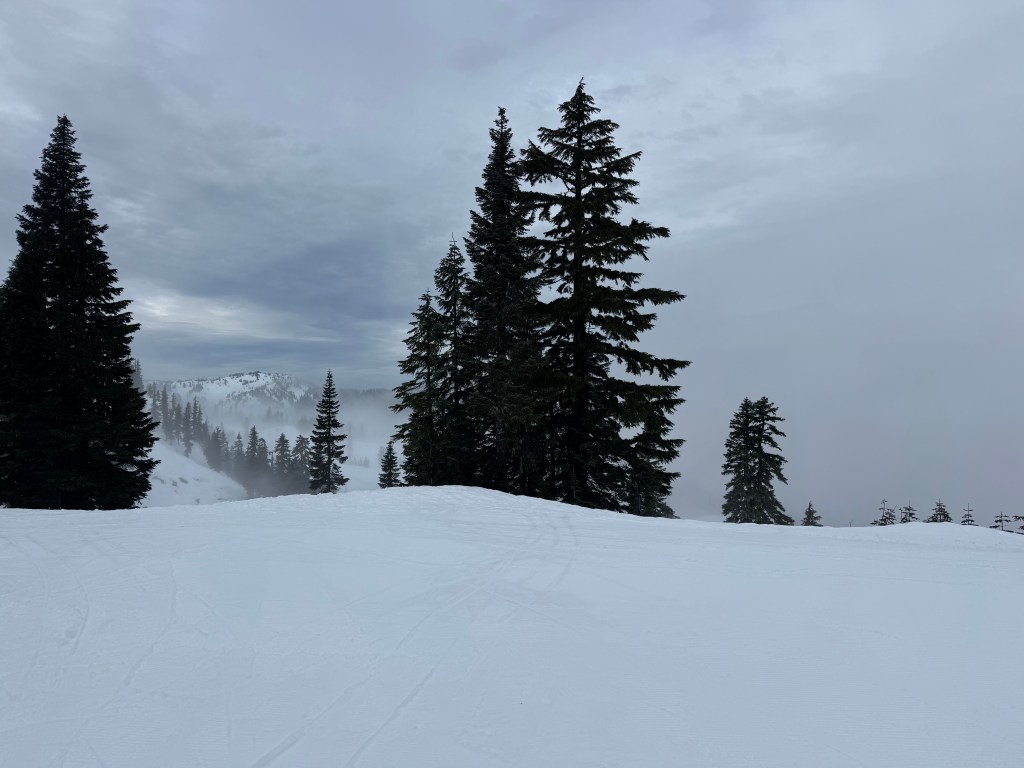
I was skiing recently on a day that had wrapped the mountains in fog. I have come to observe here in the Pacific Northwest, that fog on the slopes can be both beautiful and deeply disorienting. It softens the edges of the mountain, quiets the noise, and turns the world into shades of white and gray. It also obscures what lies ahead. I usually avoid the runs swallowed by fog and save them for later in the day, hoping the sky will clear and visibility will return.
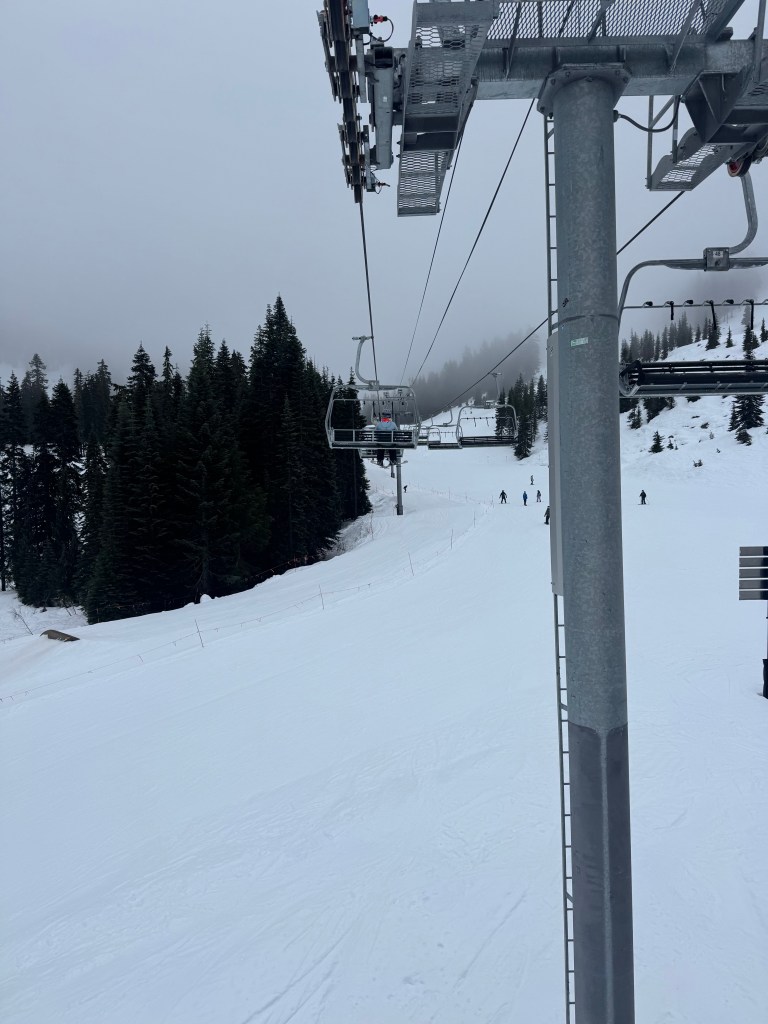
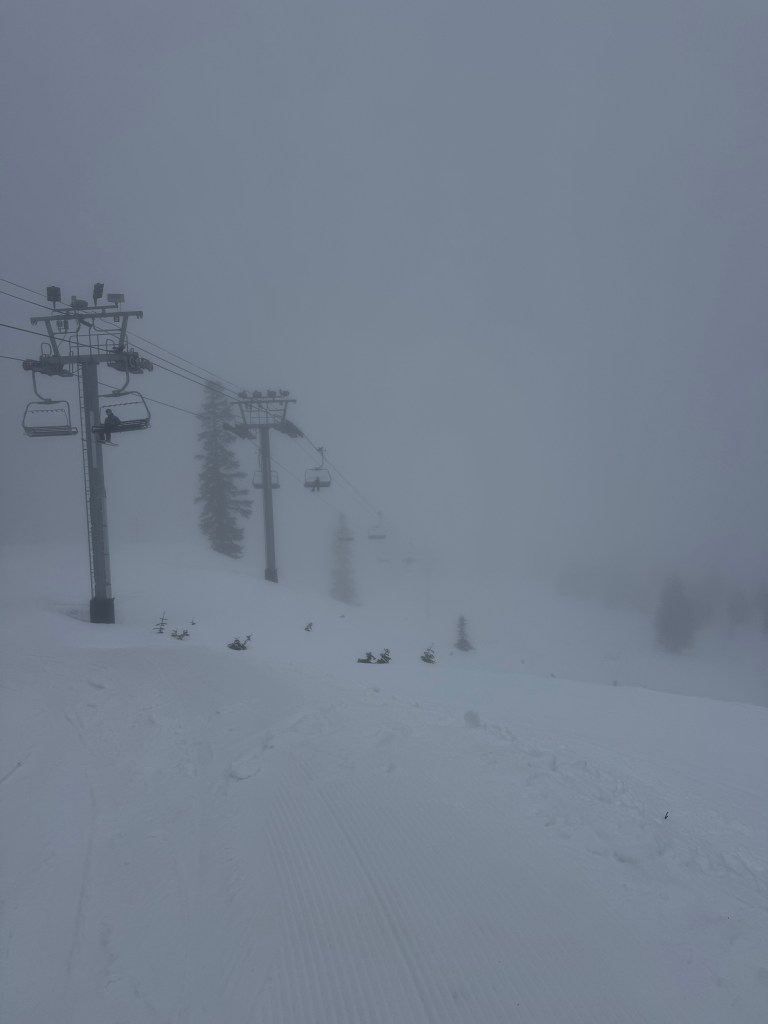
One run didn’t look so foggy from below, so I hopped on the lift and made my way up. It wasn’t until I was on the lift that I realized my view from the bottom wasn’t reliable, either. As I rode higher, visibility shifted. At moments I could see clearly and observe patches of blue in the distance. At other times, everything dissolved into a blur of white. And yet, still in the distance, there were patches of blue sky.
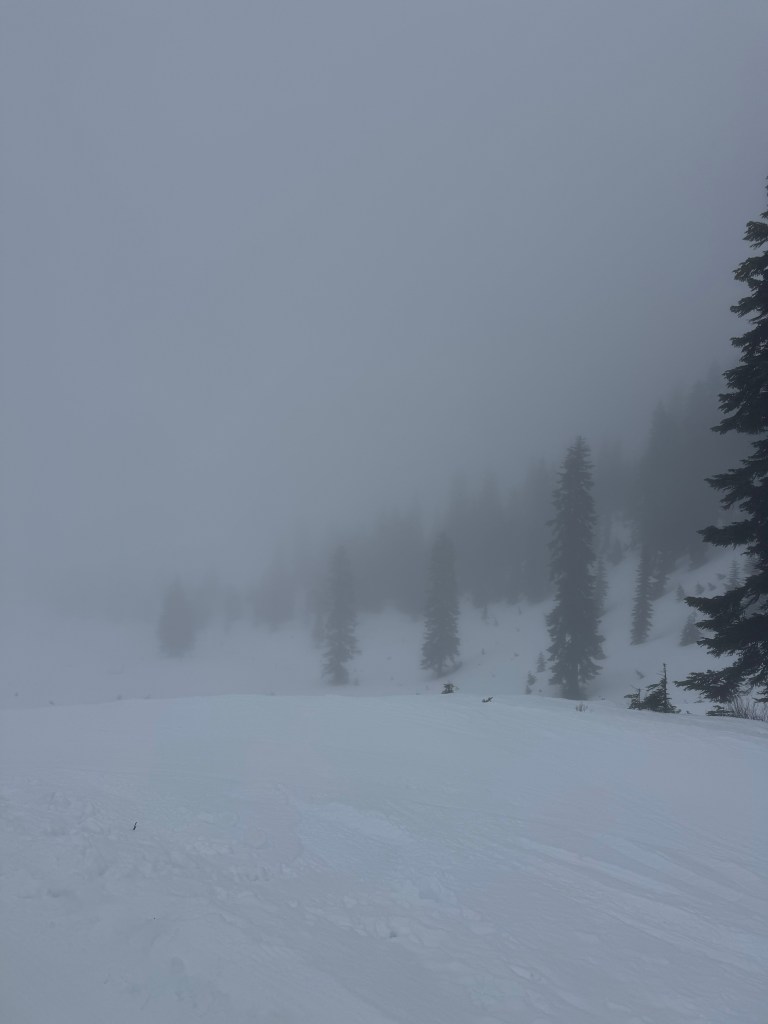
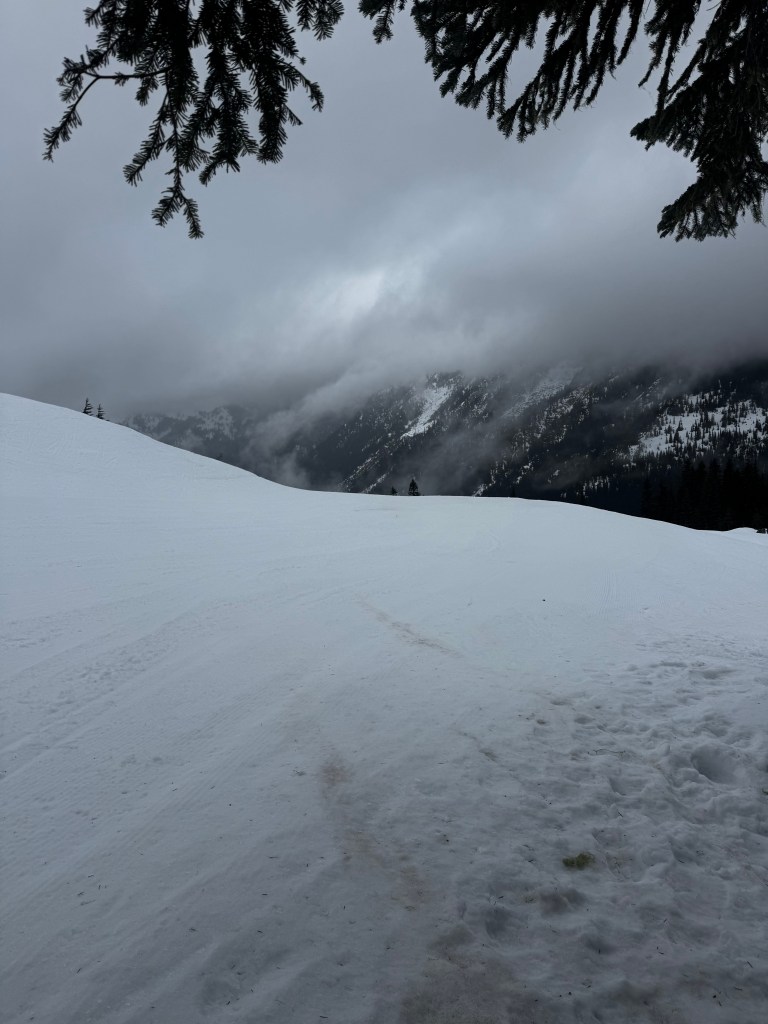
When I stepped off the lift and began my descent, I had to change my approach to descending the mountain. It was in this approach, my lens shifted and I saw both the challenges and gifts of the fog. I slowed down, not because anyone told me to, nor because I was incapable. I slowed down because I could only see the path immediately in front of me.
It was in that narrowing of vision, that my mind paused and realized that I noticed more. I felt the texture of the snow beneath my skis. I paid attention to subtle shifts in terrain. I sensed my body more clearly. I paused occasionally, not out of fear, but to take in what was visible and to carefully choose my next move, to reassess my location and my plan. The fog prevented me from charging ahead or focusing my view down the mountain, into the future. It kept me from skiing toward a horizon I couldn’t actually see, from making a mistake in the present because my eye was focused too far ahead
The gift of the fog was presence. It prevented me from getting too far ahead of myself, from racing toward imagined turns, unseen obstacles, or distant markers of progress. The fog forced me into what was immediately here. Ironically, the very thing I thought might cause me to stumble, this limited visibility, was the thing that reduced my likelihood of falling. I wasn’t skiing toward what I couldn’t see, I was skiing with only the knowledge of what I could see.
We tend to think clarity means seeing far into the distance – five-year plans, career trajectories, strategic roadmaps. We equate confidence with speed toward the goal. We assume that if we cannot see what’s coming, something must be wrong.
The definition of anxiety is living too far in the future, worrying about a future that we can’t accurately predict. So, what if fog is not an interruption of progress, but an invitation to be present, to release anxiety and trust the path will unfold before us?
Fog slows us down. It narrows our focus to the next turn rather than the entire mountain. It heightens awareness. It asks us to trust the skills we’ve already built to navigate the unknown rather than the certainty or control we wish we had.
In leadership, in parenting, in transitions, in research, in career moves, there are seasons of fog, of uncertainty, discomfort and unknowing. There are moments when the horizon disappears and the path forward looks shorter than we would like and we find ourselves uncertain, uncomfortable, and even afraid. Our instinct is often to wait it out, to avoid movement until visibility improves.
Sometimes the fog is the teacher. Fog reminds us that control is limited, control is a mirage, in fact. We learn in the fog that speed is optional, awareness is protective, and presence is stabilizing. Fog, if we acknowledge and embrace it, keeps us from stumbling not by revealing everything ahead, but by anchoring us exactly where we are. Perhaps clarity is not always about distance. Perhaps it is about presence and depth. One step at a time is the answer.
Reflective Questions:
Inward: Insight & Intuition
- Where in your life right now does it feel foggy?
- What is your default response to limited visibility — speed up, freeze, avoid, or slow down?
- What skills have you already developed that you may be underestimating in this season?
- What might the fog be protecting you from?
- What details are you noticing now that you might miss in a season of full visibility?
Integrate: Integrity & Intention
- Are you trying to move at a pace that no longer matches your current clarity?
- What would it look like to align your speed with your visibility?
- Where might slowing down increase wisdom rather than decrease momentum?
- How are your values guiding your next turn — even if you can’t see the entire run?
- What small, intentional step is visible to you right now?
Impact: The Outcome/Experience You Want
- How might presence, rather than projection, change your decisions?
- What if the goal is not to eliminate the fog, but to move skillfully within it?
- Where could greater awareness prevent future stumbling?
- What kind of leader, parent, partner, or human are you becoming in this season of limited visibility?
- If clarity returns tomorrow, what might you be grateful you learned in the fog?
 Desiree Briel Rodi Consulting & Coaching