Skip to content
  • Home
  • About
  • Services
    • Services for Individuals
    • Services for Organizational Leadership & Change
    • Services for Schools and Families
  • The Empathy & Attunement Studio
  • Events
  • Blog
  • Contact
  • Quotes and Inspiration
  • Testimonials
  • Facebook
  • LinkedIn
  • Twitter
  • Instagram
  • Home
  • About
  • Services
  • The Empathy & Attunement Studio
  • Events
  • Blog
  • Contact
  • Quotes and Inspiration
  • Testimonials
  • Facebook
  • LinkedIn
  • Twitter
  • Instagram

Desiree Briel Rodi Consulting & Coaching

Business and People Strategy Unite

  • Home
  • About
  • Services
    • Services for Individuals
    • Services for Organizational Leadership & Change
    • Services for Schools and Families
  • The Empathy & Attunement Studio
  • Events
  • Blog
  • Contact
  • Quotes and Inspiration
  • Testimonials
  • Three Thoughts for Thursday
  • Uncategorized

Three Thoughts for Thursday – July 2020!

Desiree Briel Rodi Consulting & Coaching's avatar Desiree Briel Rodi Consulting & Coaching July 16, 2020

My thoughts lately have continued to be focused around finding the lessons, leaning into this opportunity we have to learn, reflect, and move forward with purpose – to prepare, to transition, to reinvent ourselves, to scrap old, broken ways of being that are holding us back from being our best selves. I will admit, in March and April, I spent some time in denial, particularly on the professional front. I was just beginning to gain momentum with my coaching and consulting business I had worked so hard to build up the courage to start and launch, and I had a tough time admitting to myself, my work would need to pause and I would need to pivot.  Thankfully, my sense of resilience and hope set in, both built from life experiences and hardships overcome.

I began to look at this time of uncertainty and chaos as a time to get quiet and listen, to reflect and learn. I decided to focus on my academic endeavors, my personal growth, and my kids, and to prepare for the unknown future.  I started to feel hopeful that in this time of treading water – of suffering, disappointment, fear, sadness, anger, conflict, confusion, and unrest – this forced slow down and slow breaking – that we might find new answers, new ways of being, new ways of connecting with our humanity and our fellow humans.  I have begun to hope that we may have the courage to reinvent, to scrap broken systems of injustice, to not simply renovate or patch, but to simply begin afresh, to build new ways forward.

I have been inspired by the resilience of others, by the creativity and connectivity that has come forth, by the encouraging words of a neighbor and the kindness of a stranger.  I have been inspired by the opportunities for expansion and by the people taking opportunities to progress, develop, and shift.  I have been reinvigorated by the extra time we’ve spent in nature and living more simply with fewer things to distract us like the hustle and bustle of filling our kids’ time with summer camps and activities.

When people mention “getting back to normal” I cringe. I sincerely hope we do not simply return to life as it was, that returning to our old ways is not our goal. Rather, I hope that we fully lean into our human capacity to learn, expand, adapt, and rise to the challenge with the courage to create something different and better than what we knew before. I hope we take this time to sit in the mess and learn from the past.  Of course, sorting through the messes of life involves facing hard truths, limiting beliefs, painful triggers, and doing the work to process them and prevent them from continuing to hold us back – this is all hard and often painful work. I hope we choose to rise, to do the hard work, and to look for the treasures in the mess in order to thoughtfully and carefully build something more beautiful, equitable, and true.

 

bruno-van-der-kraan-v2HgNzRDfII-unsplash

Photo by Bruno van der Kraan on Unsplash

Quote(s) I am sitting with, pondering and finding inspiration:

“The universe is full of magical things patiently waiting for our wits to grow sharper.”
~ Eden Phillpotts

“Maybe the journey isn’t so much about becoming anything.  Maybe it’s about un-becoming everything that isn’t really you, so you can be who you were meant to be in the first place.”
~ Paulo Coelho

As I watch my own children grow, and I reflect on my own work to return to the essence of my being, to unbecome in order to be who I was always meant to be, I think often of how I can help them simply become.  I think about how I can help them hold onto their inner light and self-knowledge, their truth, confidence, and wonder.  Or at least I think about how their journey may be different if they aren’t striving to become who others think they should be, but simply working towards becoming the best versions of their true and authentic selves.

IMG_6572

Photo by Desiree Briel Rodi

Podcast I’m Listening to:

Coaching for Leaders Episode #479: Leadership Lies We Tell Ourselves, with Emily Leathers

Emily is an executive coach and software engineering manager. She has led teams and advised other managers for years. She’s seen the difference a truly passionate leader and manager can make for their team and the world around them. Like a lot of managers and coaches, she’s had a front-row seat to the patterns that cause a lot of leaders to overwork and overstress. She is the author of the guide The 7 Leadership Lies and she’s the host of the Emotional Leadership podcast. She’s also a member of the Coaching for Leaders Academy.

In this conversation, we discuss some of the common lies that leaders tend to tell themselves that lead to frustration and impostor syndrome. Then, we explore better ways to frame these beliefs, to lead with more confidence and effectiveness.

Key Points:
Lie #1: I’m supposed to do everything I, my manager, or my team can think of.
Truth: A leader’s job is about prioritization – and that means prioritizing how we spend our own time as well.
Lie #2: There’s a timeline.
Truth: There is no rush. Work gets much easier when we turn off the unneeded sense of emergency. Prioritization is the aim.
Lie #3: Emotions don’t belong at work.
Truth: Every action we take is driven by an emotion. You are going to experience emotions at work – that or you’ll be staring at a wall all day without a single thought in your mind. Turning them off isn’t an option. Learning to allow your emotions and use them to your advantage is critical for your success as a leader.
Lie #4: I’m supposed to have an answer for any problem or question a team member asks.
Truth: A manager’s role is to help your team solve problems, not to solve problems for your team.

Resources Mentioned:

  • The 7 Leadership Lies
  • Anger + Allowing Strong Emotions with Vivien Yang (Emotional Leadership podcast)

Related Episodes:

  • How to Build Psychological Safety, with Amy Edmondson (episode 404)
  • What to Do With Your Feelings, with Lori Gottlieb (episode 438)

The Way to Be More Coach-Like, with Michael Bungay Stanier (episode 458)

daniil-kuzelev-QRawWgV6gmo-unsplash

Photo by Daniil Kuželev on Unsplash

Book I am Reading:

The Emotionally Intelligent Manager: How to Develop and Use the Four Key Emotional Skills of Leadership by David R. Caruso and Peter Salovey

We have long been taught that emotions should be felt and expressed in carefully controlled ways, and then only in certain environments and at certain times. This is especially true when at work, particularly when managing others. It is considered terribly unprofessional to express emotion while on the job, and many of us believe that our biggest mistakes and regrets are due to our reactions at those times when our emotions get the better of us.

David R. Caruso and Peter Salovey believe that this view of emotion is not correct. The emotion centers of the brain, they argue, are not relegated to a secondary place in our thinking and reasoning, but instead are an integral part of what it means to think, reason, and to be intelligent. In The Emotionally Intelligent Manager, they show that emotion is not just important, but absolutely necessary for us to make good decisions, take action to solve problems, cope with change, and succeed. The authors detail a practical four-part hierarchy of emotional skills: identifying emotions, using emotions to facilitate thinking, understanding emotions, and managing emotions―and show how we can measure, learn, and develop each skill and employ them in an integrated way to solve our most difficult work-related problems.

Photo by Desiree Briel Rodi

Please check out my latest blog posts on Lessons from the Run, Part 1: Mile 18 – Endurance, and Lessons from the Run, Part 2: Resilience, and stay tuned for the next addition Lessons of the Run, Part 3: Rest, as well as my upcoming blog post on My Vision: The Power of EQ to Create Change!  If you missed my June edition of Three Thoughts for Thursday, you can find it here, on my blog as well. As always, thank you for your continued support and readership! Stay strong, stay brave, stay true to you!

  • Three Thoughts for Thursday
  • Uncategorized

Three Thoughts for Thursday – June 2020!

Desiree Briel Rodi Consulting & Coaching's avatar Desiree Briel Rodi Consulting & Coaching June 18, 2020

Photo by McKenna Phillips on Unsplash

When I took my first course in Emotional Intelligence, I was asked to tell and own my story, my history, my past, the moments and people and events that had served to shape me and make me who I am.  I was terrified the truth would isolate me, but I summoned the courage and owned the good, the bad and what I deemed, ‘the ugly’.  What I found was human connection in those dark moments of pain and suffering, and what I finally felt was acceptance and understanding. 

I have been thinking a great deal about this phenomenon, that the moments we hide and find embarrassing or shameful are often the moments that connect us as human beings, not on the surface but at the core.  In our humanity, we are connected by our sadness and anger and shame and fear.  In our suffering, we are united. As I learned this lesson, I became more open about sharing my tender moments, my struggles, my fear and my pain, and rather than judgment, I found acceptance, support and a great network of humans inherently alike in our human story, our humanity. I have never ceased to be grateful for the moments when I show up authentically and share deeply and am met with the same gratitude and authenticity.  In the relationships where I have shown up with vulnerability, the connection has been strengthened.  My friendships and relationships now consist of trust, depth, commitment and reciprocity. We are more alike than we are different and yet we focus so much time and energy on the differences.  When will we begin to see and own our humanity and our inherent value as human beings?

What is your story?  Who and what have shaped you into who you are, the values and beliefs you hold, what you fear, what you hide, what you show to the world? What connects you to humanity? How might you show up differently? What pieces of yourself might you find the courage to show and how might this connect you with others? How might things begin to change if you dare to offer the world the authentic you? How might your relationships benefit if you have the courage to be vulnerable and true? How might things change if you dare to see the humanity in others?

Photo by Laura Dewilde on Unsplash

Quote I am sitting with, pondering and finding inspiration:

You think your pain and your heartbreak are unprecedented in the history of the world, but then you read. It was books that taught me that the things that tormented me most were the very things that connected me with all the people who were alive, or who had ever been alive.”
~ James Baldwin

When our hearts are small, our understanding and compassion are limited, and we suffer. But when our hearts expand, we have a lot of understanding and compassion and can embrace others.

~ Thich Nhat Hanh

Photo by Andrew Seaman on Unsplash

Podcast I’m Listening to:

HBR IdeaCast

Great Leaders Use Tough Love to Improve Performance

Frances Frei, professor at Harvard Business School, says that trust, empathy – and even a bit of tough love – are all essential ingredients to strong leadership in today’s world. Successful managers focus on the effect they have on others, not themselves. They also define a strategy and create a culture that drives employee behavior in their absence. Frei is the coauthor, along with Anne Morriss, of the book “Unleashed: The Unapologetic Leader’s Guide to Empowering Everyone Around You” as well as the HBR article “Begin with Trust.”

My notes and highlights:

  • Strategy and culture are important at the team level, too, and both are too often not fully utilized.
  • Elevate, expand capacities, empower those around you so there’s leadership even in your absence
  • Pay attention to your impact
  • Trust is the starting point and is reliant upon three actionable components
    • Authenticity – be authentic as a leader and create the conditions for people to be authentic – safe, welcome, celebrated for authenticity.  Pay attention to what triggers most authentic version of you and others to show up.
    • Logic – establish credibility and careful communication.  Communication is made up of substance and style – style is often where things go wrong.  Start with the point then give supporting evidence.  Don’t talk about things you don’t know well.
    • Empathy – most important piece in time of crisis!  Have to be present to needs of others, not self-distracted. Everyone is self-distracted right now.  Put your own oxygen mask on first, be aware of distraction, and choose to hold meetings and one-on-ones when you can be present.
  • Love – In order to bring out the best in others, you need to set really high standards AND also have deep devotion to your employee’s success.  Display this intense devotion to their success without lowering standards.
  • Carol Dweck (Mindset, highlighted below) says there are two ways to parent.  You can prepare the path for the boy or prepare the boy for the path.  This goes for employees, too.  Prepare the boy for the path, to thrive even in your absence.

Staying Agile Beyond a Crisis

Darrell Rigby, partner at Bain & Company, says many firms have rapidly adopted agile principles to react to the coronavirus crisis. Namely, they’ve been ditching bureaucratic planning processes and instead fast-tracking ideas, holding focused meetings, and empowering decisions at lower levels of the organization. He argues that C-suite leaders should keep this newfound organizational nimbleness for good and explains how they can. With Sarah Elk and Steve Berez, Rigby wrote the HBR article “The Agile C-Suite” and the new book “Doing Agile Right: Transformation Without Chaos.”

My notes and highlights:

  • Agile – a mindset and a method for improving innovation through deep customer collaboration and adaptive testing and learning.
  • Maintaining our newfound agility as we return to the workplace is essential and can be done.

Photo by Sharon McCutcheon on Unsplash

Book I am Reading:

Revisiting Mindset: The New Psychology of Success by Carol S. Dweck

After decades of research, world-renowned Stanford University psychologist Carol S. Dweck, Ph.D., discovered a simple but groundbreaking idea: the power of mindset. In this brilliant book, she shows how success in school, work, sports, the arts, and almost every area of human endeavor can be dramatically influenced by how we think about our talents and abilities. People with a fixed mindset—those who believe that abilities are fixed—are less likely to flourish than those with a growth mindset—those who believe that abilities can be developed. Mindset reveals how great parents, teachers, managers, and athletes can put this idea to use to foster outstanding accomplishment.

In this edition, Dweck offers new insights into her now famous and broadly embraced concept. She introduces a phenomenon she calls false growth mindset and guides people toward adopting a deeper, truer growth mindset. She also expands the mindset concept beyond the individual, applying it to the cultures of groups and organizations. With the right mindset, you can motivate those you lead, teach, and love—to transform their lives and your own.

Photo by Joshua Hoehne on Unsplash

Please check out my latest blog posts on Lessons from the Run, Part 1: Mile 18 – Endurance, and Lessons from the Run, Part 2: Resilience, and stay tuned for the next addition Lessons of the Run, Part 3: Rest, as well as my upcoming blog post on My Vision: The Power of EQ to Create Change!  As always, thank you for your continued support and readership! Stay strong, stay brave, stay true to you!

  • featured
  • Uncategorized

Part II: Lessons of the Run – Resilience

Desiree Briel Rodi Consulting & Coaching's avatar Desiree Briel Rodi Consulting & Coaching June 3, 2020

Resilience Image

Photo by Karim MANJRA on Unsplash

I have been thinking about, mulling over this idea of resilience, and have seen many articles and discussions around the theme lately as Covid-19 has forced us all into uncharted territory. I have pondered resilience many times as I have reflected upon my past, as I watched my boys learn to crawl and walk and stumble and try again. Perhaps my biggest “aha moment” around resilience however came two years ago.  I was training for the Boston Marathon for which I had finally earned a qualifying time.  I hadn’t set out when I began running marathons, to run Boston, but rather had set the intention on simple self-improvement with each race, as after the first marathon I felt compelled to run another and another.  As my times crept closer to Boston requirements and qualifying actually became achievable, however, I reconsidered and decided to go for it.  I qualified during my 10th marathon and my 5-year-old son, Ben, ran across the finish line with me – it was a great day!

Eight months later, I found myself in the ER at UCLA Westwood, receiving the diagnosis that what I had chalked up to be a complicated migraine had actually been a stroke that morning, causing my left arm, hand, and parts of my face to go, and remain, numb.  The first question out of my mouth was, “Can I still run the Boston Marathon?” which was just six weeks away and for which I’d been training faithfully.   The doctor told me, “There will be other marathons.”  I replied, “You don’t understand!  I’ve run 10 marathons to qualify for this race and have trained for several more. There may not be more Boston Marathons in my future.”

A week later, I followed up with a cardiologist and posed the same question.  As the dust had settled a bit and I had recovered most of the sensations in, and use of, my left hand, arm and face, the response was, “Well, I can’t tell you not to” which I quickly translated to “yes”. On April 16, 2018, I ran the Boston Marathon.  Despite what Time Magazine noted as “..grueling conditions on Monday as heavy rain poured and wind gusts hit more than 25 miles per hour — all among the coldest temperatures for the 122nd annual Boston Marathon race in three decades” (Calfas, 2018). My watch died halfway through and I felt utter despair in not being able to know my pace and how many minutes until the finish line.  If you read my previous Lessons from the Run: Endurance post, you’ll understand when I note that during the Boston Marathon, the “bonk” came at just mile 13, the halfway point.  I thought about quitting – no one would have blamed me given the abysmal weather conditions.

And then the voice that had responded in defiance to the doctors after my stroke reminded me, “You have run 10 marathons to be here today.  You are crossing that finish line!  This will not be a personal record, but you will not quit! You do not quit!” This sentiment perhaps summarizes my life so far – I may reroute, but I do not quit!

When people later asked me about my stroke and the Boston Marathon and looked at me as if I was completely insane, I realized perhaps I had taken resilience to an uncommon level, and I began to ponder their questions of “How???” and “Why???”  How and why did I bounce back so quickly from the stroke to run Boston?

Resilience for babies and children seems to be automatic.  As I thought back to my childhood, one in which I had two brain surgeries, an emergency appendectomy, a broken collar bone, and in which I moved around a lot, living in 14 different houses and going to 8 different schools, I realized these experiences had shaped who I’d become.  In those early months and years, as I learned to crawl and walk and overcame my first brain surgery, a battle with a staph infection, and later at 2-years-old, a broken collar bone, I realized I only knew to fight for my life, to fight to heal – it was inherent to overcome and survive in those early months and years.  However, these early experienced shaped me and taught me to fight, and to overcome became a reflex.  So then later, as I faced other obstacles, new challenges, I had the experiences of triumph to reflect upon, and this reflex to find a way forward.

Resilience, as we grow and develop, seems to be a culmination of experience, learning to endure, reroute, move forward, and overcome.  I had been shaped by my experiences, not only by these profound personal experiences but by running, as well.  As a sophomore in high school, new to another school, I went out for the cross country running team. I trained all summer, to prepare for the infamous 2-a-day practices.  Just weeks into the season and before the first competition, the coach noticed me limping through my run and called me back.  Soon, I could barely walk, I was in so much pain.  I was diagnosed with a stress fracture and relegated to the sidelines with a purple cast for the next six weeks, the remainder of the season.  What I learned from the experience – maybe I am not someone who should run every day.  I chose to look for a lesson rather than letting the experience define me as someone who will not be a runner.  I still ran throughout high school and college.  Running became my stress relief, I just didn’t run every day.

Fast forward to a couple of years after college, all of my friends were heading to grad school, law school, med school, or taking fancy jobs in banking in New York City, and I had no idea what I wanted to do.  So, I returned to the run and signed up for a marathon.  I found a training plan and focused on this next personal achievement.  Weeks into the training plan and the ache in my shin reminded me running every day was a mistake.  Rather than quitting, I revised the training plan to run 3-4 days a week, using swimming, spinning, yoga, and weights to maintain my muscle mass, maximize my lung capacity, and improve my stretching habits.  I ran my first marathon successfully crossing the finish line, injury-free, and looking for the next challenge.

Years later, as I fell into the pattern of running a few marathons a year, I again fell into the trap of trying to run every day.  I felt good, I was getting faster, surely I’d passed that previous threshold of not being able to run every day.  Nope, just two weeks before the Napa Valley Marathon 2010, I was once again barely able to walk and this time, diagnosed with a stress fracture and two partial muscle tares. I turned to the pool to scratch the itch running had scratched and to get that high running had given me.  I learned another lesson – cross-train!

The pool became my refuge and as I returned to the run and training for marathons, I continued to rotate swimming into my training to keep me from getting hurt. I have run several marathons since then and have continued to learn the important lessons of adaptation and flexibility, both essential to resilience. I don’t quit, I adapt, and this is what has allowed me to overcome, and what allowed me to run the Boston Marathon six weeks after a stroke. As I sat in the aftermath of the stroke and the achievement of crossing the finish line of the Boston Marathon in the worst weather in history, I finally came to realize how important the theme of resilience is to my life and my character.  Resilience, the ability to overcome, to adapt, to reroute, has made me strong and determined and courageous in the face of adversity, and what has made me resilient are the many opportunities I have been given to overcome.  Resilience is hard-earned, but the lessons and outcomes are worth the battle. I only fail if I fail to learn the lesson.

In this time of great personal and national challenge, I encourage you to look for opportunities to learn, adapt, and face the fear that threatens to overcome with boldness, flexibility, determination, and endurance. Visualize you on the other side…what have you learned? How have you changed? Who have you become? Who do you want to become? What are you learning now? What are your choices? What do you not have the power to control? How can you let that go? What do you control? Own what you can change. Chase after that vision of the future you, the you who you would like to become, and don’t let anything or anyone stand in the way of becoming the best version of you, the version of you you deserve to become! Be resilient!

Highway 20 sign, Newport, OR the day after qualifying for Boston
Crossing the finish line of the Boston Marathon

If you missed Lessons from the Run, Part I: Mile 18 – Endurance, you can find it here. Please stay tuned for Lessons from the Run, Part III: Rest and Lessons from the Run, Part IV: Grit and Determination

References:

Calfas, J. (2018, April 16). “This Year’s Boston Marathon Weather is Rainy and Windy. Runners Say It’s ‘Awesome/Terrible'”. Time Magazine. Retrieved from http://www.time.com/5241504/boston-marathon-2018-wind-rain/


  • Three Thoughts for Thursday
  • Uncategorized

Seasons and Sunsets: Three Thoughts for Thursday – May 2020

Desiree Briel Rodi Consulting & Coaching's avatar Desiree Briel Rodi Consulting & Coaching May 22, 2020

Three Thoughts for Thursday – May 2020

We have been having beautiful sunsets! I really appreciate this time of year as I watch these sunsets and the view change and evolve from our bedroom window.  As winter comes to an end and spring begins, the trees have not yet bloomed yet the days are becoming longer.  The colors are stunning and while the trees are still bare, but the days are getting longer and less rainy, we can glimpse Lake Washington and the Olympic Mountains in the distance.  Of course, when the trees do begin to bud, a new beauty replaces that of the lake in the distance, and the blossoms are spectacular.  Soon, the blossoms, too, drop away, and our view is that of lush, green forest wetlands.  The view continues to change and time goes forward, each view offers its own beauty, and I can’t help but think as I watch the sunsets, what else the sun is setting upon and what will bloom from this time of slowing down, of isolation, of change and transition. This is a time of mourning and of opportunity as the sun sets on life as we knew it and we await the dawn of what will be, and as we wait, the sun continues to set and somewhere else it rises, and change and transitions continue to occur as we explore our way forward.

What will come from necessity and what will come from the abundance of which there are both right now in different ways? How do I grieve the passing of another day, an old way as the sun sets, and yet hold tightly to hope and wonder as the dawn comes again bringing and illuminating new views and new ways? What do I want to remain and what do I hope will shift?  What do I hope the dawn will bring and how might I change to offer something new and more refined?

IMG_5641

Quote I am sitting with, pondering and finding inspiration:

A Deeper View of Life

The work of acknowledging everything in mindfulness leads us to a deeper view of what life is.  It is very important to understand that impermanence is not a negative aspect of life. Impermanence is the very basis of life.  If what exists were not impermanent, no life could continue. If a grain of corn were not impermanent, it could not become a corn plant. If a tiny child were not impermanent, she could not grow into an adult.

            Life is impermanent, but that does not mean that it is not worth living. It is precisely because of its impermanence that we value life so dearly. Therefore we must know how to live each moment deeply and use it in a responsible way. If we are able to live the present moment completely, we will not feel regret later. We will know how to care for those who are close to us and how to bring them happiness. When we accept that all things are impermanent, we will not be incapacitated by suffering when things decay and die. We can remain peaceful and content in the face of continuity and change, prosperity and decline, success and failure.

~ Thich Nhat Hanh, Your True Home: the everyday wisdom of thich nhat hanh, #83

IMG_5748

Podcast I’m Listening to:

What I’ve been appreciating about the Coaching for Leaders podcast hosted by Dave Stachowiak is the variety of topics and guests, the resonance of the topics, the relevance and tips offered that I can employ in my own life and that he always offers additional materials and podcast recommendations for further work and connection. During this time of being at home, I have been homing in on what is essential, relevant, and fills me up, as well as considering how to be more flexible and adaptable.  These two podcasts hit on these themes and also made me think more about the idea that different types of organizations (non-profit, public sector, big corporations, etc.) all have lessons that cross over as they are all still made up of humans and human lessons are relevant across organizations.

Coaching for Leaders, Episode #469: See What Really Matters with Greg McKeown

Greg McKeown is the author of the New York Times and Wall Street Journal bestseller, Essentialism: The Disciplined Pursuit of Less. His book is frequently listed as #1 Time Management book on Amazon and challenges the core assumptions about achievement to get to the essence of what really drives success.

His writing has appeared in or been covered by the New York Times, Fast Company, Fortune, HuffPost, and many others. He is among the most popular bloggers for the Harvard Business Review and LinkedIn’s Influencers group averaging a million views a month.

In this conversation, Greg and Dave discuss why success can be such a poor teacher and how to avoid what Jim Collins calls, “The undisciplined pursuit of more.” We explore how the principles of journalism can help us arrive at what’s essential and why journaling may be the place to start.

Key Points:

  • Success is a poor teacher and may lead to the undisciplined pursuit of more.
  • Essentialists listen for what is not being explicitly stated. They read between the lines.
  • Nonessentialists hear what is loud. Essentialists listen for the signal in the noise.
  • Journaling is a useful practice to begin reviewing what is coming up in your life and discovering the leads you may be missing.
  • Make time every 90 days to review and determine what’s next.

Related Episodes:

  • Getting Things Done, with David Allen: Episode #184
  • How to Make Deep Work Happen, with Cal Newport: Episode 233
  • Six Tactics for Extraordinary Performance, with Morten Hansen, Episode 337
  • Finding Joy Through Intentional Choices, with Bonni Stachowiak, Episode 417

Coaching for Leaders, Episode #470: How to Build an Invincible Company, with Alex Osterwalder

Alex is obsessed with making strategy, innovation, and entrepreneurship simple, practical, and applicable. He invented the Business Model Canvas, co-founded Strategyzer.com, and lead-authored Business Model Generation which sold a million copies in 30 languages. He’s one of the top-ranked management thinkers in the world by Thinkers50.

He is the author of the book, The Invincible Company: How to Constantly Reinvent Your Organization with Inspiration From the World’s Best Business Models.

In this conversation, Alex and Dave explore the distinction between exploration and exploitation that invincible organizations must hold in tandem. Alex teaches us the five most common myths of the innovation journey and what leaders can do to compete and stay relevant in a changing world.

Key Points:

Myths of the innovation journey:

  1. The most important part of the innovation and entrepreneurship journey is to find and execute the perfect idea.
  2. The evidence will show you a clear path forward while you systematically test ideas. The solution will magically emerge if you just test and adapt your idea often enough.
  3. A small number of big bets will lead to a large return.
  4. The skills required to explore a new business and to manage an existing one are pretty similar. Business is business.
  5. Innovation teams are renegades or pirates that are out to disrupt the old business. They need to operate in stealth mode to survive inside a company.

Invincible companies constantly reinvent who they are and where and how they compete in order to stay relevant and ahead.

Related Episodes:

  • How to Transform Your Limitations into Advantages, with Mark Barden, Episode #207
  • The Way to Nurture New Ideas, with Safi Bahcall, Episode #418
  • How to Start Seeing Around Corners, with Rita McGrath, Episode #430

IMG_5747

Book I am Reading:

Dare to Lead by Brené Brown

#1 NEW YORK TIMES BESTSELLER • Brené Brown has taught us what it means to dare greatly, rise strong, and brave the wilderness. Now, based on new research conducted with leaders, change-makers, and culture shifters, she’s showing us how to put those ideas into practice so we can step up and lead.

Don’t miss the hourlong Netflix special Brené Brown: The Call to Courage!

NAMED ONE OF THE BEST BOOKS OF THE YEAR BY BLOOMBERG

Leadership is not about titles, status, and wielding power. A leader is anyone who takes responsibility for recognizing the potential in people and ideas and has the courage to develop that potential.

When we dare to lead, we don’t pretend to have the right answers; we stay curious and ask the right questions. We don’t see power as finite and hoard it; we know that power becomes infinite when we share it with others. We don’t avoid difficult conversations and situations; we lean into vulnerability when it’s necessary to do good work.

But daring leadership in a culture defined by scarcity, fear, and uncertainty requires skill-building around traits that are deeply and uniquely human. The irony is that we’re choosing not to invest in developing the hearts and minds of leaders at the exact same time as we’re scrambling to figure out what we have to offer that machines and AI can’t do better and faster. What can we do better? Empathy, connection, and courage, to start.

Four-time #1 New York Times bestselling author Brené Brown has spent the past two decades studying the emotions and experiences that give meaning to our lives, and the past seven years working with transformative leaders and teams spanning the globe. She found that leaders in organizations ranging from small entrepreneurial startups and family-owned businesses to nonprofits, civic organizations, and Fortune 50 companies all ask the same question:

How do you cultivate braver, more daring leaders, and how do you embed the value of courage in your culture? 

In this new book, Brown uses research, stories, and examples to answer these questions in the no-BS style that millions of readers have come to expect and love.

Brown writes, “One of the most important findings of my career is that daring leadership is a collection of four skill sets that are 100 percent teachable, observable, and measurable. It’s learning and unlearning that requires brave work, tough conversations, and showing up with your whole heart. Easy? No. Because choosing courage over comfort is not always our default. Worth it? Always. We want to be brave with our lives and our work. It’s why we’re here.”

Whether you’ve read Daring Greatly and Rising Strong or you’re new to Brené Brown’s work, this book is for anyone who wants to step up and into brave leadership.

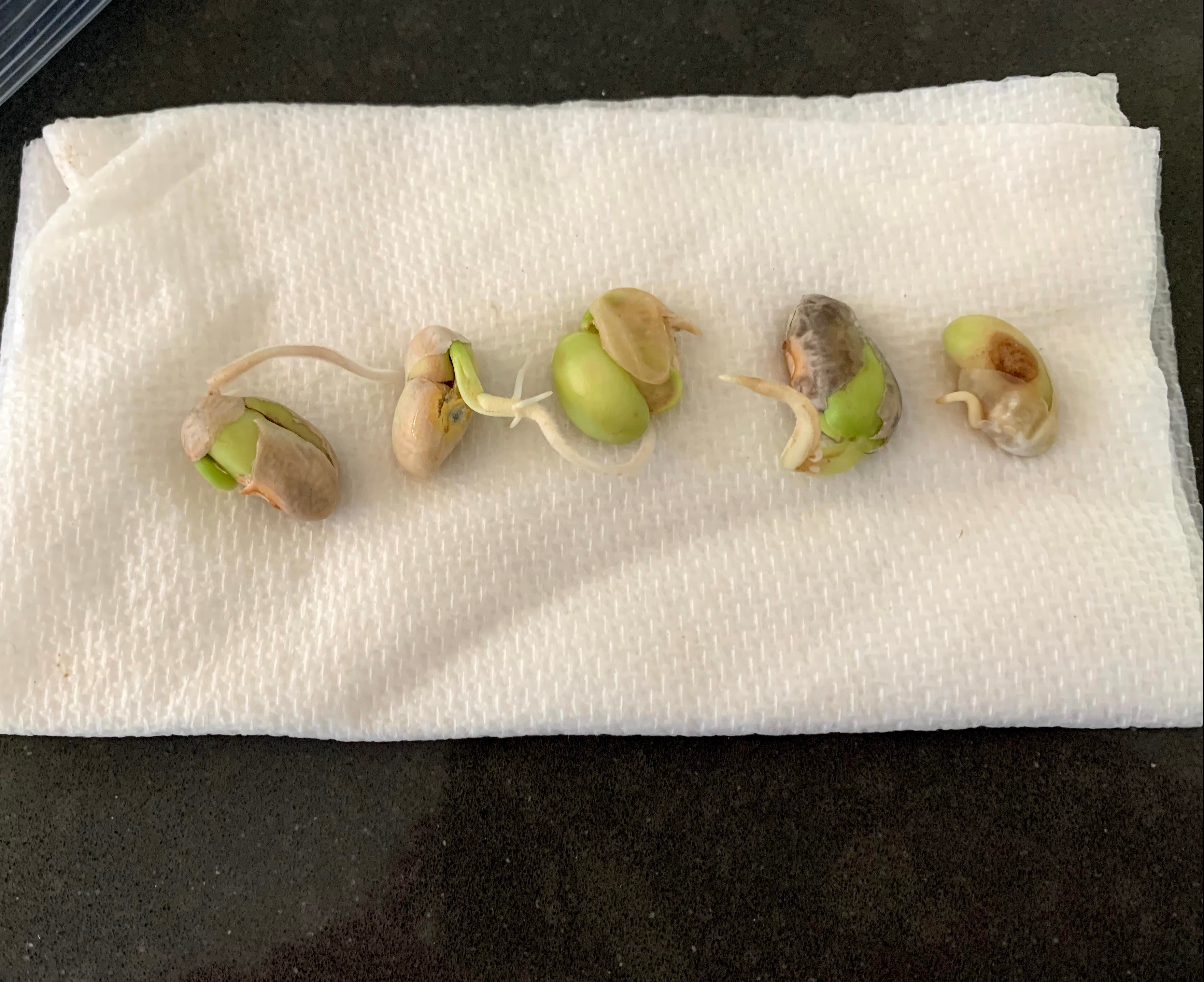
sprouting beans

Please check out my latest blog post on Lessons from the Run, Part 1: Mile 18 – Endurance, and stay tuned for the next addition Lessons of the Run, Part 2: Resilience!  As always, thank you for your continued support and readership! If you have any comments, questions, feedback, requests for future topics, or would like to share a moment/part that resonated with you, your emails are welcome! Stay strong, stay brave, stay true to you!

  • Uncategorized

Part I – Lessons from the Run: Mile 18 – Endurance

Desiree Briel Rodi Consulting & Coaching's avatar Desiree Briel Rodi Consulting & Coaching April 30, 2020

Mile 18, ENDURANCE

I recently listened to a podcast with Brené Brown and Dr. Marc Bracket, Unlocking Us: On “Permission to Feel.”  Brené compared the events of 9/11 to a sprint in which tragedy struck and then we quickly came together and moved forward to focus on recovery. Meanwhile our current situation she compared to a marathon. Just a few days later, a friend said to me, “So Des, you’re a marathon runner, what do you know? What do we need to know in this ongoing situation?”

Then yesterday, a friend and coach asked me how I am doing.  Having been pondering this comparison to a marathon, I responded, “It’s mile 18 of a marathon, “the bonk,” the part where I question my sanity, devise multiple plans of escape, calculate how I will explain quitting the race, determine how far it is to the next aid station and what I will tell them to get them to help me escape.  It is now a mental game.  I know from past marathons that in a few more miles, just 20-30 more minutes of running, resolve will kick in and I will finish.  At the moment, my brain is wild with doubt and panic and desperation (not really but in the sense of what I feel in that place of mile 18 of a marathon).  This is a marathon, and I’m in the intense struggle to find my resolve.  I know my body can finish the race but keeping my mind in the game feels somewhat impossible right now. I miss people and need some encouragement!”

There is no clear finish line to focus on in this marathon we are running. There are no fellow runners to keep up with or talk to, no fans line the course encouraging us to finish. True, at that moment, mile 18, in a marathon, I know how much distance I still have to cover and there is a finish line there, unlike now where we do not know when this will end.  But, in that moment of the “bonk”, whether that comes at mile 13 or mile 15, or mile 18, while the final distance is known, the mind cannot comprehend that distance as tangible.  The thought of another 8.2 miles after hitting mile 18 seems no different than the thought of running for all eternity.

Until I make it to mile 20 or 21 and then it clicks and my mind begins preparing and visualizing the finish line, that moment of accomplishment and celebration. From running 11 marathons now, while the “bonk” or that space of mental anguish, may come at a different point, I now know how to play the mental game, to adjust my self-talk to encourage myself to persevere, to find the resolve.  I know I can endure.  Endurance has come with training and experience, and fierce determination.  I hope we find mile 20/21 and that sense of resolve kicks in, but right now, my mind is wild and in the thick of the struggle.

So, I am focusing on my training and on the lessons from life that have taught me I can and will finish this race, too.  My choice of how the marathon ends is mine – will I cut off the course, will I take a rescue ride out, or will I cross that finish line with a relieved and proud smile of accomplishment on my face?  I am leaning into my daily runs, yoga, meditation, writing, and practicing appreciation for the little things.  I am working to give myself, and those around me, grace and space to struggle, reminding myself that the journey looks different for everyone.  And I continue to remind myself of all the times I have overcome, and to coach myself to remember I will once again cross the finish line victorious, whenever and wherever that line might finally appear.

When have you endured and overcome? What can you learn from the struggles of your past when you have overcome that will help to carry you through to the future once again?  How can you embrace the struggle and calm your mind, knowing you will endure?  What does it look like and feel like to endure and overcome, to cross the finish line? How can you hold on to that feeling in anticipation of successfully completing this endeavor? What do you need to do right now to steel your mind for this mental game? How can you make space to train for the finish line while remaining focused on the journey?

joshua-sortino-5581-unsplash

Boston Marathon 6
Boston Marathon 2
Boston Marathon 1

Boston Marathon, 2018 – The weather took the endurance lessons to another level…more to come!

Stay tuned for more Lessons from the Run!

Posts pagination

Previous 1 … 18 19 20 … 24 Next
Blog at WordPress.com.
Desiree Briel Rodi Consulting & Coaching
Blog at WordPress.com.
  • Subscribe Subscribed
    Desiree Briel Rodi Consulting & Coaching
    Join 36 other subscribers

    Have a WordPress.com account? Log in now.

  • Desiree Briel Rodi Consulting & Coaching
    View site in Reader
    Manage subscriptionsSign upLog in
    Report this content
    Collapse this bar
Loading Comments...