
Please check out my interview with Close Up Radio from December 17th.

Desiree Briel Rodi Consulting & Coaching
Business and People Strategy Unite
Please check out my interview with Close Up Radio from December 17th.

It is this time of year I think about the winter solstice. The dark nights are longer than the days, and here in Seattle, the rainy days this time of year often make the darkness seem ongoing. This year, a special event is set to occur on this longest night of the year. Saturn and Jupiter will appear the closest together they have been in four centuries. Known as the “Great Conjunction” Jupiter and Saturn haven’t been this close since 1623, during the Middle Ages. Appearing as a single star, these two plants will come within one tenth of a degree apart.
As I consider this rare event taking place in conjunction with the yearly occurrence of the solstice, it seems fitting that this coming together of Jupiter and Saturn happens as 2020 comes to a close. This rare event marks a rare and wild year! What does this event have to teach us as 2020 winds down? I have been reflecting upon the title, “Great Conjunction”, given to the merging of planets in the sky. Conjunction refers to events happening at the same time or two planets or celestial objects appearing to be in the same place in the sky. I have been pondering what other “conjunctions” have occurred this year that have demanded our attention or have provided some sort of light or illumination.
Many unusual events have happened globally, nationally, locally, and in my own life bubble. Several events have happened at the same time that have caused me to pause and reflect this year. In this unusual year, as we end with this rare “Great Conjunction” of the Winter Solstice and the coming together of Jupiter and Saturn, I encourage you to ponder the year and the other conjunctions you have experienced or observed. What new insights might you see? Thinking of 2020 or 20/20, have things been made clearer through the lens of this year? As you reflect, what are you seeing? How is your view changing? What clarity have you gained? What has come together or connected for you? What are you making of this rare year? What rare glimpses of light have you been given that are serving you as you walk forward into the new year?

Quote or Passage I am sitting with, pondering and finding inspiration in:
If everything around you seems dark, look again. You may be the light.
~ Rumi ~
Podcast I’m Listening to:
Ten Percent Happier with Dan Harris
Episode #246: Losing Your Patience? Here’s How to Get it Back
This pandemic is a colossal test of our patience – from dealing with family to interminable long wait times on calls with the unemployment office to just wanting this whole nightmare to evaporate so we can go back to the movies. We’ve got a special, two-part episode. In the first part, we bring on a pair of researchers who study patience. The good news: They have found that patience is a quality we can train and develop through meditation and other strategies, including cognitive reappraisal, transcendence, or just learning how to fake it until you make it. (Side note: we also fall into an interesting chat about the benefits of defensive pessimism versus strategic optimism.) After the researchers, we bring on legendary medication teacher Sharon Salzberg for a deeper dive into how to use meditation to increase our patience, especially when it comes to interpersonal stuff (which, let’s be honest, includes other people and ourselves). Our patience experts are Dr. Sarah Schnitker from the Psychology and Neuroscience Department at Baylor University, and Dr. Kate Sweeny from the Psychology Department at the University of California, Riverside.
Episode #250: Holding it Together When Things Fall Apart with Pema Chodron
Pema Chodron has seemingly been trying to prepare us for this pandemic for years, through a series of popular books, with titles such as When Things Fall Apart, Welcoming the Unwelcome, and The Wisdom of No Escape. But as you will hear, she is anything but gloomy. Like all of the great meditation teachers I’ve met, she has a lightness and a sense of humor about her. Notwithstanding her chipper demeanor, she has worked hard to point out to her readers and students that groundlessness and uncertainty are fundamental facts of life – which are becoming increasingly salient in our current crisis. Pema Chodron was born Deirdre Blomfield in Connecticut. She lived a conventional life, going to UC Berkeley, becoming a school teacher, and having a pair of kids. But after a rough divorce, she found herself adrift. During this time, she discovered Tibetan Buddhism, shave her head, and became a nun. Now in her mid-eighties, she lives in rural Nova Scotia, where she is the director of Gampo Abbey. We connected with her on an old-school landline. We talked about how to actually welcome the unwelcome. We also discussed how to befriend your demons, sympathize without being stupid, lighten up in th efface of fear, and embrace chaos as “extremely good news.”
Book I am Reading and Reflecting Upon:
Immunity to Change: How to Overcome It and Unlock the Potential in Yourself and Your Organization (Leadership for the Common Good) By Robert Kegan and Lisa Laskow Lahey
Unlock your potential and finally move forward.
A recent study showed that when doctors tell heart patients they will die if they don’t change their habits, only one in seven will be able to follow through successfully. Desire and motivation aren’t enough: even when it’s literally a matter of life or death, the ability to change remains maddeningly elusive.
Given that the status quo is so potent, how can we change ourselves and our organizations?
In Immunity to Change, authors Robert Kegan and Lisa Lahey show how our individual beliefs–along with the collective mind-sets in our organizations–combine to create a natural but powerful immunity to change. By revealing how this mechanism holds us back, Kegan and Lahey give us the keys to unlock our potential and finally move forward. And by pinpointing and uprooting our own immunities to change, we can bring our organizations forward with us.
This persuasive and practical book, filled with hands-on diagnostics and compelling case studies, delivers the tools you need to overcome the forces of inertia and transform your life and your work.
I was introduced to the Immunity to Change program and work during my time in the Evidence-Based Coaching program at Fielding Graduate University. This fall, I finally took the opportunity to participate in the 3-day facilitator’s training program with Minds at Work. I was privileged to meet and hear from Dr. Kegan, Dr. Lahey and Dr. Helsing themselves as they led us through their process of transforming and becoming. This work, and their book, provide an insightful and unique path to illuminating the assumptions and beliefs that hold us back, as well as what is at the root of our goals and how to reframe our barriers to allow us to move forward. I also found helpful, the way the map they have created, really encourages, requires in fact, authenticity and honesty, in order to put forth meaningful and impactful goals to help us create real and lasting change. I am excited to be able to use this work and to pair it with Emotional Intelligence and coaching in both workshops and work with one-on-one clients to further serve to support lasting transformation.

Hear me speak about my personal and professional journey, Emotional Intelligence and coaching on CloseUp Radio, December 17th at 9 am PST/12 pm EST, or listen to the recording of the interview. Please check out my latest blog posts on Lessons from the Run, Part 1: Mile 18 – Endurance, and Lessons from the Run, Part 2: Resilience, and Lessons from the Run, Part 3: Rest, as well as my post, See and Be the Light. Stay tuned for my upcoming blog post on My Vision: The Power of EQ to Create Change! If you missed my November edition of Three Thoughts for Thursday, you can find it here, on my blog as well. As always, thank you for your continued support and readership! Stay strong, stay brave, stay true to you!


The leaves have fallen, and the trees are bare. While some may find this sad, or see the trees as barren, I find I can now see the individual trees in the forest. I can also see through the forest. The view has opened up before me and the path through the trees is more evident. My view is no longer obscured. As the end of the year approaches, I have been considering this season and time of harvest, the clearing of the view, and the ability to look ahead.
In the spring, as Covid began shutting things down, I wrote of planting, of sowing seeds with the reckless abandon and low expectations of a child that lead to celebration when one plant springs forth and one bloom appears. I noted the figurative mud of the mess of challenges we had begun to encounter and the necessity of water and mud for germination and growth. Now here we are in the season of harvest. I have found myself challenged often to see the good, to see the blooms and growth of this year. In light of this challenging year, I have chosen to try to see the beauty in the mess, to see the growth and bounty, and to find the good, particularly in this season of harvest.
I know I have received a few harsh comments and push back in seeking to see the light, the lessons, and the good. Having experienced moments of despair and hopelessness myself, I know seeking and reframing challenges with positivity can be hard. I understand this will not resonate with everyone, and yet in this season I put forth what I have harvested and hope you will consider even in your struggles, the strength and resilience you have earned and built. I have been inspired by the podcasts and book I feature below, and in the ability of others to find gratitude in times of overwhelming struggle. I hope you will lean into the hardships you have faced and overcome, not just in this past year but over the course of your life, that have served to make you stronger and more able to conquer. I have been inspired this year in seeing the resilience, kindness, and adaptability of my fellow human beings, and the triumphs of others have in turn been a great reminder to dig deep and continue forward. In reflecting upon this year and past challenges, too, I have found both strength and hope.
Rather than becoming bitter, how might you leverage your past triumphs to remind yourself that this too shall pass, that you will again overcome? Despite the hardships, or rather in light of the hardships of this year, what have you learned, what are you harvesting in this season of fall? Where have you found hope and inspiration to persevere? How have you been inspired by others? What have you learned about yourself? What will you carry forward from this challenging year that will serve you in facing future hardships?

“Give more.
Give what you didn’t get.
Love more.
Drop the old story.”
~ Garry Shandling ~
“The meaning of life is to find your gift. The purpose of life is to give it away.”
~ William Shakespeare ~
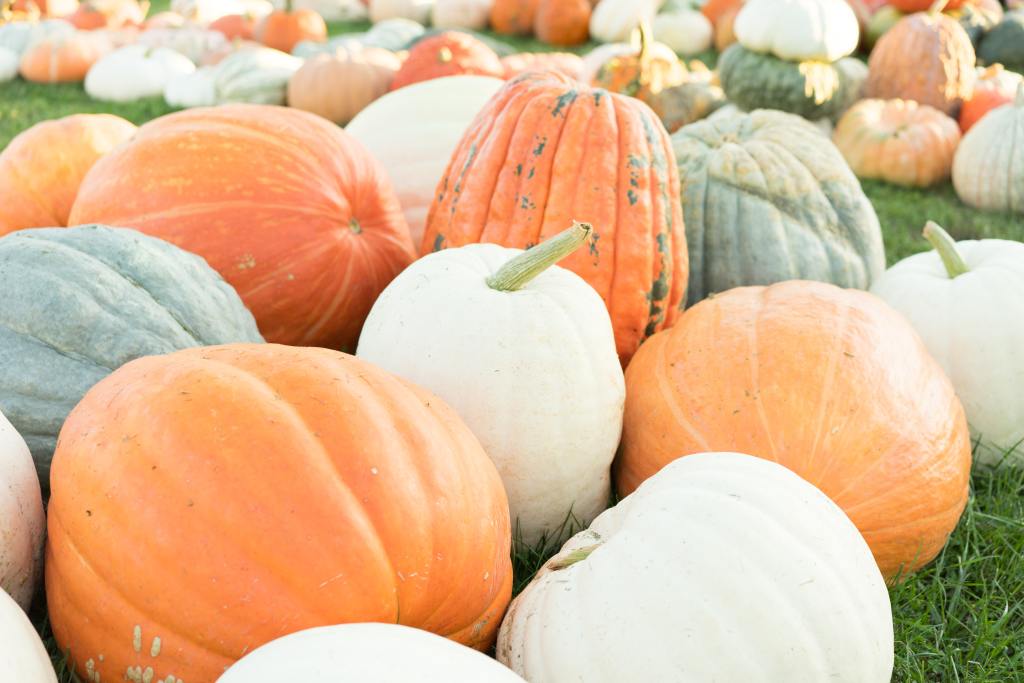
In striving to find the positive, to seek gratitude, I found these podcasts enlightening and uplifting, and both fitting with the theme of harvest I have been contemplating.
Ten Percent Happier with Dan Harris, #295: How to Be Grateful When Everything Sucks with DaRa Williams
In the face of the seemingly unremitting horrors of 2020, is it possible – or wise – to generate gratitude? Guest DaRa argues yes! A longtime practitioner and teacher of meditation, she is one of the guiding teachers at the Insight Meditation Society. She’s also had a clinical mental health private practice in Manhattan for many years. DaRa Williams says, only semi-facetiously, that she believes gratitude can be considered the fifth Brahma Vihara. As you know, we’ve just wrapped up the special Election Sanity series here on the podcast where we explored the ancient Buddhist list called the Four Brahma Viharas: loving-kindness, compassion, sympathetic joy, and equanimity.
A key takeaway for me was the affirmation of my own observations in life – you can’t have joy and happiness without struggling and suffering. The idea being that without knowing hardship you wouldn’t be able to recognize and appreciate joy.
Another key takeaway was the idea that joy and gratitude will sustain you in a time of struggle. I think of this as a mindset tool – if you look for the good you’ll find it, and if you look for the bad or negative, you’ll find that, too. I also think of the idea of positive inquiry and in times of struggle, I find it is helpful to remember the hardships I’ve walked through before and the strength and learning that has come. There are always things to be grateful for and by focusing on those things, we can forge our way forward rather than getting stuck in the mud.
Ten Percent Happier with Dan Harris, #249: Don’t Let This Crisis Go to Waste with Roshi Joan Halifax
Roshi Joan Halifax is definitely not arguing the pandemic is a good thing, but she also believes we shouldn’t let this crisis go to waste. It’s a very real wake-up call, she says – a chance for us to really take a beat and ask ourselves what actually matters, both individually and as a culture. Roshi Joan Halifax is a Buddhist teacher, zen priest, anthropologist, and pioneer in the field of end-of-life care. She is the founder, abbot, and headteacher of Upaya Institute and Zen Center in Santa Fe, New Mexico. Her motto for this crisis, as you will hear, is strong back, soft front.An offering I appreciated from this podcast is the idea of grit and grace in this time of uncertainty. I often have a hard time maintaining grace when I’ve set my mind on grit, and this seems particularly important in the world right now, to dig deep to find the grit to carry on while also having grace for ourselves and our fellow humans. This is an intention I would like to set for myself, to be mindful, and to strive to embody both grit and grace on my journey. This was a great reminder that outlook and gratitude are a choice.

Big Magic: Creative Living Beyond Fear by Elizabeth Gilbert
I just finished listening to the Audible version of this New York Times, #1 Best Seller from Elizabeth Gilbert. I found myself appreciating the idea of having the courage to make your visions and dreams come true now, rather than making excuses for postponing the future you desire. If this year has taught me anything, it is to plant, grow, and harvest in the now rather than waiting for optimal conditions.
Here’s what Amazon has to say:
Readers of all ages and walks of life have drawn inspiration and empowerment from Elizabeth Gilbert’s books for years. Now, this beloved author digs deep into her own generative process to share her wisdom and unique perspective about creativity. With profound empathy and radiant generosity, she offers potent insights into the mysterious nature of inspiration. She asks us to embrace our curiosity and let go of needless suffering. She shows us how to tackle what we most love, and how to face down what we most fear. She discusses the attitudes, approaches, and habits we need in order to live our most creative lives. Balancing between soulful spirituality and cheerful pragmatism, Gilbert encourages us to uncover the “strange jewels” that are hidden within each of us. Whether we are looking to write a book, make art, find new ways to address challenges in our work, embark on a dream long deferred, or simply infuse our everyday lives with more mindfulness and passion, Big Magic cracks open a world of wonder and joy.
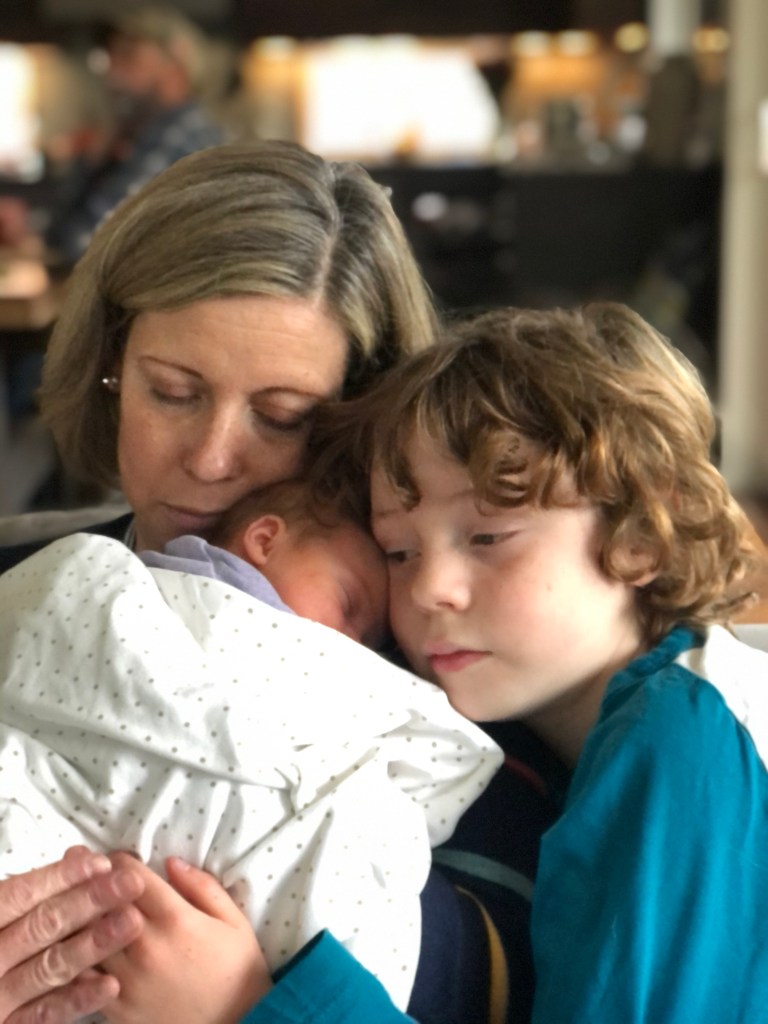
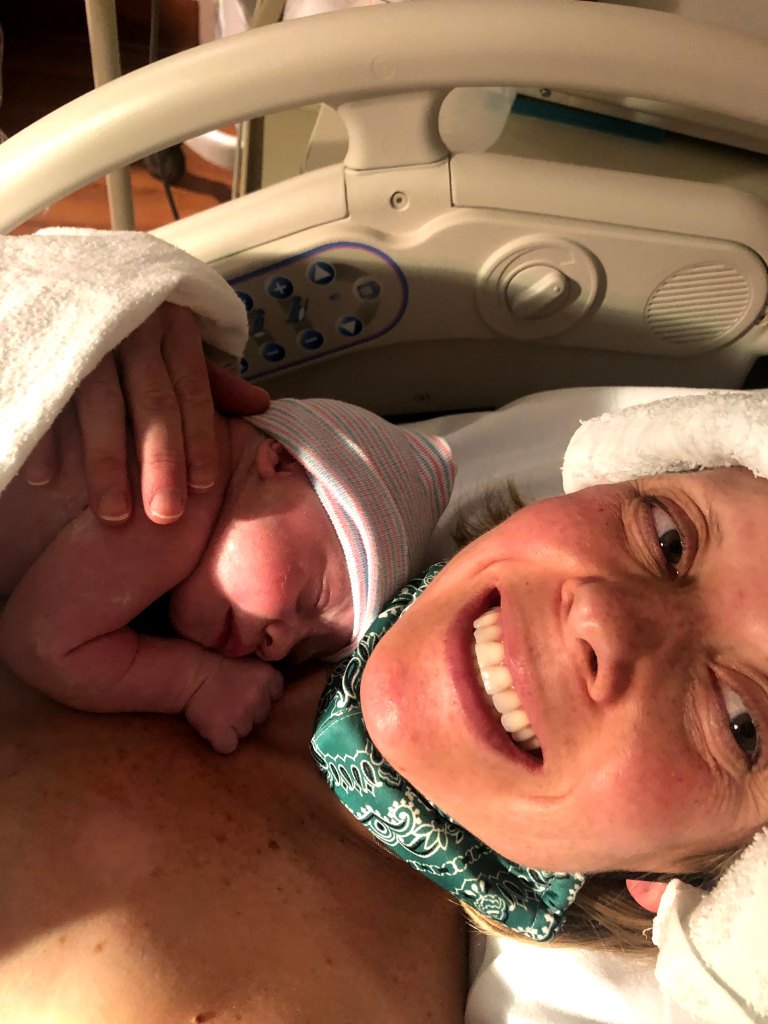
And finally, my apologies for this edition of Three Thoughts for Thursday coming to you on the last day of November. I was delayed by another little something ready for harvest. On November 18th, we welcomed our daughter, Sally Olivia, to our family. The joy that has come from her arrival has truly been a gift! I have not only found joy in her arrival but have felt astounding joy in seeing the happiness of my boys in welcoming their sister. We are reveling in deep gratitude for this little blessing of 2020!
I wish you all a bountiful harvest from this muddy, messy year! May you reap great rewards for your perseverance and from choosing to see the gifts and lessons. May gratitude and light, peace and hope be yours!





Please check out my latest blog posts onLessons of the Run, Part 3: Rest, as well as my blog post, See and Be the Light – Hope and Resilience. If you missed my October edition of Three Thoughts for Thursday, you can find it here, on my blog as well. As always, thank you for your continued support and readership! Stay strong, stay brave, stay true to you!

After a week of smoke from fires burning all over the west coast and a weather pattern that was blowing the smoke into the Puget Sound, keeping the disastrous air trapped here, the rains finally came and washed the smoke away. My family and I immediately escaped outdoors for an adventure. I had run the Tunnel Light Marathon along the Iron Horse Trail years ago and I thought my boys, 7 and 5, would find the tunnel interesting and entertaining. I recalled the tunnel was quite long. Upon looking the tunnel up, I learned its precise length was greater than I’d remembered – 2.25 miles! Wow! We took their bikes to ensure they could cover the distance there and back. They were very excited to pack lots of flashlights.
As we set out, I thought back on my previous experience of the tunnel. I remembered the tunnel was near the beginning of the marathon course which began in Hyak, and we were advised to wear a headlamp and extra layers. At this point in the run, we were still in a large pack as we set out to traverse 26.2 miles and the tunnel served to keep us confined and in a tight formation. With hundreds of runners funneled into the tunnel, the numerous lights illuminated the space and I didn’t find much need for my individual light. In fact, my light seemed to make little difference. As we spread out a bit, however, I remember my light came in handy for avoiding holes and puddles. Likewise, because we were running in a large group, I didn’t really notice just how cold the tunnel got.

The experience was quite different as a family of four. There were other people on the trail, out enjoying the fresh air, and we encountered several families in the tunnel. However, I was not prepared for the extent of the darkness or the significant drop in temperature that had not been as noticeable as I’d run through the tunnel years ago, part of a pack of runners. Allowing the boys to ride their bikes was a solid decision but also meant we were operating at different paces, too.
The temperature in the tunnel was COLD! And, wow, was it dark!!! The darkness was consuming and there was quite a stretch of distance between being able to still see the light from one end to the time we could finally observe a glimmer of light at the other end. We stopped many times to adjust lights, put coats on the boys, etc. The boys asked many times how much further until the light would reappear. They kept going, however, trusting that I knew we would indeed exit the darkness, and relying on the flashlights and my light to proceed. They also stuck close by, and together we traveled through the darkness. Now and then, we came across people traveling back the other way, dogs and the sounds of children entertaining themselves filling the void as they traversed the long, dark path.
Finally, a speck of light appeared! I was astounded by the celebration that erupted from my boys, and the level of excitement I also felt. The journey was still quite long until we emerged from the tunnel, but the hope that was ignited fueled us to continue on towards the light.

I was struck by just how far the light at the end of the tunnel shown, the distance the light was able to penetrate. The distance even once we could finally see the light was still quite a distance to cover. Despite the pinprick of observable light representing the end of the tunnel, I was also struck by the sense of hope I felt – I could see the end! A sense of determination and calm set in in that moment. Once we finally emerged, I took a great breath in – we’d made it! Two miles feels much longer with less light, fewer people on the journey with me, and with children in tow who repeatedly asked when we would emerge from the darkness.

Once on the other side, we took our time exploring and soaking up the view and the sunshine. When we announced we’d have to go back through the tunnel to return to our car, there were different responses. My oldest son was on board. Made even braver by our recent journey, he set out ahead of us, fearlessly leading the way, the first to complete the mission. My younger son was astounded we’d have to go back through again and that there wasn’t another way to go. He stuck with us, making sure to stay in the path of the light I carried.
As we reentered the tunnel, I was again taken aback by how quickly we were engulfed by the darkness. This time, as my younger son’s flashlight failed, I carried two lights for us both. He slowed down to stay near me, and I tried to go faster to keep up with him. My husband and our dog also hurried to keep up and to use my light to see their way forward. I found myself a bit annoyed at how many of our family were relying on my light, to be honest, and I found my own frustrations driving me forward to find the end of the tunnel as quickly as possible.
Later, I pondered this feeling of frustration and reflected on the experience further. I didn’t mind sharing my light earlier when we were each shining our lights, sharing and attempting to make our way through together. When I ran the marathon, I found I hardly needed my own light to see by because of the shared glow of everyone else’s lights merging together. Yet when I became the only light, I felt the heaviness of the darkness, the burden of being the only light and having everyone else reliant upon my light.
In this time of Covid, political stress, racial tensions, and isolation, I find myself thinking about this period much like being in a tunnel. I keep telling myself to be and see the light! We each have light within us, to illuminate our path before us one step at a time. We each have light to share, too. We each also need to recharge our lights from time to time, to rely then on the light of others to make our way forward. And the more lights we can gather with, the less alone and less reliant we are upon our own individual light to help move us forward.
The journey was so much easier when I ran the marathon – with so many others running forward, trusting together in the path forward. Not for a moment questioning the path and knowing that our running goal lay far beyond the end of this tunnel, the journey was bright, warm and fast. When we went through as a family, the faith my children showed in our light and in our pronouncement that the end of the tunnel would soon appear was something to learn from indeed. When we went through the tunnel again, I was inspired by the courage and learning of my older son. I was proud as he released his fear and journeyed forward to light the way ahead now knowing from experience that the end of the tunnel would come. I also learned from my own new experiences of the tunnel, some important lessons as well. I found my reflections and learnings particularly meaningful for this time in which we are all living. My learnings I am taking forward and reminding myself of constantly are these:
Have faith, there is always an end to the tunnel!
Persist! Don’t quit in the middle and let the darkness consume you; seek the light!
Remember you have overcome before. Let those triumphs be reminders and give you courage. Just like my older son used the first tunnel experience to fearlessly tackle the second, call upon your experience and inner strength. This may be a new path, but your experience and strength are not new and will still serve you.
Be fearless in your charge ahead, knowing from previous experience, you can and will conquer the darkness.
Share your light with others, and don’t be afraid to ask for others to share their light when your batteries are running low.
Remember to recharge your light and that it is okay to ask for the light of others. Just as I saw with my younger son, sometimes we need to let our own light recharge and to follow the light of others.
The light is brighter when combined with the light of others.
Light always shines through the darkness; the light will overcome!
I hope you are all well and this is a welcome reminder of the power of your light and the light of others as we find our way forward! The journey isn’t all about having the the confidence in the outcome; the journey is about having the self-confidence you can overcome and the courage to move forward despite your fears. Be the light, seek the light, choose to see the light around you! Keep the faith, there is always light at the end of a tunnel!
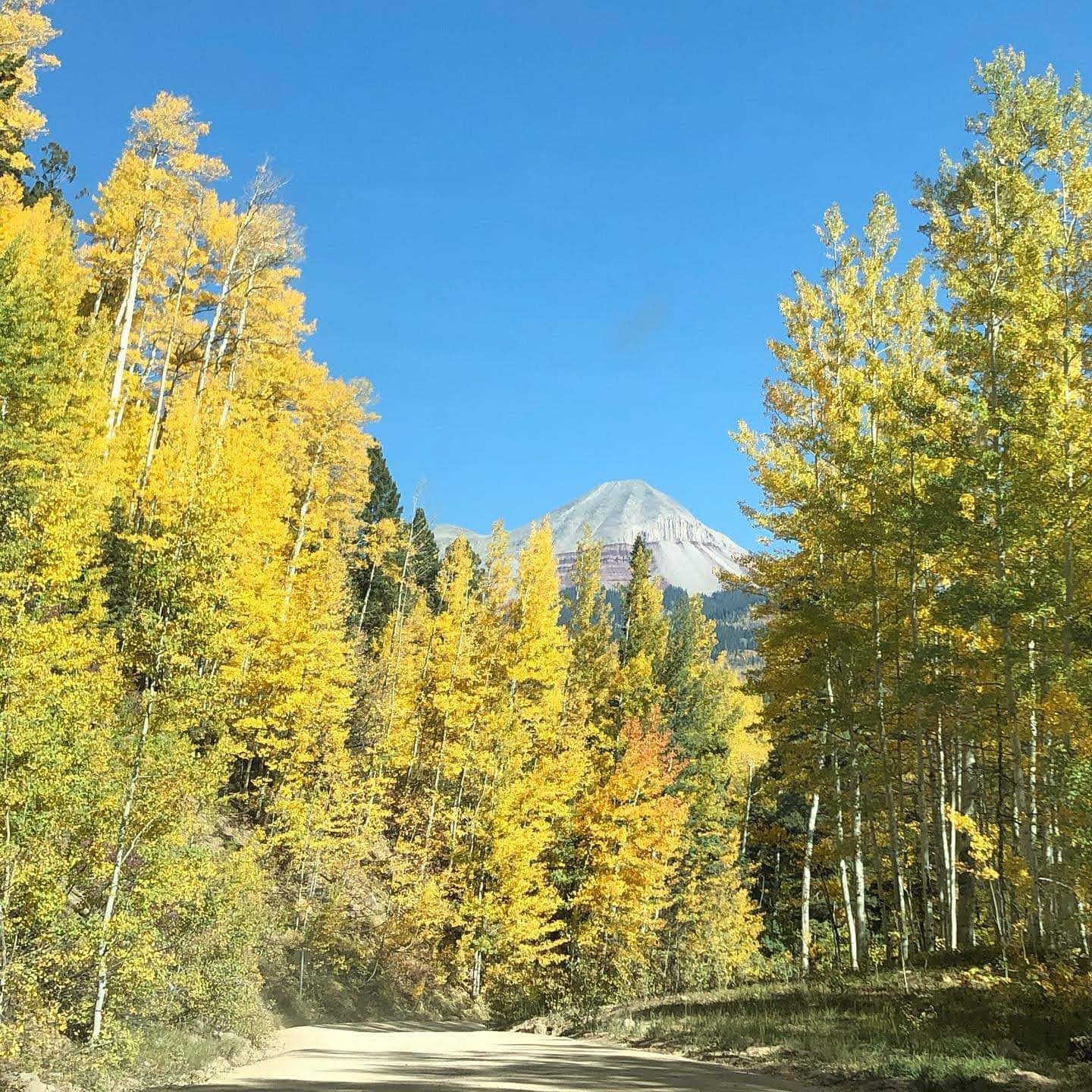

I have found myself pondering the seasons lately and thinking about what nature has to teach us with these annual shifts. I love the fall, but I know many others don’t favor this particular time of year. I’ve heard some think of autumn as a time of death and decay, a sad season when the days become shorter and the trees drop their green leaves to become bare. I personally love the colors, the crisp, cool air, the crunch of the leaves beneath my feet. As I have considered these different feelings about fall, I have thought more about what autumn represents, what each season might illustrate, and what we might learn from the natural progression of the changing seasons.
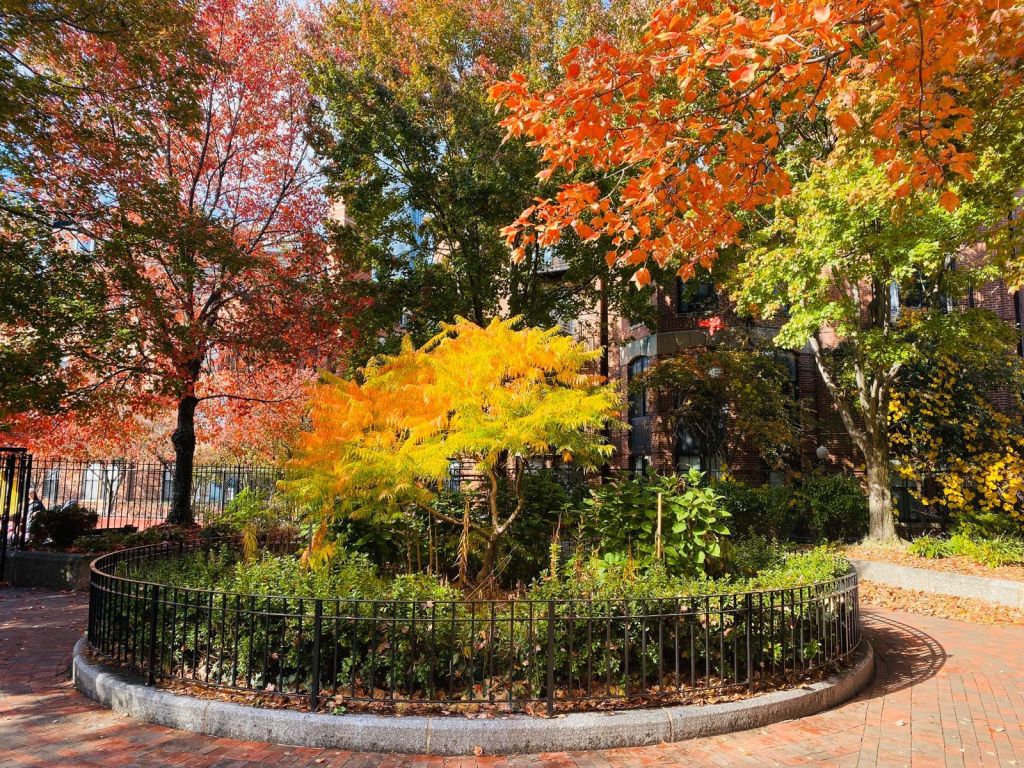
As I’ve been observing the colors changing here in the Pacific Northwest and have reminisced about the change of colors I’ve witnessed in other places I’ve lived – Colorado, Connecticut, New Jersey – I’ve been realizing the beauty that comes from the diversity of shades and hues produced by different trees and appreciating this diversity of how and when trees change colors. I have searched through images of autumn, and I have not only seen vibrant and diverse colors, but I have also seen images of bright colors of deciduous trees against the backdrop of a forest of evergreens, or a pop of gold in the midst of a forest of deep green. These images have also been a powerful point of reflection, seeing the beauty and strength of one that dares to stand out. I have found encouragement in this display of nature, and a call to action to dare to be different, unique, and confident in myself, and to appreciate and embrace the diversity and beauty of others that surround me.
I’ve been contemplating the seasons of my own life and have noticed as I get older, I am more comfortable owning who I am, letting my authentic self, my true colors show, and letting the inauthentic parts of me fall away much as a tree sheds its leaves in autumn. I have been on a journey of refining and becoming my best self, getting more and more comfortable with who I am and how I show up. In the spring, trees bud and bloom, again a sea of color, the trees put forth their beauty. Summer comes and trees are green, perhaps different shades, but deciduous and evergreen are connected in their shared green hue.
As I think of human nature, I think about how we all start out connected to our inner light, lacking the ability to be anything but ourselves, bold and beautiful in our unique bloom. As we mature, we learn to blend like the trees of summer, we put on our green leaves. Our branches are covered, we blend and learn to be part of the masses. Then fall comes and we have an opportunity to show our colors, to show all that we have learned and experienced, and to put forth of all that we’ve grown, but also to let go of all that does not serve us, all that has been placed upon us. We have the opportunity to share the beauty of our lives in a display of our diverse experiences and a chance to shed that which hides our authentic beauty. While we may liken the seasons of nature to the ebb and flow of life, these seasons come and go throughout the course of the year and give us a unique opportunity to observe winter, a time of hibernation and reflection, restoration and quiet, before we bloom again in the spring.
With these reflections on autumn, I challenge you to reflect upon this season with new eyes and to take the opportunity to assess your own internal beauty as well as the aspects of the world that have been given or put upon you that you might wish to shed. Use this season as an opportunity to let go of beliefs and ways of being that are holding you back, that are not serving you in your quest to be and become your authentic self. Allow your experiences to give you the courage to be you. Who are you and who do you want to be? How do you want to show up? What colors are your authentic leaves? What do you need to shed and let go of this season to become who you were meant to be? What is keeping you from standing out and how might you become truer to yourself? What keeps you from seeing and appreciating the diversity and beauty that surrounds you? For those of you who like me, love the fall, what do you love about this season? How might you find a greater appreciation for autumn?

Quote(s) I am sitting with, pondering and finding inspiration in:
“Fear is a reaction. Courage is a decision.”
~ Winston Churchill ~
“Courage is the commitment to begin without any guarantee of success.”
~ Johann Wolfgang von Goethe ~

Podcast I’m Listening to:
The Tim Ferris Show, Episode 357: Susan Cain – How to Overcome Fear and Embrace Creativity
“So often, when you see someone who’s really good at almost anything, it’s because they actually start out exactly the opposite – and then they cared so much about fixing that problem.”
Susan Cain is the author of the bestsellers Quiet Power: The Secret Strengths of Introverted Kids, and Quiet: The Power of Introverts in a World That Can’t Stop Talking, the latter of which has been translated into more than 40 languages. Quiet is in its seventh year on The New York Times Best Sellers list, and it was named the best book for the year by Fast Company magazine, which also named Susan one of its Most Creative People in Business.
She is the Chief Revolutionary of Quiet Revolution, and her writing has appeared in The New York Times, The Atlantic, The Wall Street Journal, and many other publications. Her record-smashing TED talk has been viewed more than 20 million times and was named by Bill Gates as one of his all-time favorite talks.
Enjoy!
Book I am Reading and Reflecting Upon:
Emotional Intelligence and Stress-Free Leadership: Turn Emotional Pain into Performance Gain with the TENOR Method
by Charles M. Jones & Jim Knickerbocker, Ph.D.
This is a very practical approach to emotions in the workplace and offers some straight-forward guidance to understanding what lies beneath the emotions we feel, how our experiences connect to our emotions and how emotions connect most directly to providing information about what needs aren’t being met. The authors also offer practical advice and their method to use emotions to fuel success.
What Amazon has to say:
In a world where change is accelerating and competition is intensifying, leaders must be able to meet challenges and adversity with composure and resourcefulness — while keeping their people engaged and aligned. To do this, emotional intelligence (EI) is a must. The idea that EI is the foundation of effective leadership is not new. What is new is the existence of a reliable method for systematically increasing EI.
Building on recent discoveries in the fields of cognitive psychology and neuroscience, and tested with nearly a thousand people, the authors lay out a straightforward approach to developing EI. In contrast to other books on EI that view emotions as irrational drivers of reactive behavior, this book demonstrates that all emotions contain valuable guidance on how to improve your performance. The authors provide the equivalent of “emotion-decoder rings” that show you how to exploit frustration to achieve goals, anxiety to mitigate risks, and other common workplace emotions that drive business performance.
Stress, the authors’ show, is not caused by what’s happening in the world nor by your own emotions. Stress is caused by fighting against your emotions instead of working with them to improve your performance. The authors back this up by showing that stress results from tolerating tension, reactivity, negativity, powerlessness, and reluctance — and that these five killers of effective leadership are all signs that you are fighting against your own emotions.
Then how do you work with your emotions? Learn TENOR, a proven 5-step method that will help you:

Please check out my latest blog post series on Lessons from the Run, Part 1: Mile 18 – Endurance, and Lessons from the Run, Part 2: Resilience, and finally the newest addition Lessons of the Run, Part 3: Rest. Stay tuned for my upcoming blog post on My Vision: The Power of EQ to Create Change! If you missed my September edition of Three Thoughts for Thursday, you can find it here, on my blog as well. As always, thank you for your continued support and readership! Stay strong, stay brave, stay true to you!

