Desiree has worked in Higher Education Administration at Princeton University School of Architecture, non-profits in the Seattle-area, and in People and Business Strategy at Brooks Sports and uniquelyHR, in addition to owning her own personal chef business, Able Table. With experience in the start-up world, in non-profits and higher education, and in large corporations and government, Desiree is passionate about leadership and development and building successful companies through simultaneous creation of people and business strategy based on the vision and mission of a company.
Desiree finds great satisfaction in helping others to become their best, while simultaneously pursuing her own path of self-improvement. Desiree holds a B.A. in Art and American Studies from Yale University and an MBA from Seattle University where she continues to assist with and facilitate graduate leadership courses, MGMT 5100, Leadership Skills and Team Development, and MGMT 5335, Leading with Emotional Intelligence.
Desiree is also a member of the Los Angeles chapter of SHRM, PIHRA, and attends the local LA chapter meetings of the International Coaching Federation.
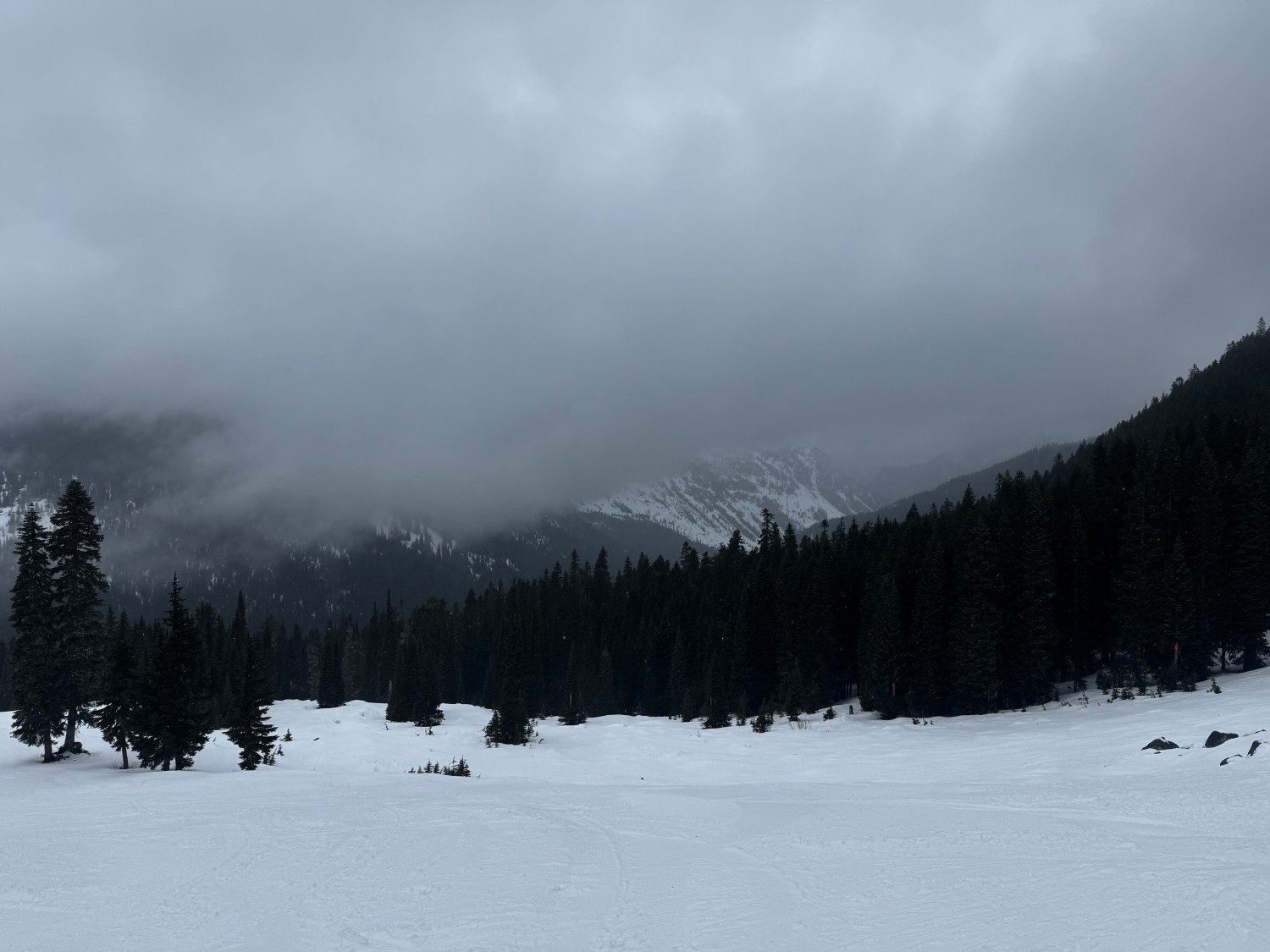
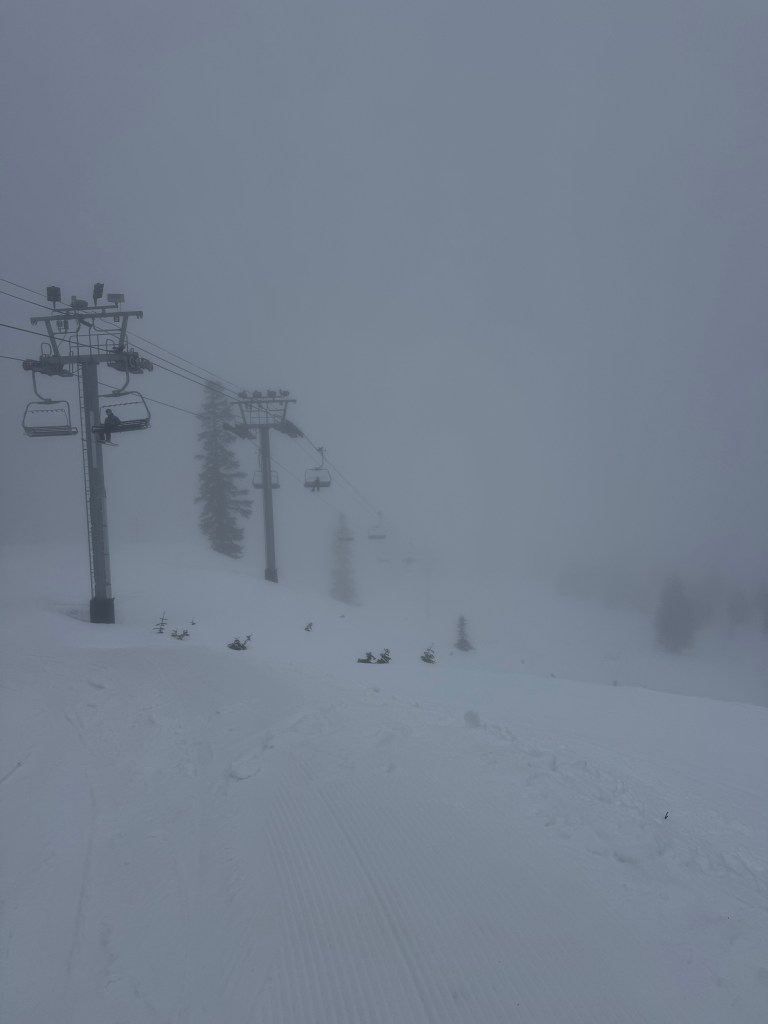
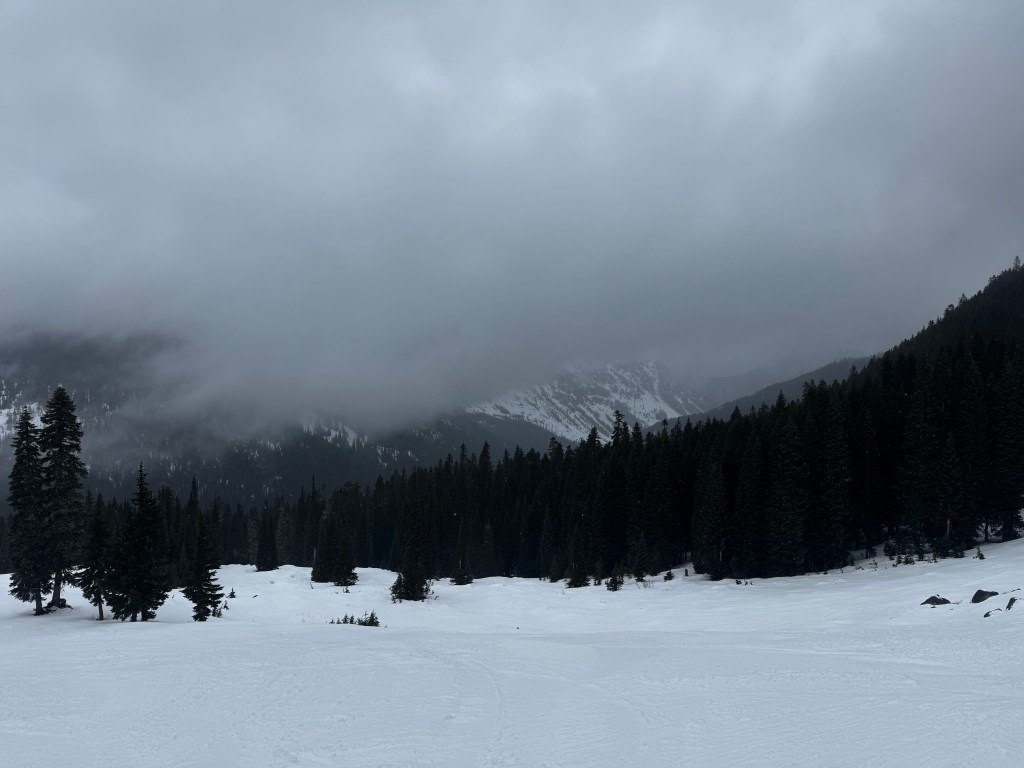
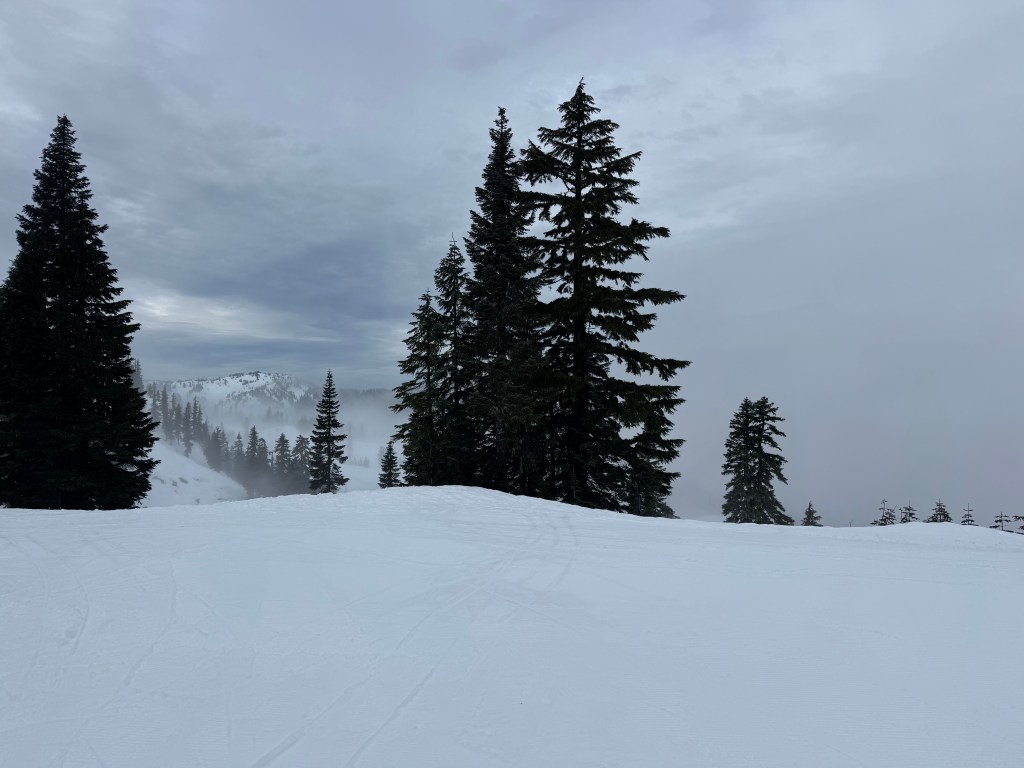
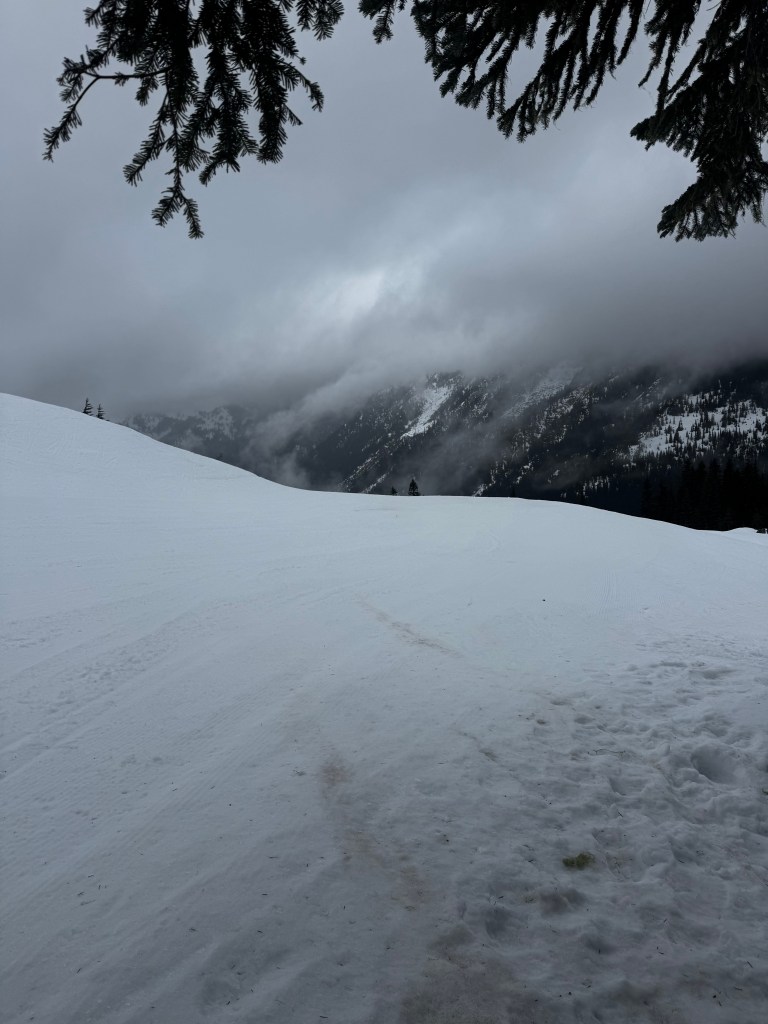
I was skiing recently on a day that had wrapped the mountains in fog. I have come to observe here in the Pacific Northwest, that fog on the slopes can be both beautiful and deeply disorienting. It softens the edges of the mountain, quiets the noise, and turns the world into shades of white and gray. It also obscures what lies ahead. I usually avoid the runs swallowed by fog and save them for later in the day, hoping the sky will clear and visibility will return.
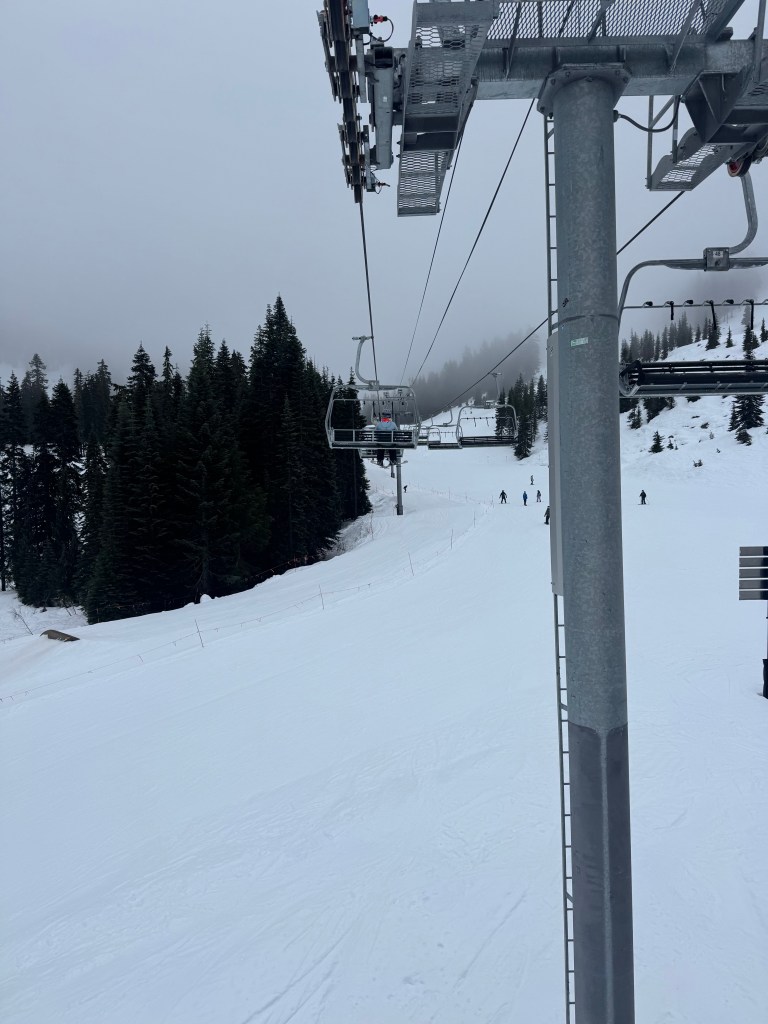
One run didn’t look so foggy from below, so I hopped on the lift and made my way up. It wasn’t until I was on the lift that I realized my view from the bottom wasn’t reliable, either. As I rode higher, visibility shifted. At moments I could see clearly and observe patches of blue in the distance. At other times, everything dissolved into a blur of white. And yet, still in the distance, there were patches of blue sky.
When I stepped off the lift and began my descent, I had to change my approach to descending the mountain. It was in this approach, my lens shifted and I saw both the challenges and gifts of the fog. I slowed down, not because anyone told me to, nor because I was incapable. I slowed down because I could only see the path immediately in front of me.
It was in that narrowing of vision, that my mind paused and realized that I noticed more. I felt the texture of the snow beneath my skis. I paid attention to subtle shifts in terrain. I sensed my body more clearly. I paused occasionally, not out of fear, but to take in what was visible and to carefully choose my next move, to reassess my location and my plan. The fog prevented me from charging ahead or focusing my view down the mountain, into the future. It kept me from skiing toward a horizon I couldn’t actually see, from making a mistake in the present because my eye was focused too far ahead
The gift of the fog was presence. It prevented me from getting too far ahead of myself, from racing toward imagined turns, unseen obstacles, or distant markers of progress. The fog forced me into what was immediately here. Ironically, the very thing I thought might cause me to stumble, this limited visibility, was the thing that reduced my likelihood of falling. I wasn’t skiing toward what I couldn’t see, I was skiing with only the knowledge of what I could see.
We tend to think clarity means seeing far into the distance – five-year plans, career trajectories, strategic roadmaps. We equate confidence with speed toward the goal. We assume that if we cannot see what’s coming, something must be wrong.
The definition of anxiety is living too far in the future, worrying about a future that we can’t accurately predict. So, what if fog is not an interruption of progress, but an invitation to be present, to release anxiety and trust the path will unfold before us?
Fog slows us down. It narrows our focus to the next turn rather than the entire mountain. It heightens awareness. It asks us to trust the skills we’ve already built to navigate the unknown rather than the certainty or control we wish we had.
In leadership, in parenting, in transitions, in research, in career moves, there are seasons of fog, of uncertainty, discomfort and unknowing. There are moments when the horizon disappears and the path forward looks shorter than we would like and we find ourselves uncertain, uncomfortable, and even afraid. Our instinct is often to wait it out, to avoid movement until visibility improves.
Sometimes the fog is the teacher. Fog reminds us that control is limited, control is a mirage, in fact. We learn in the fog that speed is optional, awareness is protective, and presence is stabilizing. Fog, if we acknowledge and embrace it, keeps us from stumbling not by revealing everything ahead, but by anchoring us exactly where we are. Perhaps clarity is not always about distance. Perhaps it is about presence and depth. One step at a time is the answer.
Reflective Questions:
Inward: Insight & Intuition
Where in your life right now does it feel foggy?
What is your default response to limited visibility — speed up, freeze, avoid, or slow down?
What skills have you already developed that you may be underestimating in this season?
What might the fog be protecting you from?
What details are you noticing now that you might miss in a season of full visibility?
Integrate: Integrity & Intention
Are you trying to move at a pace that no longer matches your current clarity?
What would it look like to align your speed with your visibility?
Where might slowing down increase wisdom rather than decrease momentum?
How are your values guiding your next turn — even if you can’t see the entire run?
What small, intentional step is visible to you right now?
Impact: The Outcome/Experience You Want
How might presence, rather than projection, change your decisions?
What if the goal is not to eliminate the fog, but to move skillfully within it?
Where could greater awareness prevent future stumbling?
What kind of leader, parent, partner, or human are you becoming in this season of limited visibility?
If clarity returns tomorrow, what might you be grateful you learned in the fog?
I’ve observed that sometimes love and joy seem to simply happen — as if I’ve stumbled into them and they’ve greeted me along the path, a lucky happenstance. But as I’ve grown older, I’ve learned something deeper: I don’t just have to wait and hope to encounter love and joy — I can create them. I can pour into them. I can love joyfully and joyfully love.
Love and joy are cyclical. I live in and with them. I exude them. I intentionally cultivate them. And they expand. I can create my experience. For those of you who bake, it’s a bit like feeding a sourdough starter — nurture it, tend it, give it attention, and it grows.
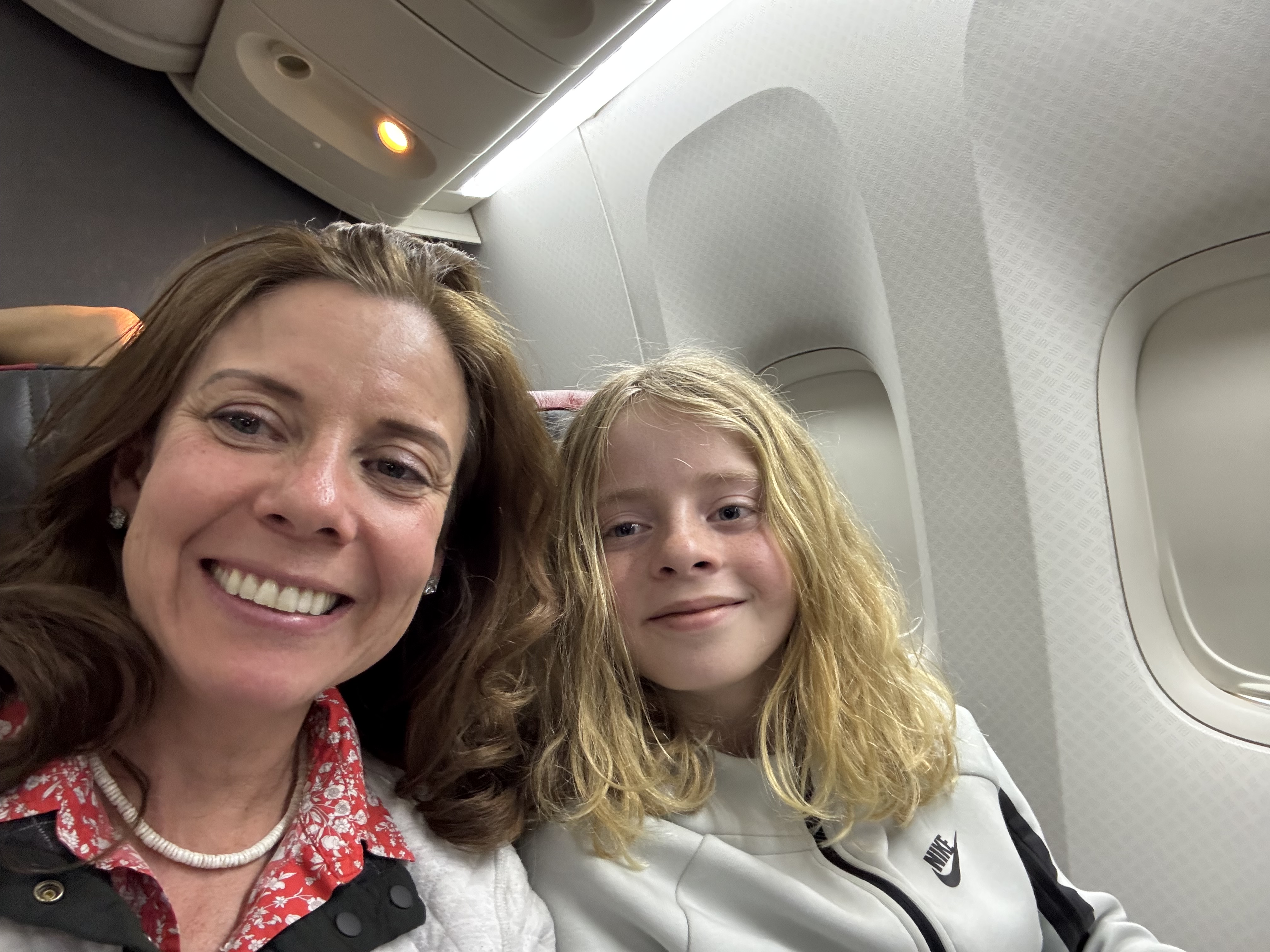
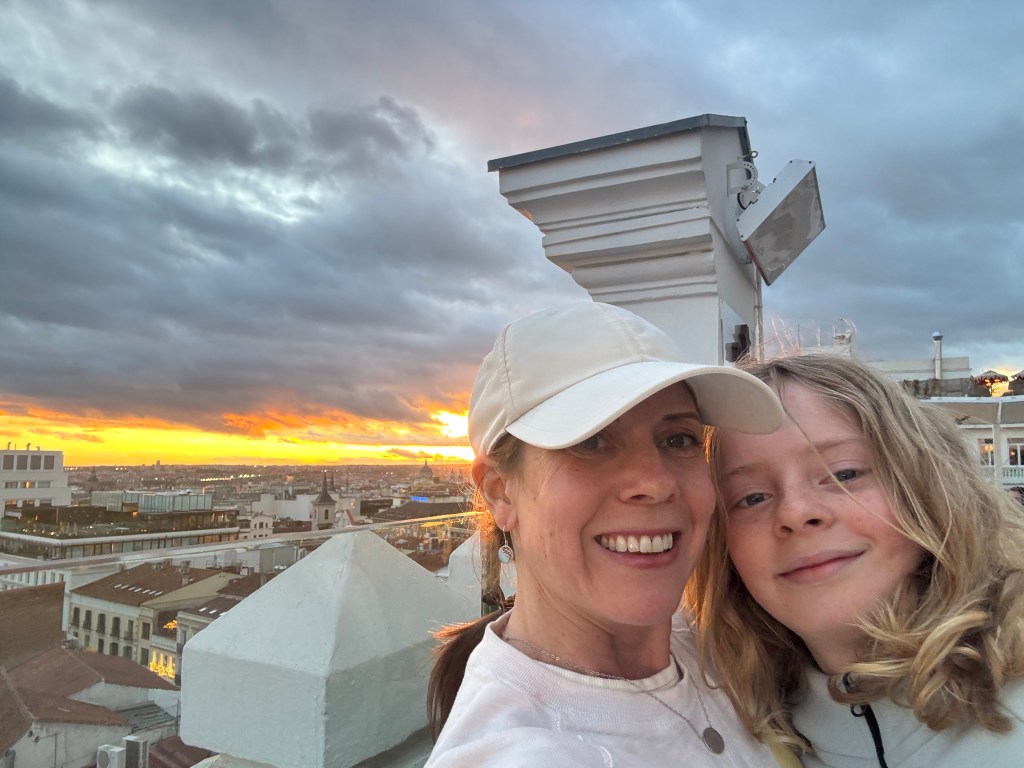
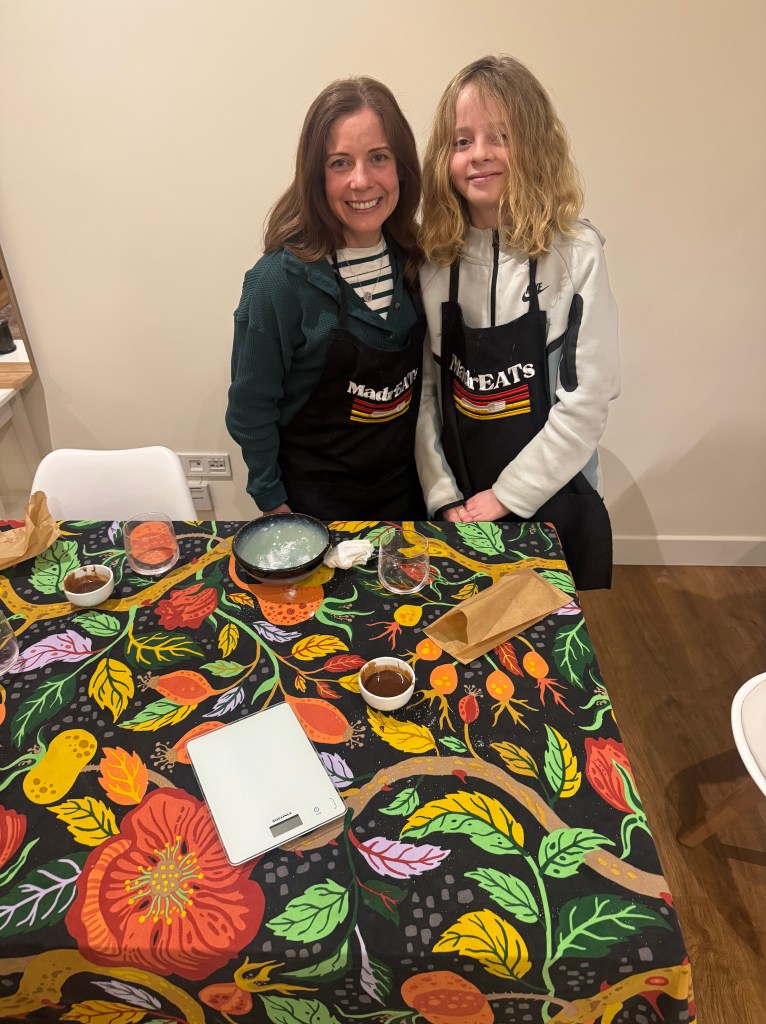
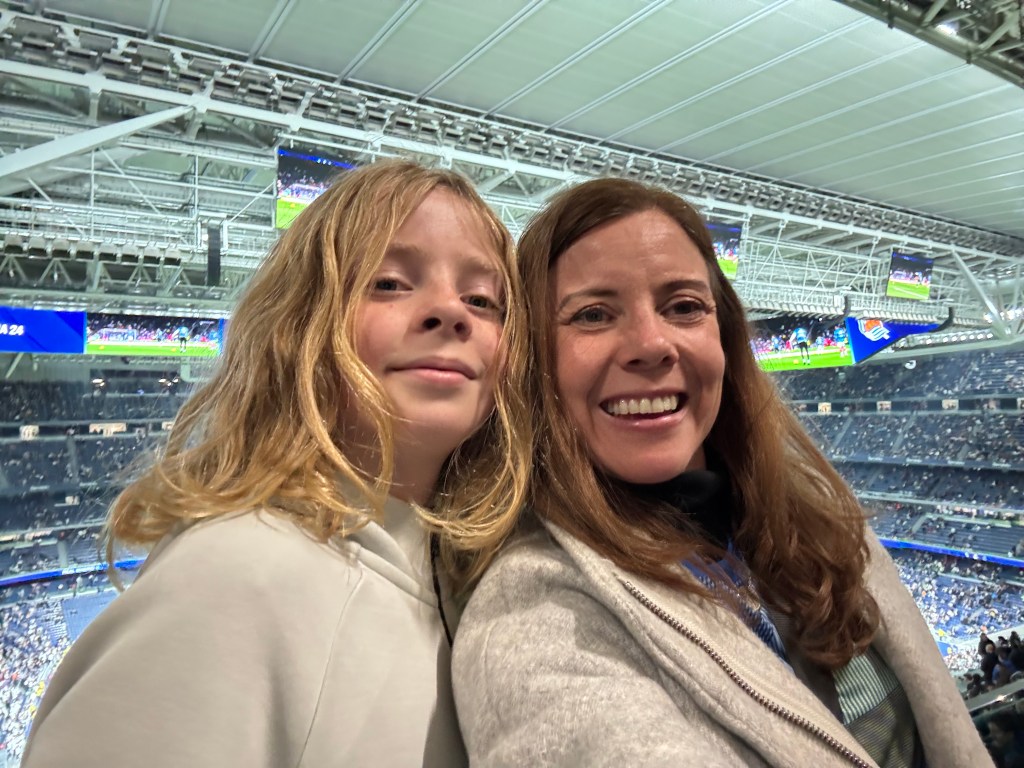
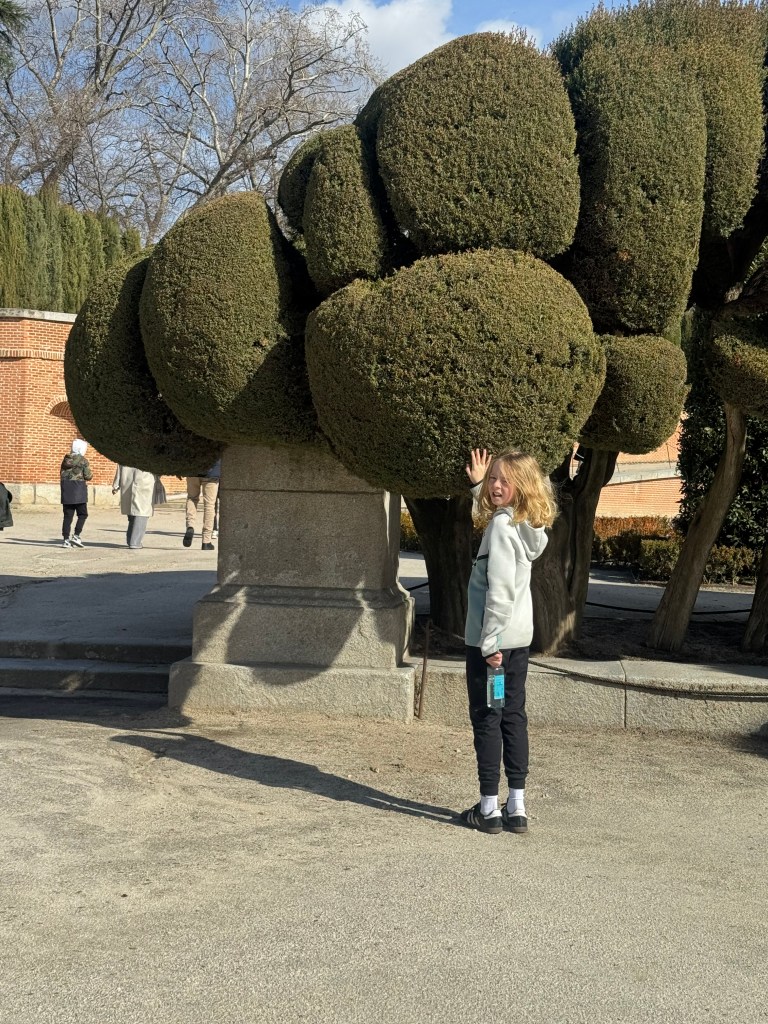
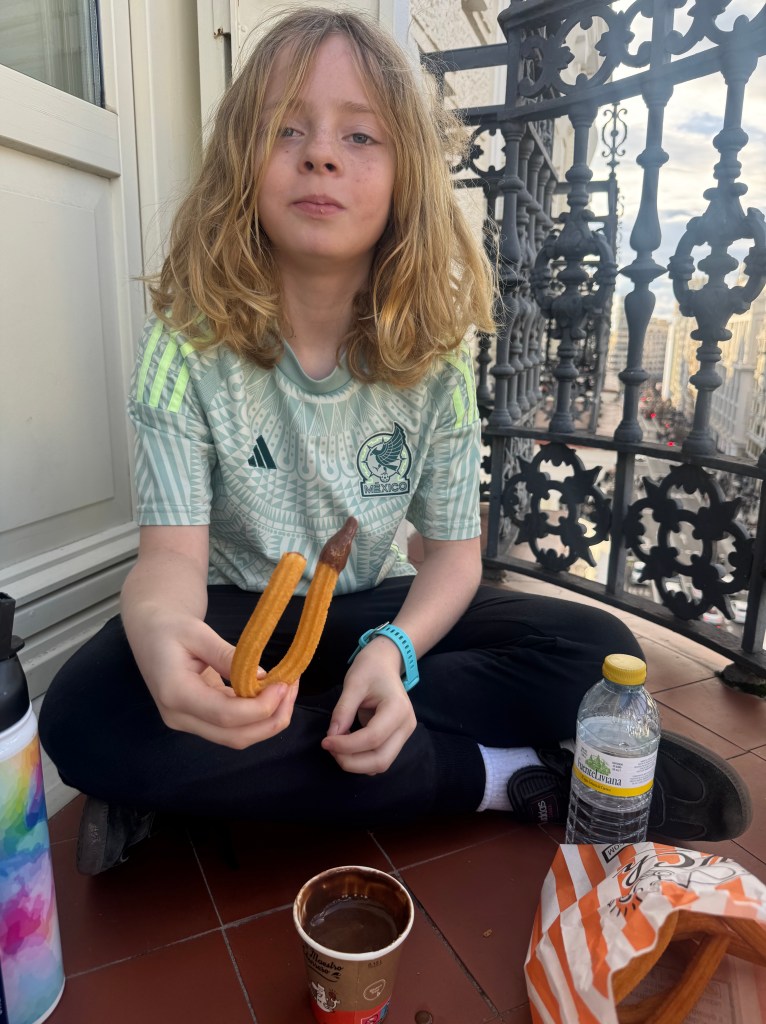
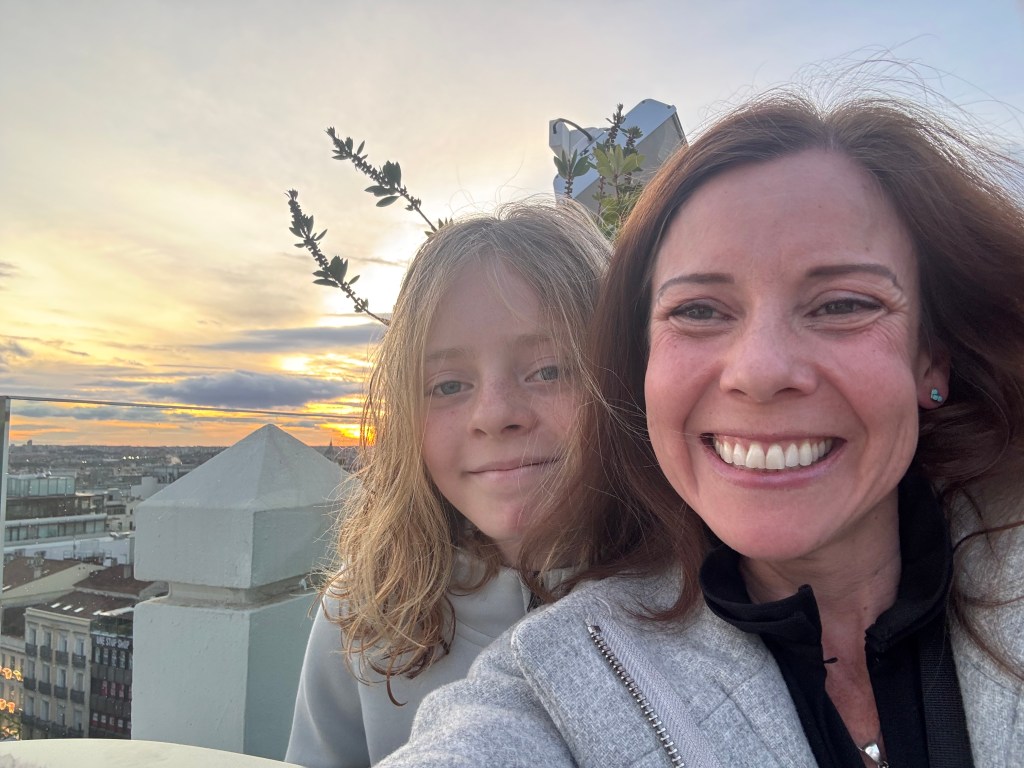
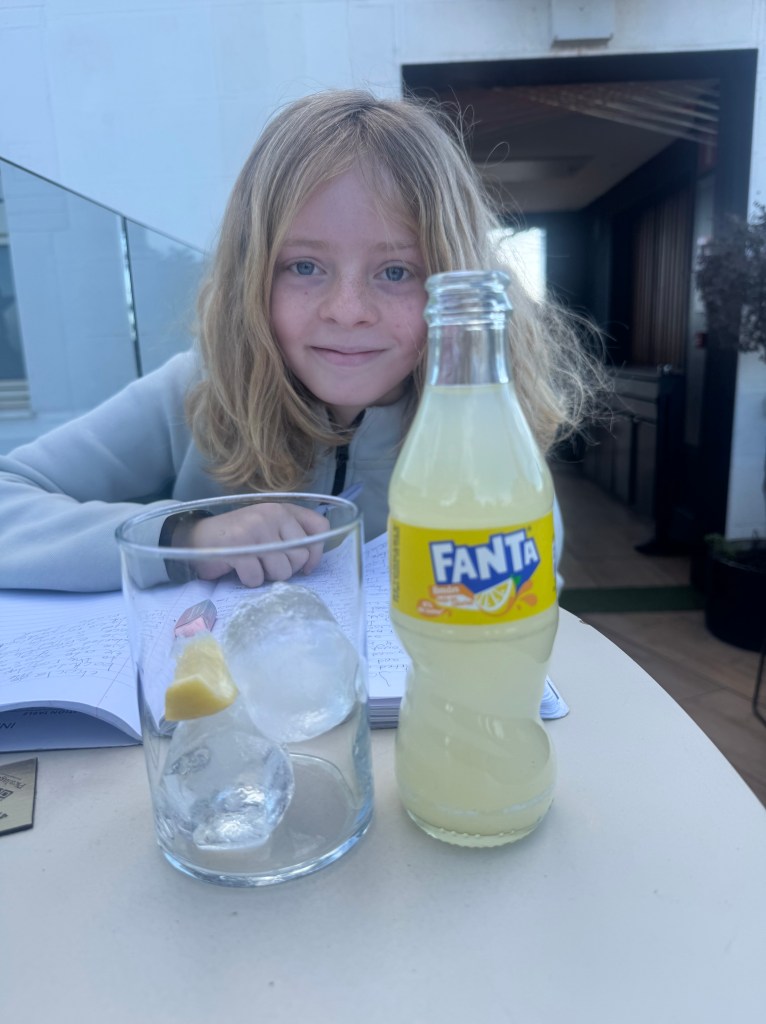
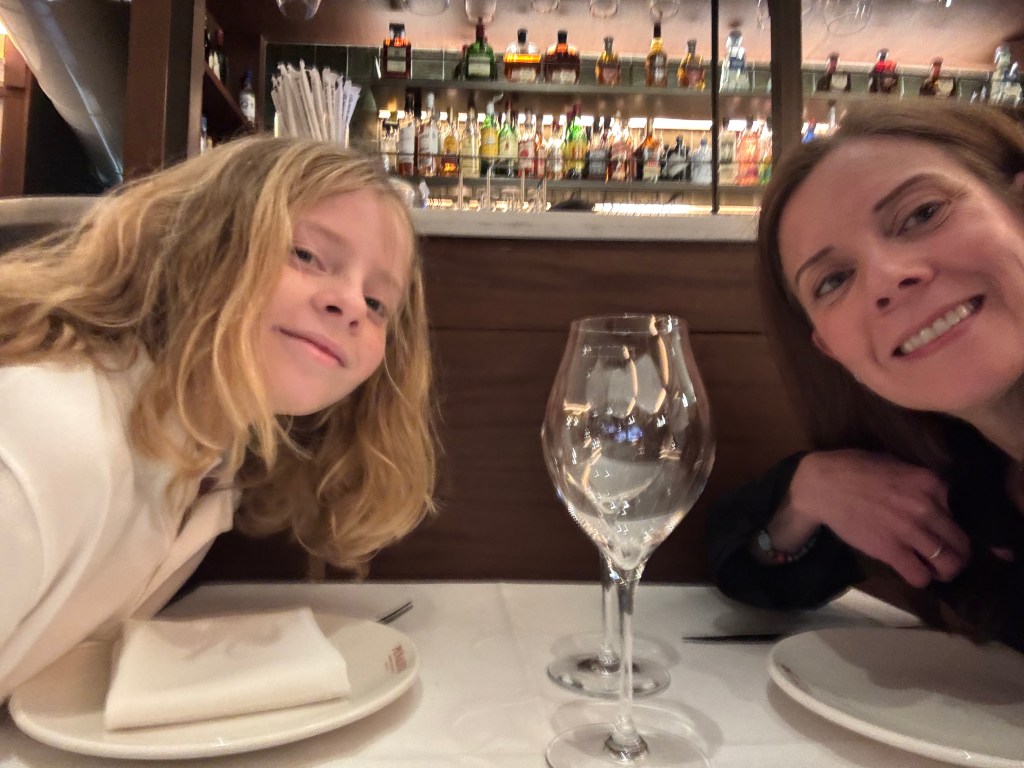
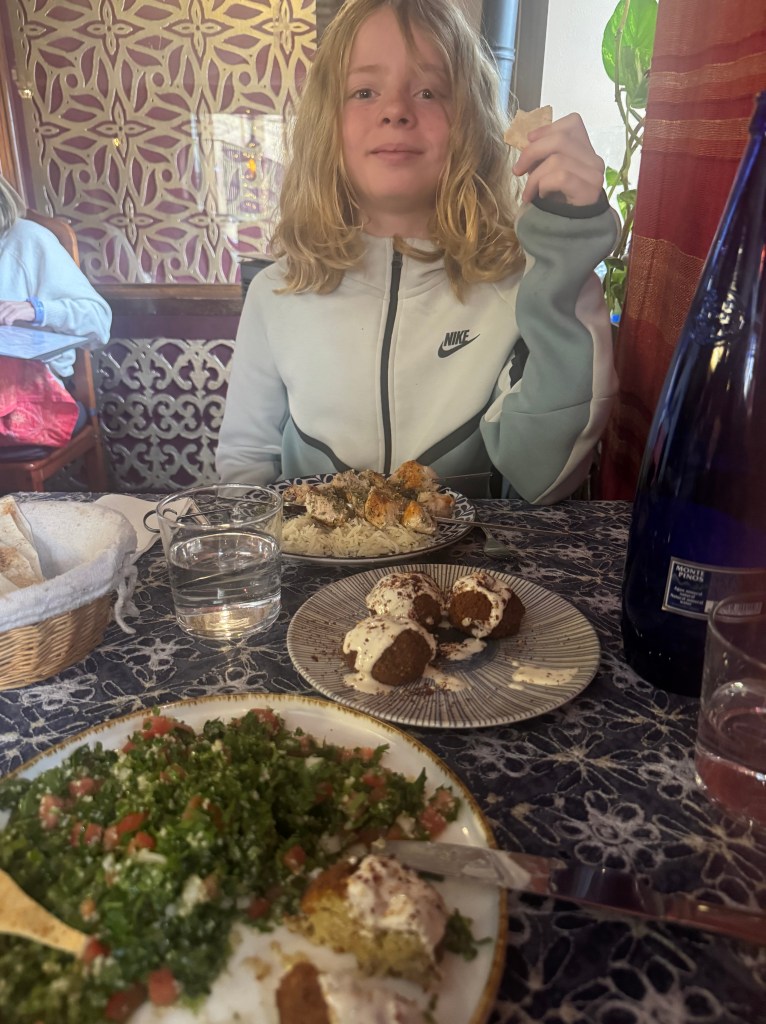
I’ve been in Madrid with my middle child and youngest son, Will, introducing him to international travel as part of his 10th-year journey; what a gift to have this adventure with him! Love and joy inspired this trip, and each moment has been curated with those values at the center. He chose Madrid because of his love for soccer — the joy it brings him tipped the scales for me. “Absolutely,” I said. “Let’s go watch soccer in Madrid.”
Spain also holds love for me. Covarrubias is my mother’s family name, and Spain carries both ancestral roots and cherished memories. It was the destination of my second journey abroad 27 years ago, traveling with my dear high school Spanish teacher — a woman who still holds a special place in my heart.
As many of you know, I’ve been on a mission — one that has become simply the way I move forward — to intentionally create a life filled with love and joy. Travel. Art. Food. Relationships. Learning. With clarity about my values, vision, and mission, I now plan accordingly. I leverage my resources to build the life I want to live.
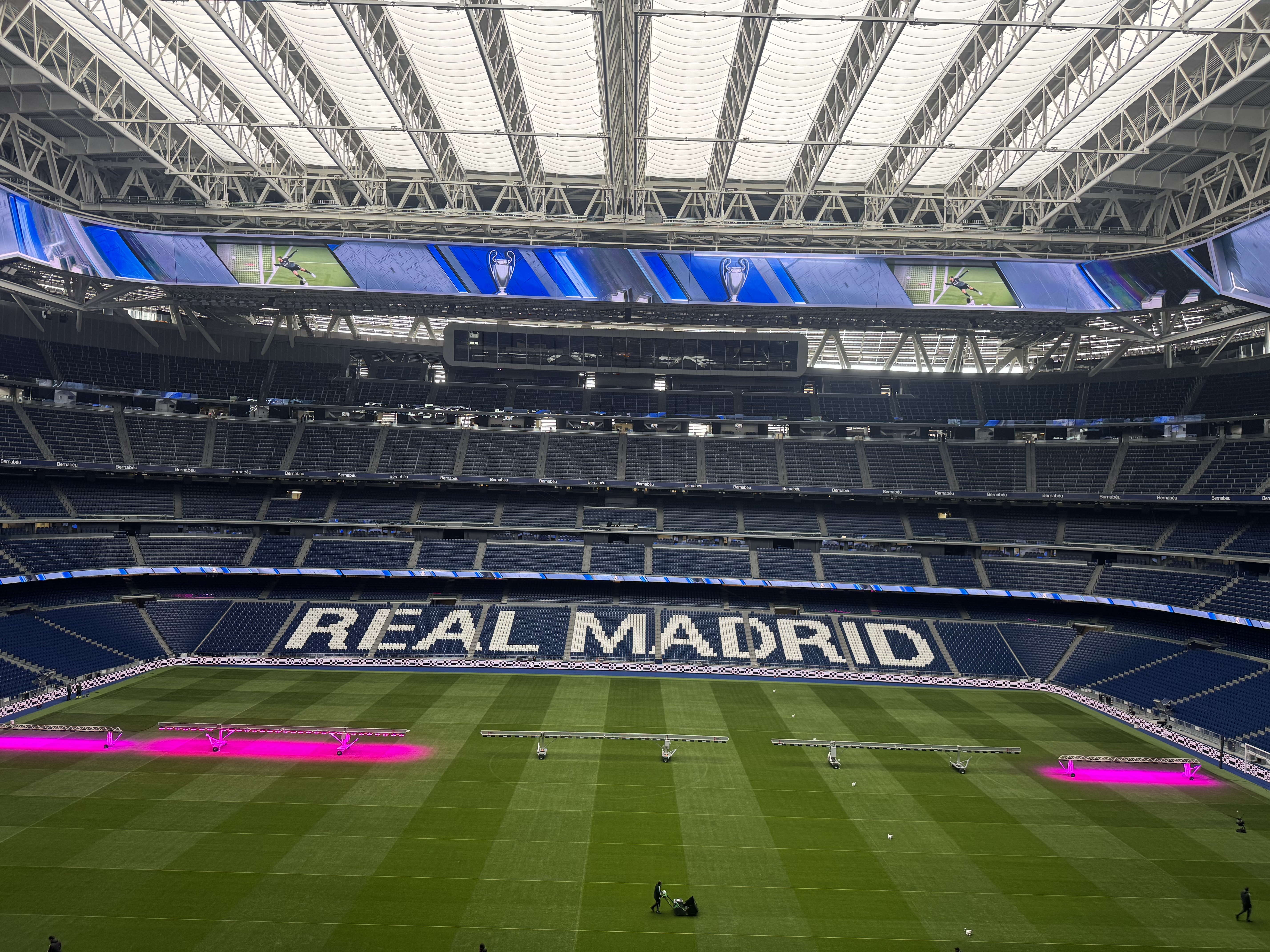
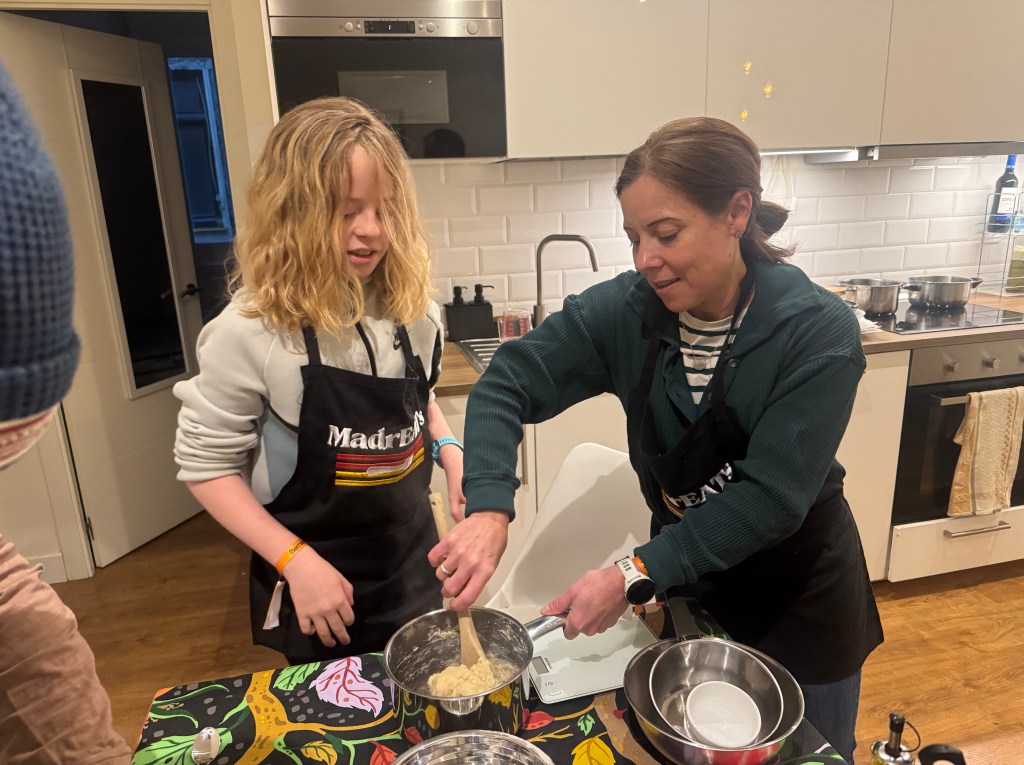
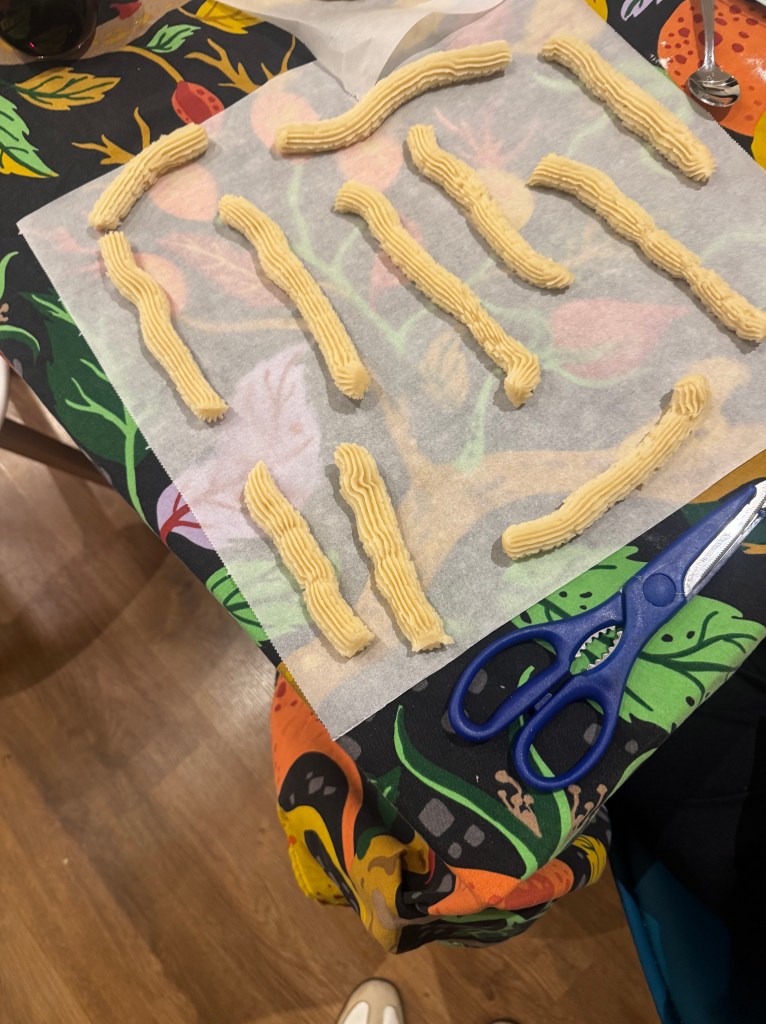
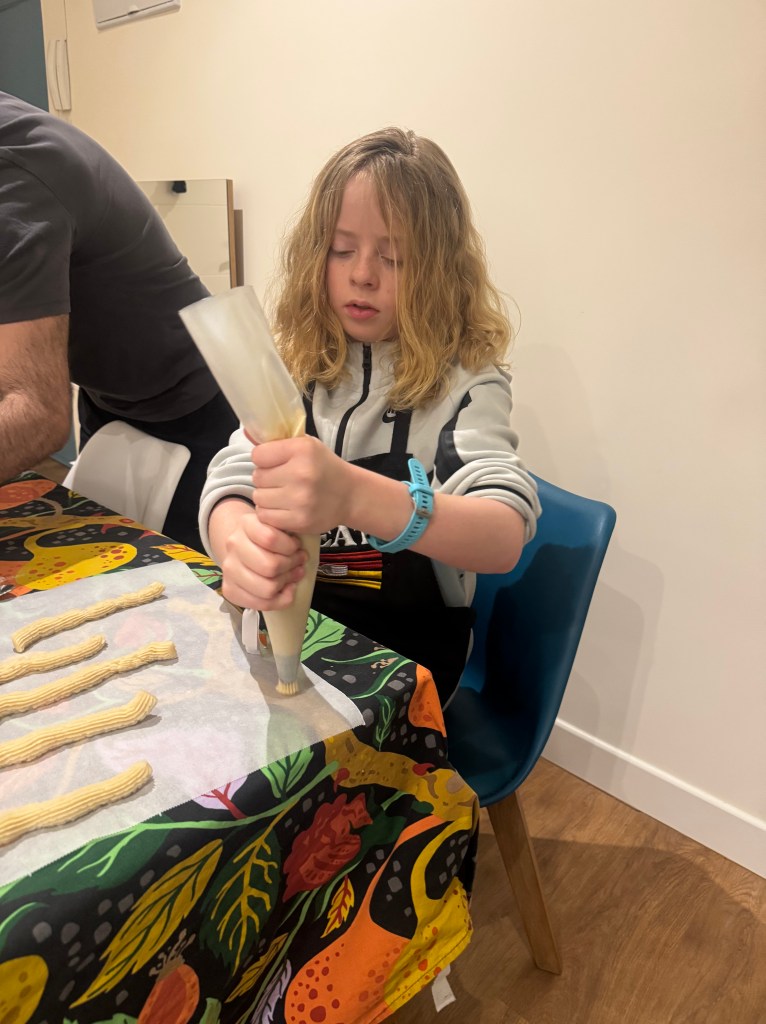
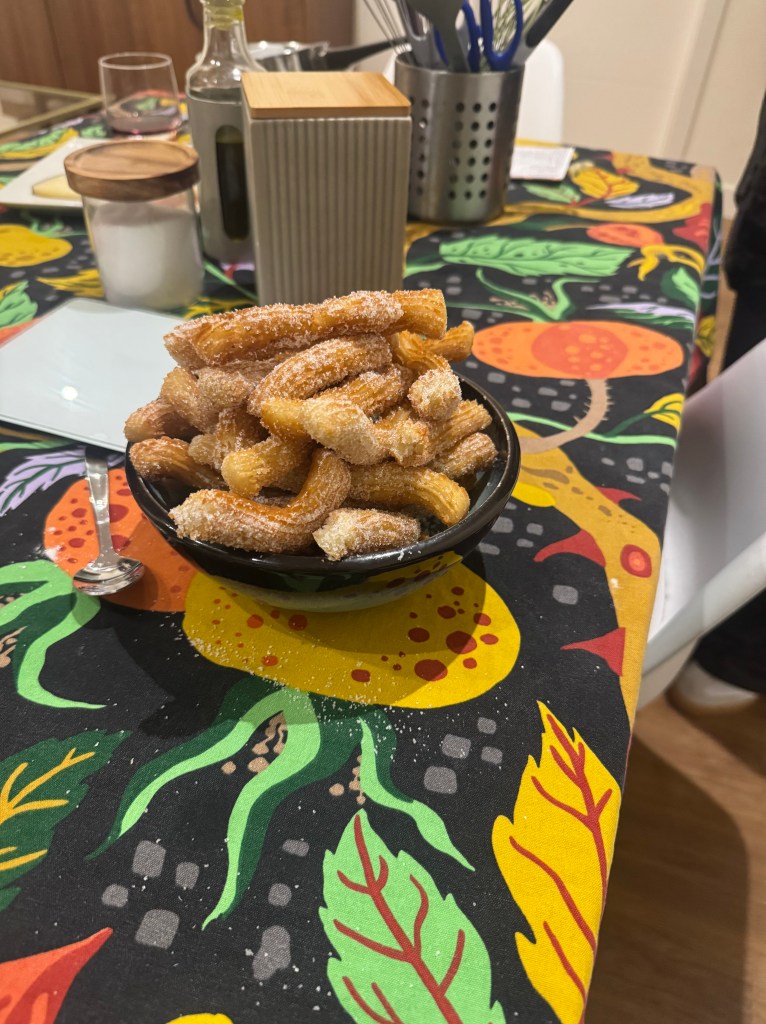
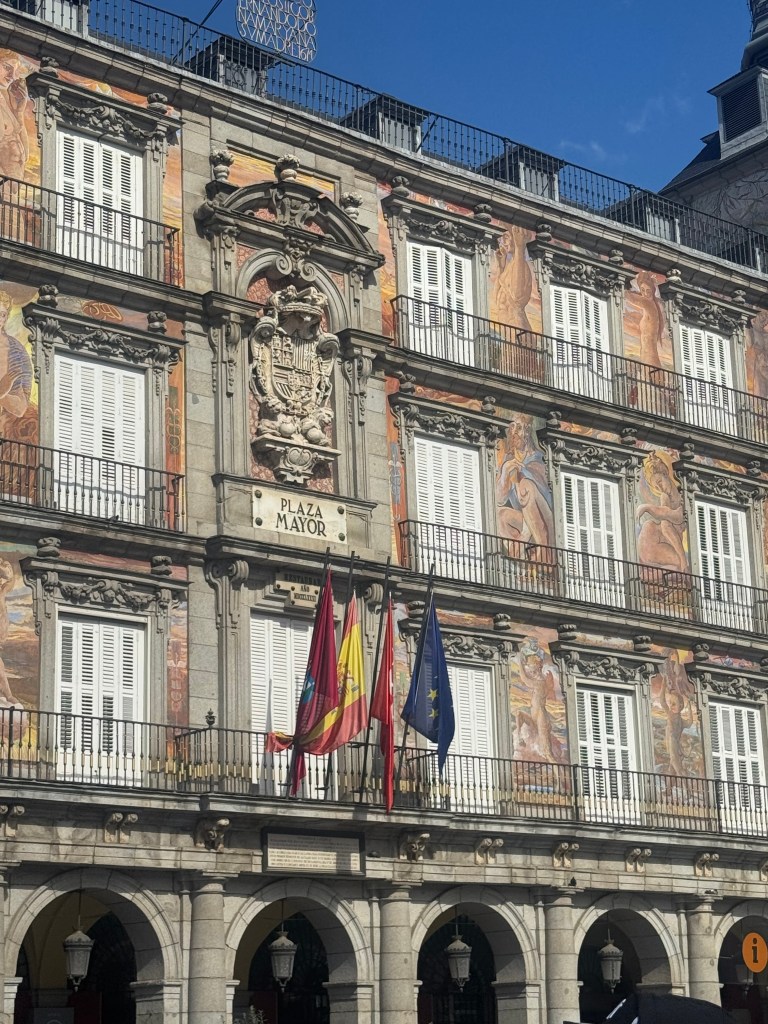
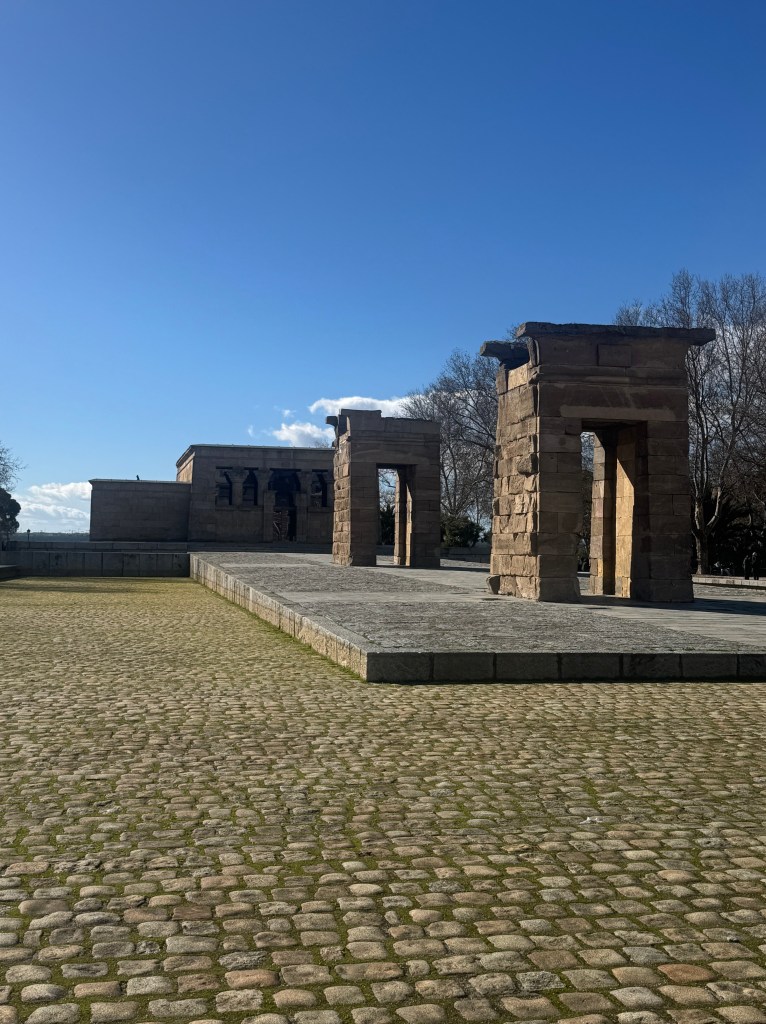
What a gift to share this adventure with my son. To create memories rooted in exploration and connection. We toured the Estadio Santiago Bernabéu and learned to make churros y chocolat. We wandered Plaza Mayor, visited the Palacio Real, strolled through the Jardines de Sabatini, and stood before the Templo de Debod — an Egyptian temple from the 2nd century BC, gifted to Spain in 1968.
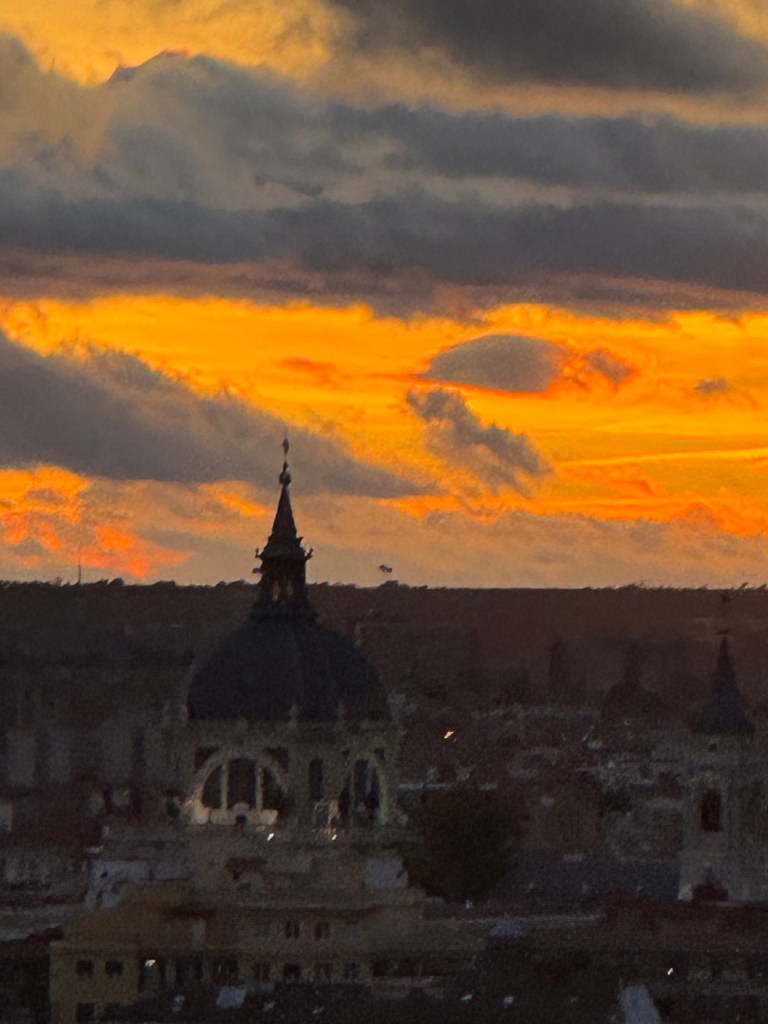
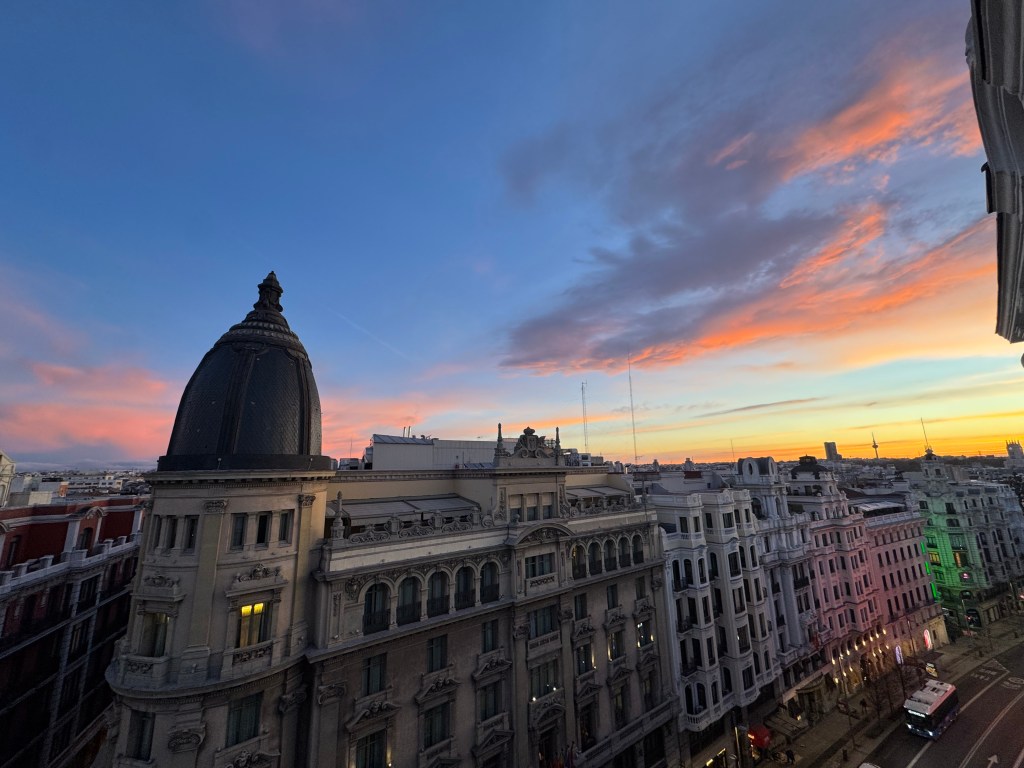
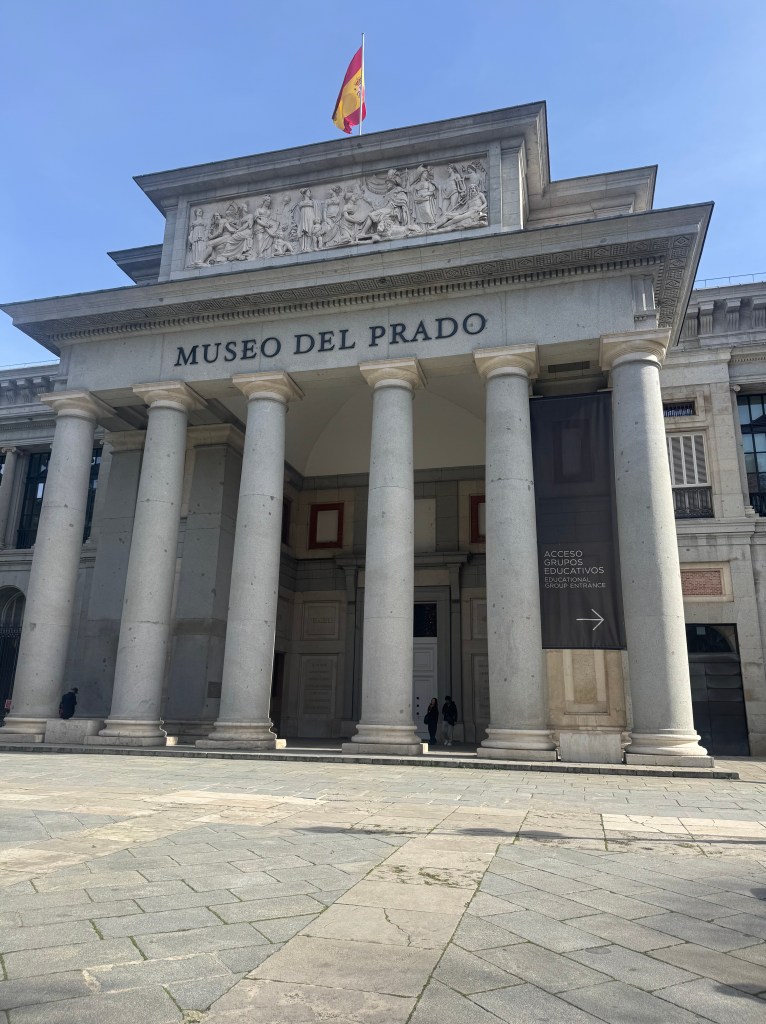
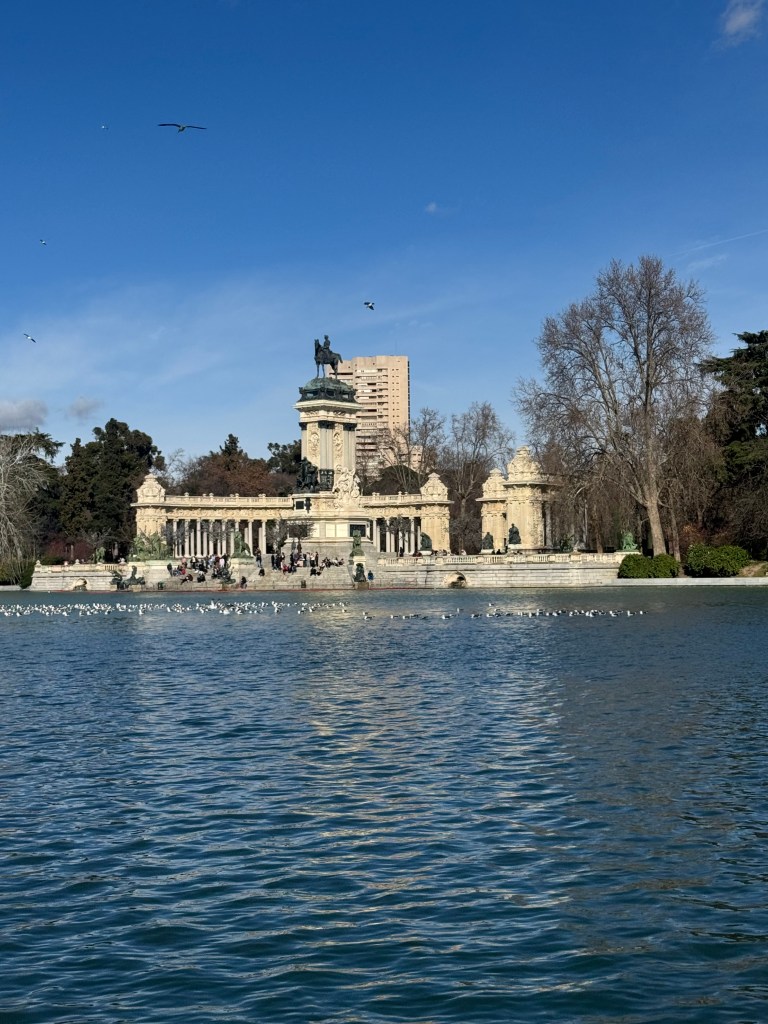
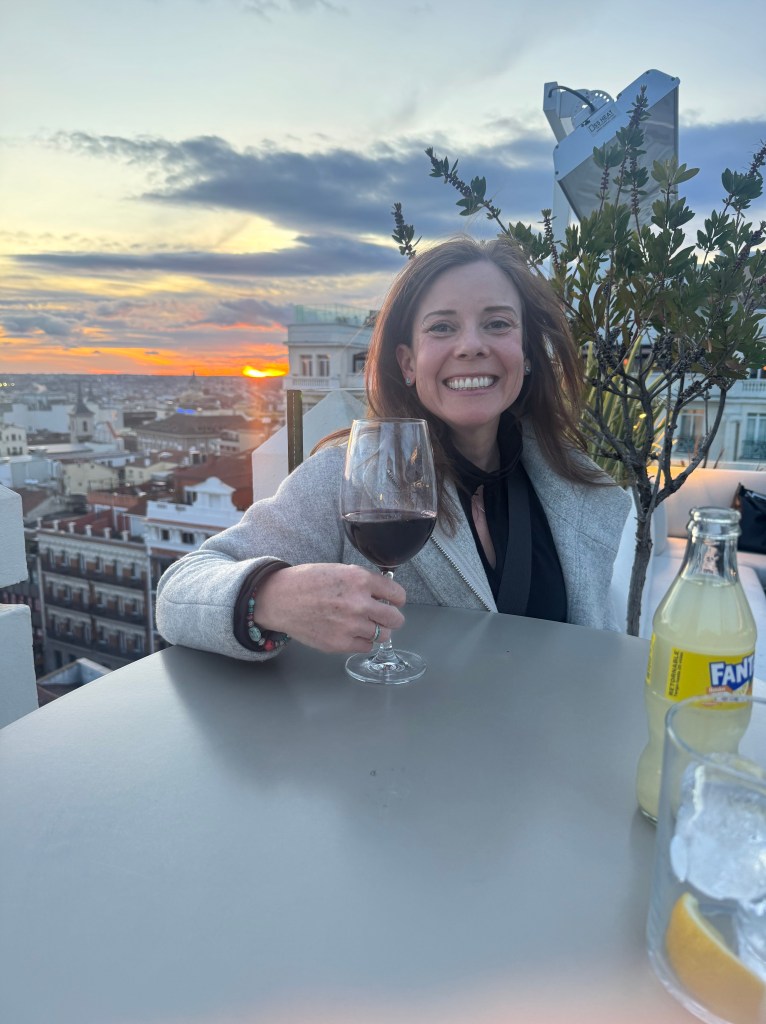
We watched Real Madrid defeat Real Sociedad 4–1. We successfully navigated the metro (with only a few minor hiccups). We admired masterworks at El Prado and wandered through the beauty of Parque del Retiro. Each evening, we caught sunset from the rooftop patio.
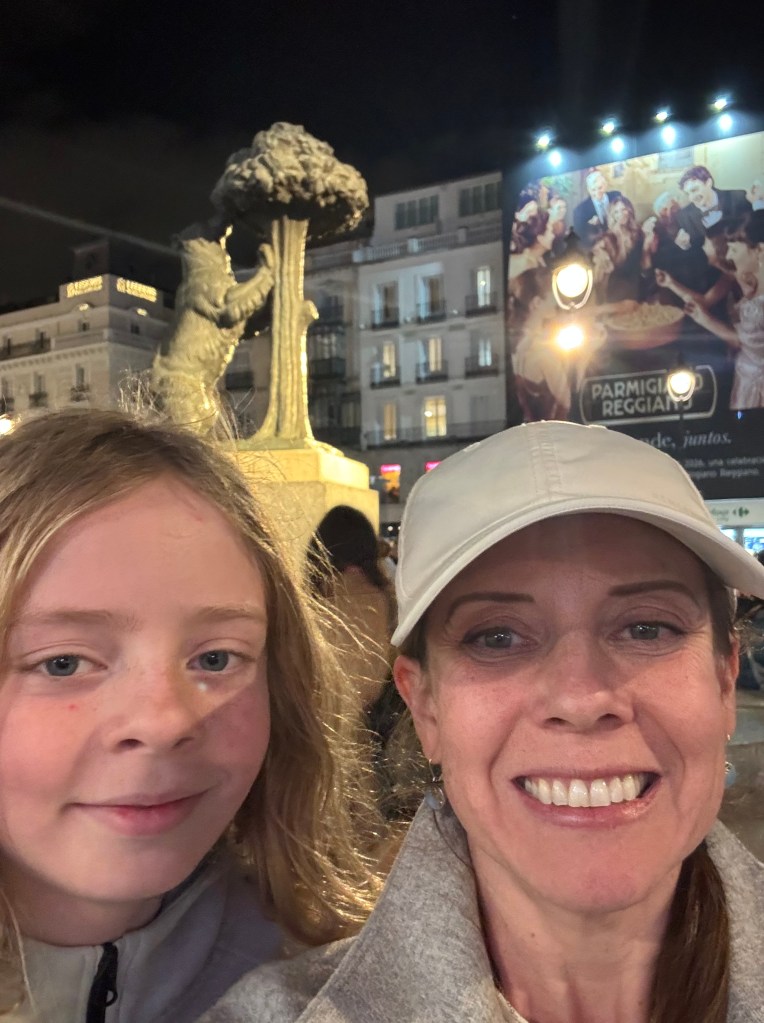
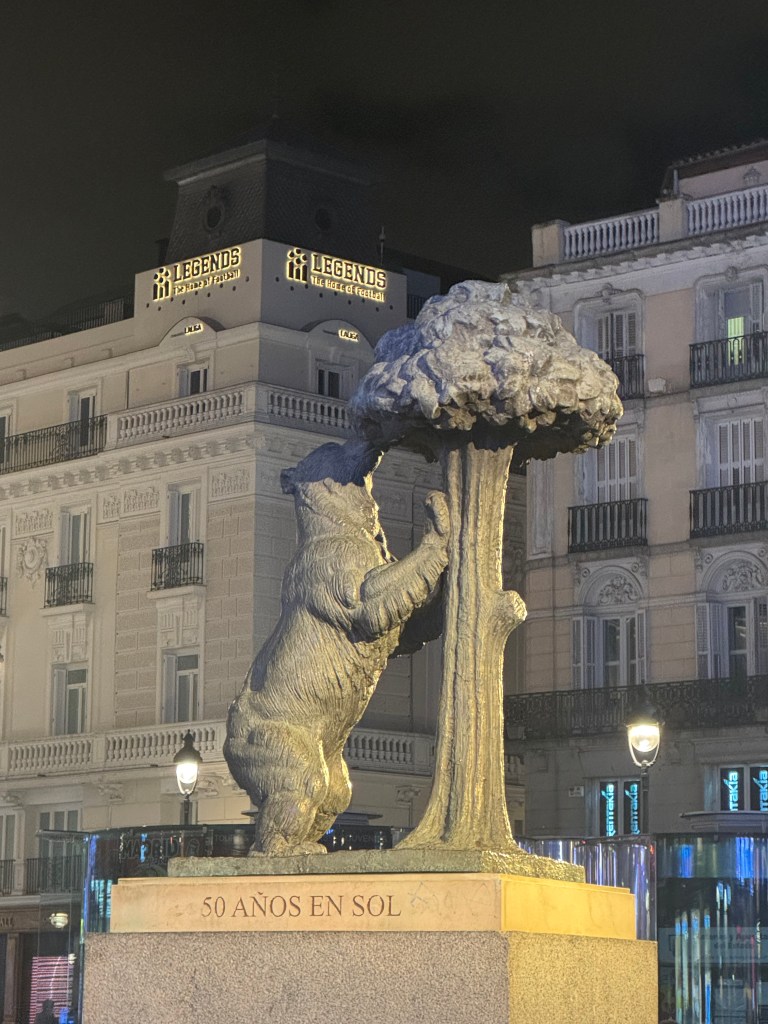
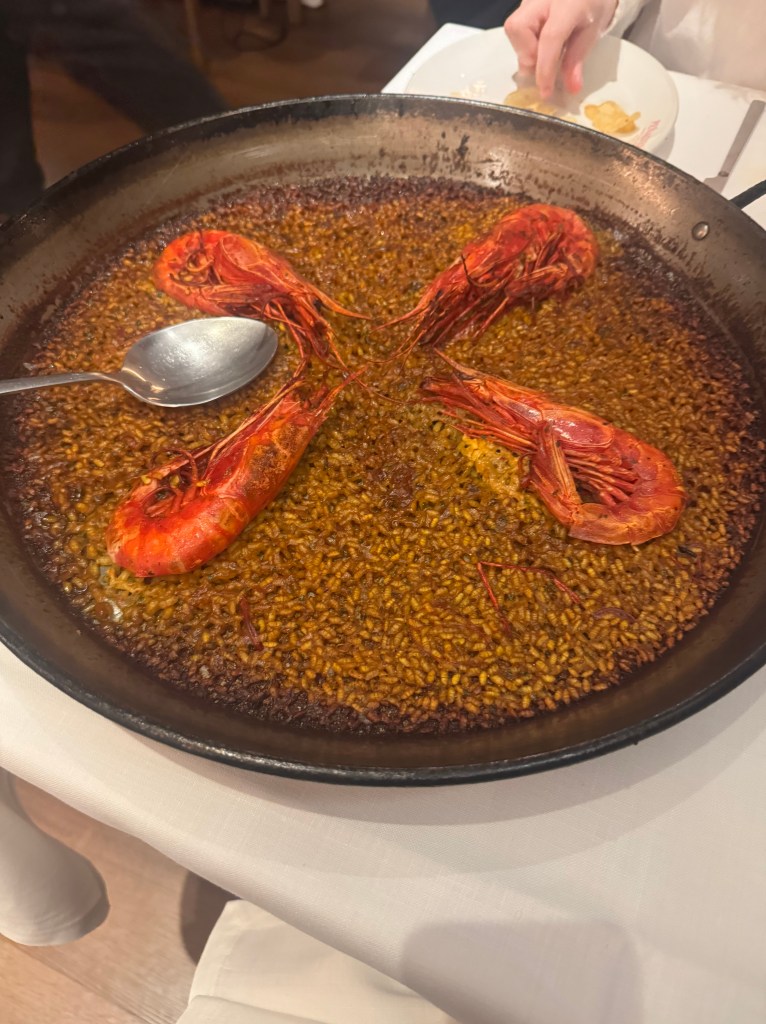
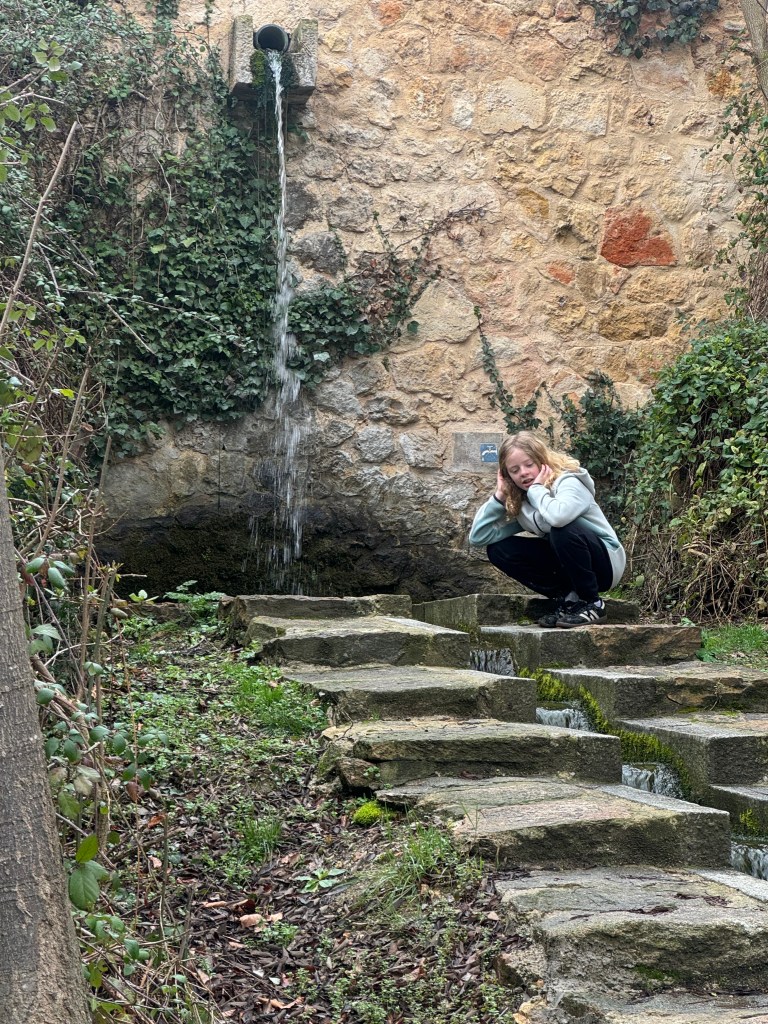
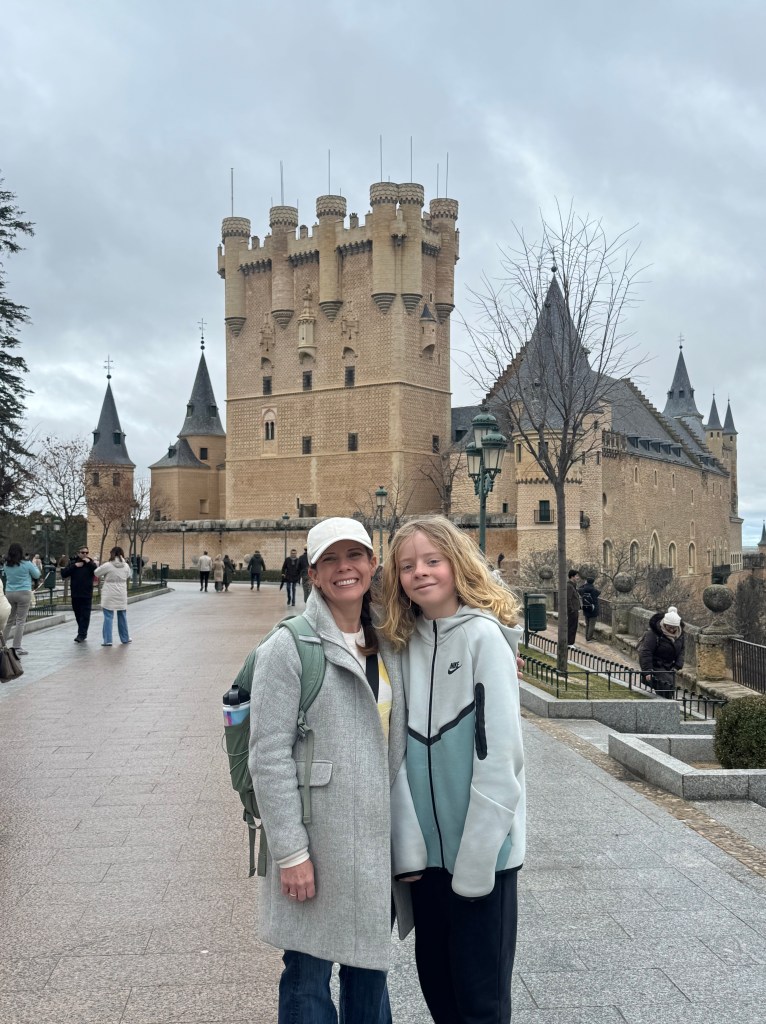
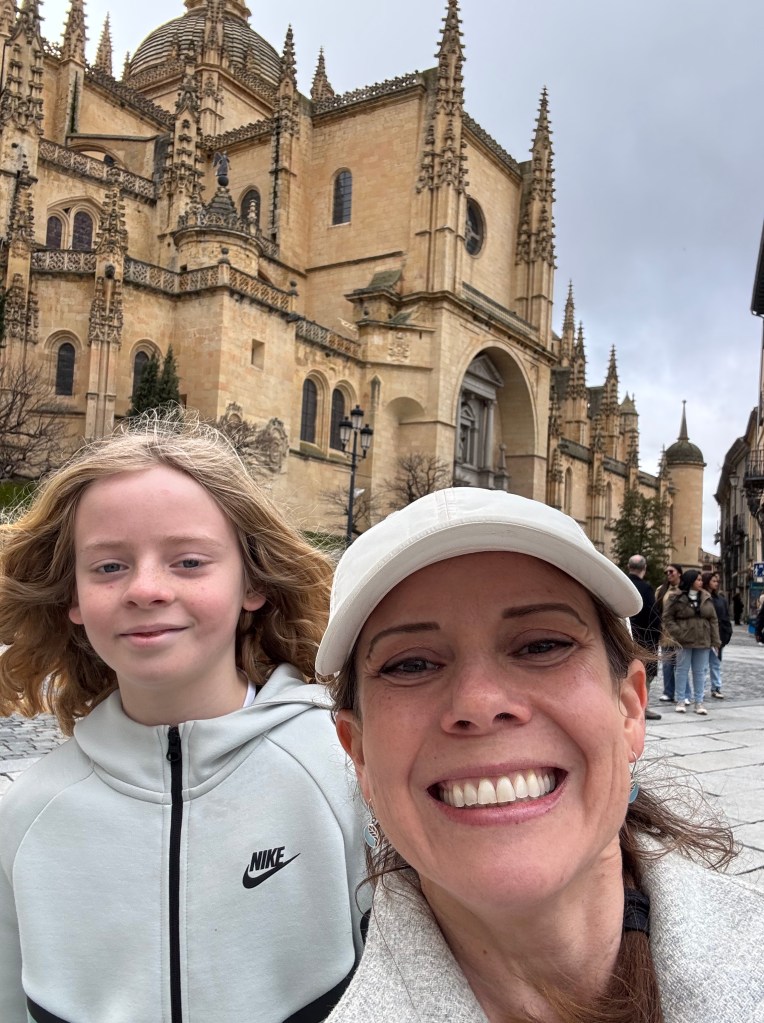
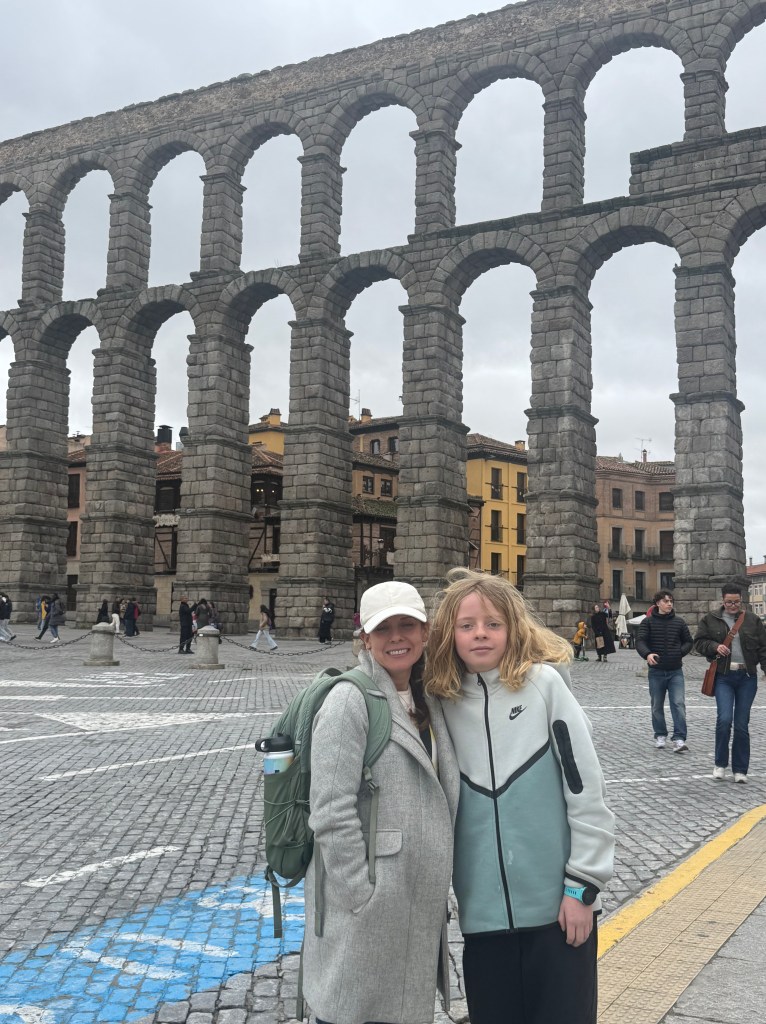
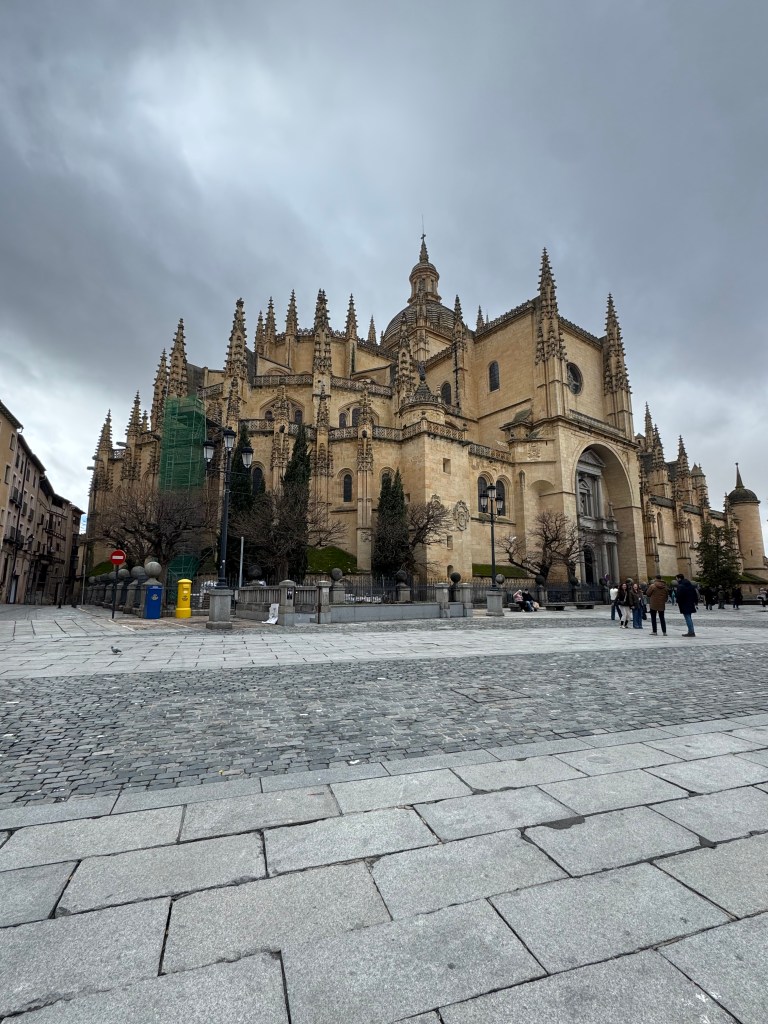
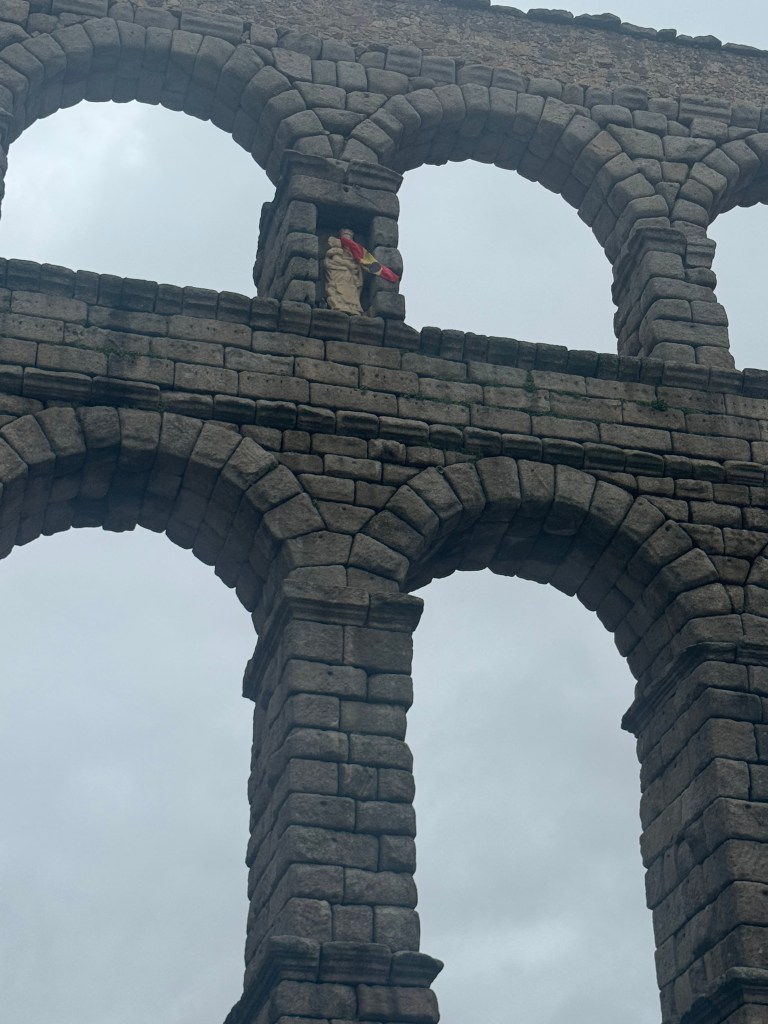
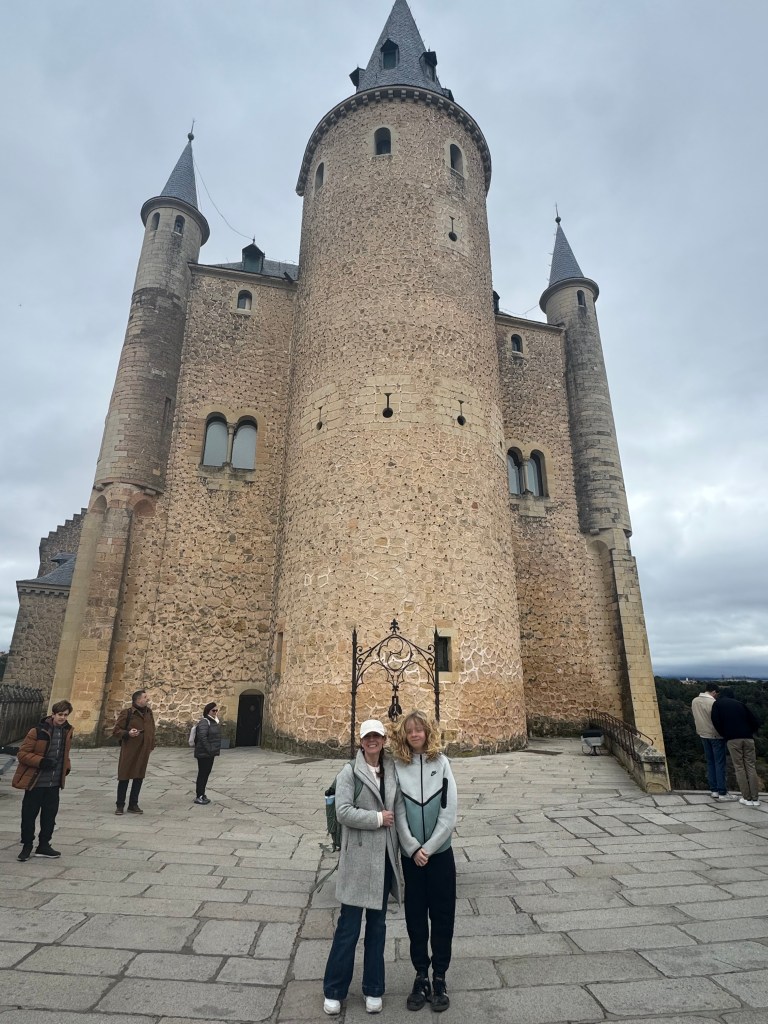
We shared paella de camarones at La Taberna Peñalver. We took a high-speed train to Segovia with our guide Antonio and stood in awe before the Roman aqueducto. We explored the Alcázar — the castle of Queen Isabella and King Ferdinand — and visited the cathedral where Isabella was proclaimed queen. We savored one last sunset, one last dinner, one last round of churros y chocolat, one final wander through the city, one last sunrise at Puerta del Sol.
It was incredible.
And part of what made it truly incredible was presence — the ability to savor each morsel of love and joy. Created with love and joy. Experienced with love and joy. Filled with love and joy.
Love and joy are not accidents. They are practices. They are investments. They are generative.
And when we choose them intentionally, they multiply.
Questions for Reflection:
When in my life have love and joy felt like “happenstance,” and when have I intentionally cultivated them? What was different about my mindset or actions?
What values were guiding me in my most meaningful recent experiences? How clearly do I name and prioritize those values?
Where in my life am I waiting for joy to appear instead of consciously creating it?
What emotions arise when I slow down enough to savor a moment? What do those emotions teach me about what matters most?
What practices help me stay present enough to truly savor experiences rather than rush through them?
When stress, distraction, or negativity show up, how do I respond? What would it look like to intentionally “feed the sourdough starter” of love and joy instead?
How do I plan and leverage my time, energy, and resources in alignment with my values?
How do the people I love experience joy? What lights them up — and how often do I notice and honor that?
In what ways do I attune to beauty, wonder, or meaning through someone else’s eyes (a child, a partner, a colleague)?
How do I actively create shared experiences of love and joy in my relationships?
What memories am I intentionally building with the people I care about? What future joy am I investing in today?
How can my presence — not just my plans — become a gift to others?
Quote(s) I’ve Been Pondering:
“It is only with the heart that one can see rightly; what is essential is invisible to the eye.”
Daniel Pink reframes regret not as something to avoid, but as something to harness. What struck me most is his argument that regret, when approached honestly, offers three powerful benefits: it sharpens our decision-making, elevates our performance, and strengthens our sense of meaning and connection (42). “Its very purpose is to make us feel worse – because by making us feel worse today, regret helps us do better tomorrow.” Regret, in other words, is not weakness. It is data. It is guidance. It is refinement.
And yet, our brains complicate this process. Pink notes that “our brains play a double trick on us” — we overvalue the present and undervalue the future, and then fail to recognize the nonlinear, compounding effects of our choices (91). We discount the long game. We minimize the quiet accumulation of habits. And often, we wake up to regret only after the compounding has already occurred.
One of the most clarifying distinctions Pink offers is between disappointment and regret. Disappointments exist outside our control. Regrets, in contrast, are our responsibility (94). That difference matters. Regret carries agency within it. If it was ours to shape, it is ours to reshape.
And perhaps most haunting are the regrets of inaction. Research from Gilovich and Medvec suggests that inactions stay more “alive, current, and incomplete” than actions (104). As Ogden Nash wrote:
“It is the sin of omission, the second kind of sin, That lays eggs under your skin.”
The consequences of action are concrete and limited. The consequences of inaction are abstract and unbounded (105). They incubate speculation. They whisper what if. They expand over time.
Which brings us to boldness.
“Authenticity requires boldness,” Pink writes (109). When we silence ourselves, when we avoid risk, when we choose comfort over alignment, growth is thwarted. Sometimes the most courageous act is using one’s voice in ways that might unsettle others but clear a new path for oneself.
Pink’s framework for the deep structure of regret (150) was especially powerful to me. Beneath the surface, regrets reveal universal human needs:
THE DEEP STRUCTURE OF REGRET (p. 150)
What it Sounds Like
The Human Need it Reveals
Foundation
If only I’d done the work.
Stability
Boldness
If only I’d taken the risk
Growth
Moral
If only I’d done the right thing
Goodness
Connection
If only I’d reached out
Love
Regret, then, is not random. It points to what we value most.
And here is where I felt both sobered and encouraged: “The best time to plant a tree is twenty years ago. The second-best time is today” (93). Regret can either calcify into shame — or catalyze action. The door is not closed. It is simply later than we expected.
One of my favorite metaphors in the book is kintsugi — the Japanese art of repairing broken pottery with gold. The cracks are not hidden. They are illuminated. The vessel becomes more beautiful because of the break.
“What’s true for ceramics can also be true for people.”
If your heart has broken, it means you cared. If you regret, it means you aspired. The cracks are not proof of failure — they are evidence of aliveness. As Leonard Cohen wrote, “There is a crack in everything, that’s how the light gets in.” Pink echoes this idea: the cracks offer a glimpse of the good life.
Regret, when faced honestly, does not diminish us. It clarifies us. It refines us. It calls us toward growth, goodness, stability, and love.
And perhaps the invitation is this:
Instead of asking, How do I avoid regret? We might ask, What is this regret trying to teach me — and what will I do differently going forward?
What Amazon has to Say:
“The world needs this book.” — New York Times bestselling author Brené Brown
An instant New York Times bestseller
Named a Best Book of the Year by NPR andFinancial Times
From the #1 New York Times–bestselling author of When and Drive, a new book about the transforming power of our most misunderstood yet potentially most valuable emotion: regret.
Everybody has regrets, Daniel H. Pink explains in The Power of Regret. They’re a universal and healthy part of being human. And understanding how regret works can help us make smarter decisions, perform better at work and school, and bring greater meaning to our lives.
Drawing on research in social psychology, neuroscience, and biology, Pink debunks the myth of the “no regrets” philosophy of life. And using the largest sampling of American attitudes about regret ever conducted as well as his own World Regret Survey—which has collected regrets from more than 15,000 people in 105 countries—he lays out the four core regrets that each of us has. These deep regrets offer compelling insights into how we live and how we can find a better path forward.
As he did in his bestsellers Drive, When, and A Whole New Mind, Pink lays out a dynamic new way of thinking about regret and frames his ideas in ways that are clear, accessible, and pragmatic. Packed with true stories of people’s regrets as well as practical takeaways for reimagining regret as a positive force, The Power of Regret shows how we can live richer, more engaged lives.
This talk explores how to see past the mask of personality and glimpse the sacred goodness shining through each person we meet. As we become mirrors of this goodness, we help one another trust the divine essence that connects us all.
My thoughts and takeaways:
I listened to this podcast through the lens of these ideas — seeing scars as history, as information, as beauty. I found myself asking what it would mean to look at others through the lens of love and joy, to search intentionally for the inner goodness and light that may not be immediately visible.
What happens when we allow our own goodness to shine first? When we look beyond the exterior – beyond the armor, the missteps, the sharp edges – and instead see the human needs underneath? When we recognize that scars are evidence of living, of caring, of trying, of being human – and that light often slips through the cracks?
How might our relationships shift if we chose, again and again, to look for the light in one another? If we approached each interaction assuming there is goodness there – even if it’s hidden, even if it’s bruised? What kind of conversations, communities, and connections might become possible if we led not with judgment, but with curiosity and reverence for the whole, imperfect, luminous human in front of us?
If you are interested or know someone who may be interested, I also offer leadership and emotional intelligence coaching and workshops. You can find more information on my website, or you can use this link to set up a free 30-minute introduction to coaching session.
As I mentioned, the stroke I had in February 2018 was a pivotal event and valuable turning point in my life; you can read more in my commemorative post. Please join me in celebrating these milestones, turning points, and calls to “winter,” by taking time to celebrate your own milestones and by fully embracing the opportunities in front of you, the value in the little things, and the beauty that surrounds you in this wonderful, messy life. I will forever be grateful for my stroke and the path of integrity I found in its wake.
I am currently partnering with my fellow Education and Coaching colleague, Dr. Joan Flora, to offer a series on Resolving Emotional Reactivity. This series explores emotions and their purpose, the information they hold about our human needs, and how we can learn to respond with intention and integrity instead of reacting and regretting. We are offering monthly Open Houses to learn more.
Over the course of the last two years, I’ve hosted a few local, in-person events here in the Seattle area, like Savor the Sweetness and the Serenity Retreat.The Serenity Retreat was another success! This relaxing and delightful event took place again June 14, 2025; learn more! Savor the Sweetness took place again September 20, 2025, and was also divine! I’m excited to play more in these spaces of creating opportunities for connection and reflection If you are interested in such local events, please contact me with any questions, or to join the invite list for future events!
I have also joined forces with James Garrett at BrainByDesign, where I have had the distinct privilege of working with colleagues, Paula Miles and Sandra Clifton, to support aspiring female leaders in the workshop series, The Brain Science Advantage for Women Leaders. Also check out the latest work at BrainByDesign – The Confidence Challenge and The Confident Finisher Program (where I have the delight of serving as a coach) – where we leverage neuroscience to overcome the roadblocks in your brain to achieve your most important goals!
If you are interested in joining and co-creating these learning communities, please use the links above to learn more about ICFLA’s Emotional Intelligence Special Interest Group, BrainByDesign, and the Women’s Events. I hope you will come along for the journey!
I’m always looking for new inspiration, new books to read, and new podcasts to listen to, so please send your suggestions my way or comment on this post to offer some new recommendations!
As always, thank you for your continued support and readership! Stay strong, stay brave, stay true to you!
Wishing you a season filled with love and joy – a season of seeking the light, noticing it in others, and recognizing how it shines most beautifully through the cracks. May you see the beauty in the imperfections, both around you and within you. Thank you for being part of my journey.
This is my year to create with hope, fueled by joy. My challenge is to continue to find moments of goodness and awe, serenity and peace, gratitude and love, to support me in creating ripple effects of hope. Joy and hopeful creation are my way of facing and fighting oppression.













 Desiree Briel Rodi Consulting & Coaching